

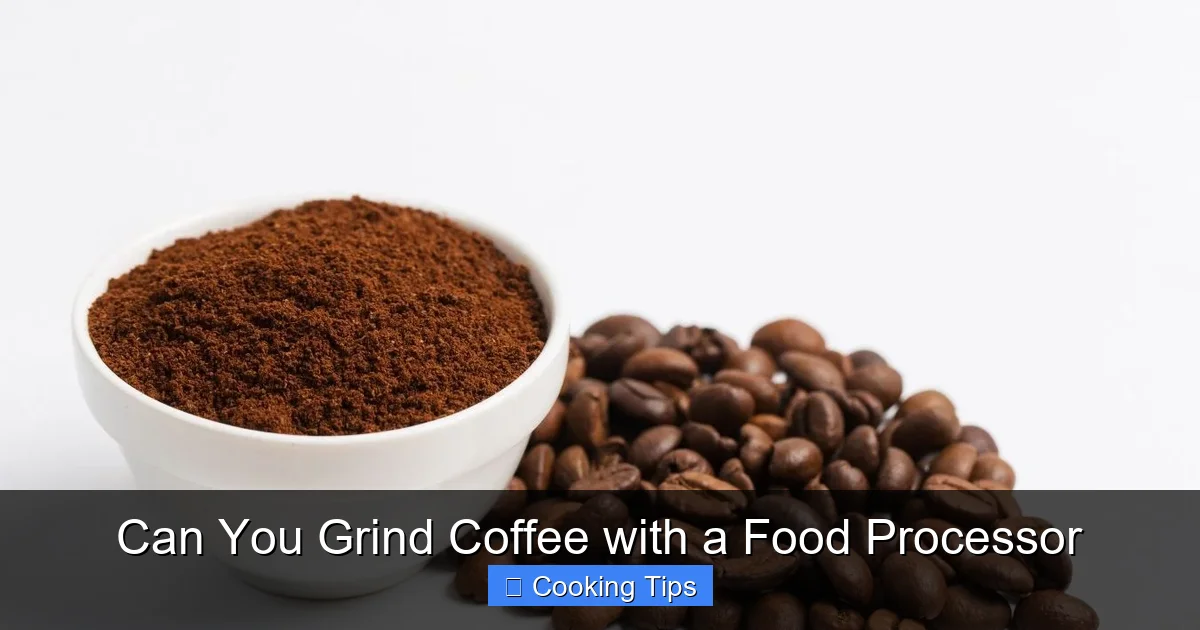
Thinking about grinding coffee beans in your food processor? This guide explains if it’s possible and how to do it effectively. While not ideal for the perfect grind, a food processor can be a convenient alternative when your grinder is unavailable. We’ll cover the steps, the potential downsides, and offer tips for achieving the best possible results.
So, you’re craving a fresh cup of coffee, but your trusty coffee grinder seems to have vanished or is on the fritz. The question on your mind is: “Can you grind coffee with a food processor?” The short answer is yes, you absolutely can. However, it’s important to understand that a food processor isn’t a coffee grinder, and the results might not be as precise as you’re used to.
This guide will walk you through everything you need to know about grinding coffee beans using a food processor. We’ll cover the process step-by-step, discuss the pros and cons, offer practical tips to get the best possible outcome, and even touch on some troubleshooting. By the end, you’ll be equipped to make a decent cup of coffee, even without a dedicated grinder.
Key Takeaways
- A Food Processor Can Grind Coffee in a Pinch: While not a dedicated coffee grinder, a food processor can break down coffee beans if it’s your only option.
- Expect Inconsistent Grinds: Food processors are designed for chopping and pureeing, leading to a mix of coarse and fine particles, which can affect coffee extraction.
- Control is Key: Pulse in short bursts and check frequently to avoid overheating the beans or creating too fine a powder.
- Cleanliness is Crucial: Thoroughly clean your food processor to prevent residual food odors or flavors from contaminating your coffee.
- Best for Coarser Grinds: This method is more forgiving for coarser grinds suitable for French press or cold brew.
- Not for Espresso: The inconsistent grind size makes it unsuitable for the fine, uniform texture needed for espresso machines.
- Consider the Wear and Tear: Frequent use of your food processor for grinding coffee can potentially shorten its lifespan.
Understanding the Food Processor’s Capabilities (and Limitations)
Before we dive into the “how-to,” let’s set some expectations. A food processor is a versatile kitchen appliance designed to chop, slice, shred, puree, and mix ingredients. Its blades spin at a high speed, effectively breaking down food. When it comes to coffee beans, this means it can certainly pulverize them.
However, the key difference lies in the design. Coffee grinders are specifically engineered to produce a uniform grind size. This uniformity is crucial for consistent extraction during brewing. A food processor, on the other hand, tends to create a more varied particle size, ranging from fine powder to larger chunks. This inconsistency can lead to over-extraction (bitter coffee) or under-extraction (weak, sour coffee), depending on which particles dominate and how you brew.
The Pros of Using a Food Processor for Coffee
- Convenience: It’s readily available in most kitchens. If your coffee grinder is broken or you’re away from home, it’s a lifesaver.
- Speed: For a quick grind, it can be surprisingly fast.
- Volume: You can often grind a larger quantity of beans at once compared to many small blade grinders.
The Cons of Using a Food Processor for Coffee
- Inconsistent Grind Size: This is the biggest drawback. The uneven particles can negatively impact your coffee’s flavor.
- Potential for Overheating: Running the food processor for too long can generate heat, which can “cook” the coffee grounds and affect their delicate flavors.
- Difficulty Achieving Fine Grinds: It’s very hard to get a fine, espresso-like grind. This method is best suited for coarser grinds.
- Cleaning: Coffee oils can linger, and the blades and bowl need thorough cleaning to avoid transferring flavors to future food.
- Wear and Tear: Grinding hard coffee beans can put extra strain on your food processor’s motor and blades over time.
How to Grind Coffee Beans with a Food Processor: A Step-by-Step Guide
Now that you understand the trade-offs, let’s get to the practical steps.
Step 1: Gather Your Supplies
You’ll need:
- Whole coffee beans
- Your food processor
- A clean, dry bowl or container for the grounds
- A timer (optional, but helpful)
Step 2: Measure Your Beans
Measure the amount of coffee beans you want to grind. It’s generally best to grind only what you need for immediate brewing, as ground coffee loses its flavor more quickly. A good starting point is around 15-20 grams of beans per cup of coffee.
Step 3: Add Beans to the Food Processor Bowl
Pour your measured whole coffee beans into the bowl of your food processor. Don’t overfill the bowl. You want enough space for the blades to move freely and chop the beans effectively. Aim to fill the bowl no more than one-third of the way full.
Step 4: Pulse and Grind
This is where the magic (and potential chaos) happens. The key here is *control*.
Using the Pulse Function
The pulse function is your best friend. Instead of running the motor continuously, use short, decisive pulses.
How to do it:
Visual guide about Can You Grind Coffee with a Food Processor
Image source: coffeeorbital.com
- Press the pulse button for about 1-2 seconds.
- Release the button.
- Observe the beans. Are they still whole? Are they getting smaller?
- Repeat this process, pulsing in short bursts.
Checking the Grind
After every few pulses, open the lid (ensure the machine is off!) and check the consistency of the grounds. You’re aiming for a texture that suits your brewing method.
- For French Press or Cold Brew: You want a coarse, breadcrumb-like consistency.
- For Drip Coffee Makers: Aim for a medium grind, similar to coarse sand.
- For Aeropress (depending on the recipe): You might need something between a medium-fine and fine grind.
Avoiding Overheating
If you notice any warmth emanating from the motor or the bowl, take a break. Let the food processor cool down for a few minutes between pulses. Overheated beans can develop a stale, burnt flavor.
Step 5: Stop When You Reach Your Desired Consistency
Don’t get greedy! It’s better to stop slightly too early and have a few larger chunks than to over-process and end up with a dusty powder. Remember, the grind will continue to break down slightly as you transfer it.
Step 6: Transfer Your Coffee Grounds
Carefully pour the ground coffee into a clean, dry container or directly into your coffee maker’s filter.
Tips for Better Coffee Grinding with a Food Processor
Even though it’s not a perfect tool, you can improve your results with a few smart strategies.
Tip 1: Grind in Batches
As mentioned earlier, don’t overfill the food processor. Smaller batches allow for more even processing and better control.
Tip 2: Choose the Right Beans
Lighter roasts tend to be harder and more brittle, which can be good for grinding. Darker roasts are often more oily and softer, which can sometimes gum up blades. If you’re struggling with oily beans, try to grind them when they are slightly cooler.
Tip 3: Consider Your Brewing Method
This method is most forgiving for coarser grinds. If you’re a fan of French press or cold brew, you’ll likely get the most satisfactory results. If you absolutely need a fine grind, you might consider a manual burr grinder as a secondary option.
Tip 4: Clean Thoroughly!
This is non-negotiable. Coffee oils can be potent and leave behind a flavor that can ruin your morning toast or your next batch of pesto.
- Immediately after grinding, unplug the food processor.
- Disassemble the blades and bowl.
- Wash them with hot, soapy water. Use a brush to get into any crevices around the blades.
- Rinse thoroughly.
- For stubborn coffee oils or lingering aromas, a solution of equal parts white vinegar and water can be used. Run the food processor with this solution for a few seconds (ensure adequate ventilation). Then wash again with soap and water.
- Ensure all parts are completely dry before reassembling or storing.
Tip 5: Don’t Aim for Perfection
Accept that this is a workaround. Enjoy the fact that you can still make coffee and focus on the taste of the brewed coffee itself.
Troubleshooting Common Issues
Even with the best intentions, you might run into a few snags.
Problem: My coffee is too fine and dusty.
Solution: You probably pulsed for too long or too aggressively. Next time, use shorter pulses and check the consistency more frequently. If it’s already too fine, try mixing it with a coarser grind (if you have any available from a previous grind) or just accept that it might extract a bit more intensely.

Visual guide about Can You Grind Coffee with a Food Processor
Image source: coffeeorbital.com

Visual guide about Can You Grind Coffee with a Food Processor
Image source: coffeeorbital.com
Problem: My coffee is too coarse, with many whole beans.
Solution: You might not have pulsed enough, or the beans might be too few for the processor to catch them effectively. Try pulsing for slightly longer bursts or process a slightly larger batch if you have more beans. Also, ensure the beans are spread out in the bowl, not clumped together.
Problem: The coffee tastes bitter.
Solution: This is likely due to over-extraction, often caused by too fine a grind. Try adjusting your grind to be coarser next time, using shorter pulses. If using a drip machine, you might need to use slightly less coffee or add a bit more water.
Problem: The coffee tastes weak or sour.
Solution: This could be under-extraction, often caused by too coarse a grind. Ensure you’re grinding for a bit longer to get a finer consistency, or consider using a more concentrated brew ratio.
The Verdict: Is Grinding Coffee with a Food Processor Worth It?
Ultimately, using a food processor to grind coffee beans is a **functional compromise**. It’s a viable option when you don’t have a dedicated coffee grinder, and for those who prioritize convenience over absolute precision, it can be a satisfactory solution, especially for brewing methods that are more forgiving of grind size.
However, if you are a coffee aficionado who savors the nuanced flavors of a perfectly extracted cup, investing in a quality burr grinder is highly recommended. A burr grinder will give you consistent particle sizes, which is the foundation of great coffee.
But for those moments when you just need that caffeine fix and your grinder is MIA? Your food processor is ready to step up to the plate. Just remember to be patient, use those pulses wisely, and clean up thoroughly. Happy grinding!
