

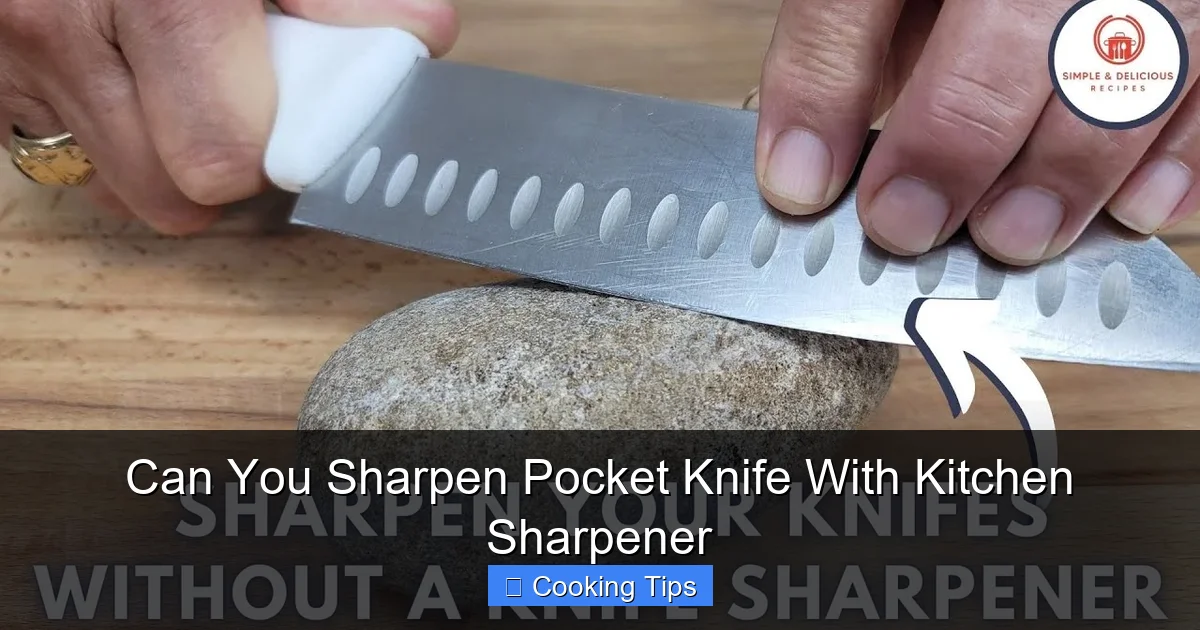
Unsure if your kitchen knife sharpener can handle your pocket knife? This comprehensive guide answers that question with clear instructions and practical advice. We’ll explore the compatibility of different sharpener types, detail the step-by-step sharpening process, and offer troubleshooting tips to ensure you achieve a razor-sharp edge on your pocket knife. You’ll learn everything you need to know to maintain your EDC tool effectively.
Can You Sharpen Pocket Knife With Kitchen Sharpener
It’s a common dilemma for any pocket knife enthusiast: your trusty EDC (Everyday Carry) blade is starting to feel a little dull, and you’re wondering if you can just grab that kitchen knife sharpener sitting on your counter to bring it back to life. The quick answer is: sometimes. But it’s not a straightforward yes or no.
In this comprehensive guide, we’ll dive deep into the world of knife sharpening, specifically addressing whether your kitchen knife sharpener is up to the task of restoring the keen edge to your pocket knife. We’ll explore the factors that determine compatibility, the best techniques to use, and what to watch out for. By the end, you’ll have a clear understanding of how to sharpen your pocket knife using a kitchen sharpener, or when it might be time to consider a different tool.
Key Takeaways
- Compatibility Varies Greatly: Not all kitchen knife sharpeners are suitable for pocket knives. V-slot manual sharpeners and electric sharpeners with adjustable angles are more likely to work than pull-through sharpeners with fixed angles.
- Blade Angle is Crucial: Pocket knives often have a different, more acute blade angle than kitchen knives. Matching this angle is essential for effective sharpening and avoiding damage.
- Manual V-Slot Sharpeners Can Work: These are often the most accessible option. Learn to control the angle and pressure for best results.
- Electric Sharpeners Require Caution: While convenient, ensure the electric sharpener has settings for the correct angle and can accommodate the size and shape of your pocket knife blade.
- Proper Technique is Key: Consistent strokes, correct pressure, and alternating sides are vital for achieving a uniform and sharp edge.
- Honing is a Separate Step: A sharpener primarily removes metal to create an edge. A honing steel or ceramic rod is used to realign the existing edge.
- Practice Makes Perfect: Start with an inexpensive pocket knife if possible to get comfortable with the process before working on your favorite EDC.
Understanding Knife Angles: The Foundation of Sharpening
Before we get into the how-to, it’s crucial to understand a fundamental concept: blade angle. Every knife, whether it’s a chef’s knife or a pocket knife, has an edge that is ground at a specific angle. This angle determines how sharp the blade can become and how well it will cut.
Kitchen Knife Angles
Kitchen knives, especially Western-style ones, typically have a blade angle between 15 to 20 degrees per side. This results in a total edge angle of 30 to 40 degrees. This angle is designed for efficiency in the kitchen, allowing for clean cuts through various food items without being overly delicate.
Pocket Knife Angles
Pocket knives, on the other hand, are often designed for a wider range of tasks, from opening packages to more robust outdoor use. Their blade angles can vary significantly. Many modern pocket knives are sharpened to an angle of 15 to 20 degrees per side, giving them a total edge angle of 30 to 40 degrees. However, some tactical or outdoor-oriented pocket knives might have a slightly steeper angle, around 20 to 25 degrees per side (40 to 50 degrees total), for increased durability and resistance to chipping. Older or more traditional designs can also have different angles.
Why Angle Matters When Using a Kitchen Sharpener
The discrepancy in blade angles is the primary reason why not all kitchen knife sharpeners are suitable for pocket knives. Most manual V-slot sharpeners and many electric sharpeners are designed with a fixed angle, often optimized for the typical 15-20 degree kitchen knife edge. If your pocket knife has a different angle, forcing it into a sharpener with a mismatched angle can lead to several problems:
* Uneven Edge: The sharpening grooves will only contact part of the bevel, creating an inconsistent and weak edge.
* Damage to the Edge: The wrong angle can roll or chip the edge, making it harder to sharpen and potentially damaging the knife.
* Ineffective Sharpening: You won’t be able to achieve a truly sharp edge if the angle isn’t matched correctly.
Types of Kitchen Knife Sharpeners and Their Suitability for Pocket Knives
Let’s break down the common types of kitchen knife sharpeners and assess their potential for sharpening a pocket knife.
1. Manual V-Slot Sharpeners
These are perhaps the most common type of kitchen sharpener. They feature two or more angled slots, often made of tungsten carbide, ceramic, or diamond-coated material, through which you pull the knife blade.
* **Pros for Pocket Knives:** Many V-slot sharpeners are set at approximately 20 degrees per side, which is often compatible with pocket knives. They are affordable and easy to use.
* **Cons for Pocket Knives:** The main issue is the fixed angle. If your pocket knife has a significantly different angle, you won’t get optimal results. Some V-slot sharpeners can be quite aggressive and remove a lot of metal, which might not be ideal for delicate pocket knife steels. The narrow slots can also be restrictive for larger or unusually shaped pocket knife blades.
* **Can You Use It?** Yes, but with caution. If your pocket knife’s angle is close to 20 degrees, it might work. Always test on an inexpensive knife first.
2. Electric Knife Sharpeners
Electric sharpeners use abrasive wheels or belts that spin at high speed. They can be very effective but also very aggressive if not used correctly.
* **Pros for Pocket Knives:** Some high-end electric sharpeners offer adjustable angle settings, which is ideal for matching your pocket knife’s specific angle. They are fast and efficient.
* **Cons for Pocket Knives:** Standard electric sharpeners often have fixed angles, usually set for kitchen knives. Using one with a mismatched angle can quickly damage your pocket knife’s edge. They are also more expensive than manual sharpeners. The high speed and aggressive abrasives can also remove too much material from smaller or harder pocket knife steels.
* **Can You Use It?** Only if it has adjustable angle settings and you can confidently set it to your pocket knife’s angle. Otherwise, proceed with extreme caution or avoid it altogether.
3. Pull-Through Sharpeners (Ceramic Rods/Steels)**
These are typically ceramic rods set at a fixed angle. They are more for re-aligning a slightly dull edge (honing) rather than for significant sharpening (removing metal).
* **Pros for Pocket Knives:** They are good for quick touch-ups and maintaining an already sharp edge.
* **Cons for Pocket Knives:** They are not designed for sharpening dull knives that need metal removed to form a new edge. The fixed angle might not match your pocket knife’s edge.
* **Can You Use It?** For honing, yes, if the angle feels comfortable. For actual sharpening, generally no.
4. Sharpening Stones (Whetstones) and Guided Systems
While not strictly “kitchen knife sharpeners” in the typical sense of pull-through devices, many people have sharpening stones or guided systems that they use for kitchen knives.
* **Pros for Pocket Knives:** These offer the most control. You can select different grits of stones to achieve your desired sharpness and polish. Guided systems ensure a consistent angle.
* **Cons for Pocket Knives:** They require more skill and practice than pull-through sharpeners.
* **Can You Use It?** Absolutely! If you have sharpening stones or a guided sharpening system, they are often the *best* way to sharpen a pocket knife because you have full control over the angle and grit progression.
How to Sharpen Your Pocket Knife with a Manual V-Slot Kitchen Sharpener
If you’ve determined that your manual V-slot kitchen sharpener has an appropriate angle (around 20 degrees per side) for your pocket knife, here’s how to proceed.
Step-by-Step Sharpening Process
Step 1: Assess Your Pocket Knife’s Angle
This is the most critical step.
How to Check the Angle: If you have a protractor or angle gauge, you can measure the angle of your pocket knife’s edge. A simpler, albeit less precise, method is to use a marker. Color the edge bevel with a permanent marker. Then, take a light stroke or two through your sharpener and examine where the marker has been removed. Ideally, the marker should be removed evenly across the bevel. If it’s only removed from the very apex of the edge, the angle is too steep. If it’s removed only from the shoulder of the bevel, the angle is too shallow.
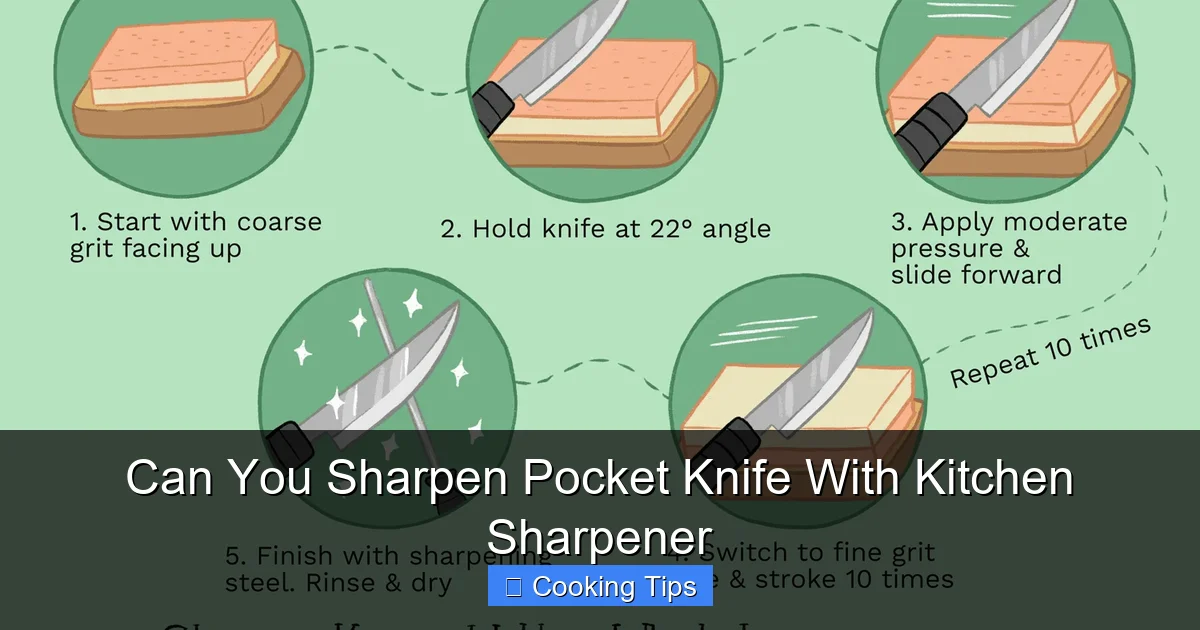
Visual guide about Can You Sharpen Pocket Knife With Kitchen Sharpener
Image source: thespruceeats.com
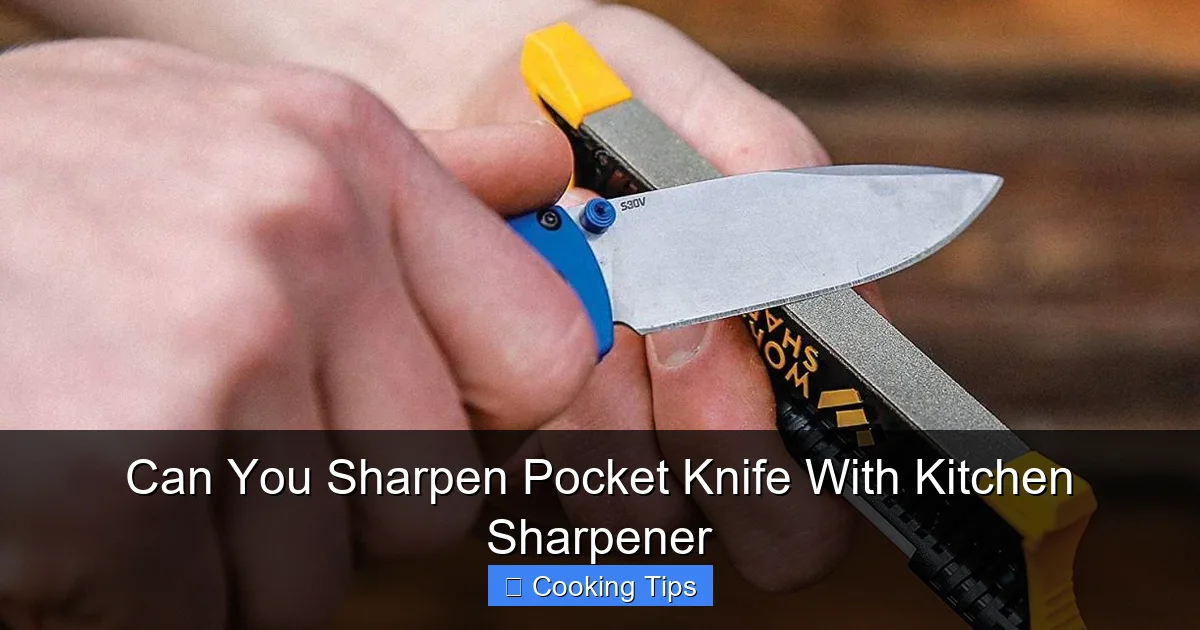
Visual guide about Can You Sharpen Pocket Knife With Kitchen Sharpener
Image source: s3.amazonaws.com
Visual guide about Can You Sharpen Pocket Knife With Kitchen Sharpener
Image source: s3.amazonaws.com
Step 2: Clean Your Pocket Knife
Ensure your pocket knife is clean and free of any debris, dirt, or oil. This will prevent contaminants from getting into the sharpening slots and ensure a cleaner sharpening process.
Step 3: Stabilize the Sharpener
Place the kitchen knife sharpener on a stable, flat surface. Many sharpeners have non-slip rubber feet. If yours doesn’t, you can place a damp cloth underneath it to prevent it from sliding.
Step 4: Insert and Stroke the Blade
* Hold the Handle: Firmly grasp the handle of your pocket knife.
* Align with the Slot: Carefully insert the heel of the blade into the appropriate sharpening slot (usually marked “Coarse” or “Fine”). Make sure the blade is sitting flush within the V-shaped groove.
* Apply Light Pressure: Apply very light, consistent pressure as you draw the blade through the slot. Do not press down hard, as this can damage the edge and the sharpener.
* Full Stroke: Draw the blade from the heel all the way to the tip in a single, smooth motion. The entire length of the edge should pass through the sharpening material.
* Repeat on the Other Side: Flip the knife over and repeat the same stroke on the other side of the blade, using the same light pressure.
* Alternate Strokes: After a few strokes on each side, alternate to one stroke per side. This helps to refine the edge and create a burr-free finish. A common pattern is 5 strokes per side, then 3, then 1, or simply a consistent number of alternating strokes.
Step 5: Check for a Burr
As you sharpen, a tiny wire edge, called a burr, will form on the opposite side of the edge you are sharpening. You can feel for this burr by carefully running your fingertip *away* from the edge (never towards it!) along the side of the blade. The burr will feel like a slight roughness or a tiny lip of metal.
Step 6: Refine the Edge (Honing)
Once you’ve established a burr along the entire length of the blade, you’ll want to remove it and refine the edge.
* Fewer Strokes: Use very light pressure and take fewer strokes on each side, alternating sides more frequently (e.g., one stroke per side). This helps to break off and smooth out the burr.
* Using a Ceramic Slot: If your sharpener has a ceramic finishing slot, use this for the final few strokes. These slots are finer and help to polish the edge.
Step 7: Test the Sharpness
* Paper Test: The classic test is to see if your knife can cleanly slice through a piece of paper held vertically. It should slice with minimal resistance.
* Arm Hair Test (Use Caution): A truly sharp knife can shave hair off your arm. Be very careful if you attempt this.
Step 8: Clean and Maintain
Wipe down your pocket knife to remove any metal shavings. Clean your sharpener according to its manufacturer’s instructions to keep it in good working order.
Tips for Success
* Start Slow: If you’re new to sharpening, go slowly and focus on technique.
* Consistent Pressure: The key is consistent, light pressure. Too much pressure will dull the edge or damage the sharpener.
* Full Stroke: Make sure you’re using the entire length of the blade during each stroke.
* Blade Angle is King: If you suspect your sharpener’s angle is wrong, don’t force it. You’ll get better results with a different method.
* Don’t Over-Sharpen: Only sharpen when necessary. Over-sharpening can wear down your blade and sharpener unnecessarily.
* Consider a Stropping Compound: For a truly polished and razor-sharp edge, you can use a leather strop with a stropping compound after using your sharpener. This isn’t usually part of a kitchen sharpener kit.
Troubleshooting Common Issues
* **”My knife isn’t getting sharp.”**
* *Possible Cause:* Incorrect blade angle for the sharpener.
* *Solution:* Verify the angles match. If not, a V-slot sharpener may not be suitable.
* *Possible Cause:* Not enough strokes or pressure.
* *Solution:* Increase the number of strokes slightly, maintaining light pressure. Ensure you’re drawing the blade fully through the slot.
* *Possible Cause:* The sharpener is worn out.
* *Solution:* Tungsten carbide sharpeners can wear down over time. Consider replacing it if it’s very old.
* **”I feel a burr, but it won’t go away.”**
* *Possible Cause:* Inconsistent strokes or pressure when trying to remove the burr.
* *Solution:* Use very light, alternating strokes, focusing on a smooth motion. Try fewer strokes.
* **”The sharpener seems to be taking off too much metal.”**
* *Possible Cause:* The sharpener is too aggressive, or you’re applying too much pressure.
* *Solution:* Use significantly lighter pressure. If it’s a very aggressive sharpener, it might not be suitable for finer steels or pocket knives that you want to preserve.
When to Use a Different Sharpening Method
While it’s often possible to sharpen a pocket knife with a suitable kitchen sharpener, there are times when you should consider other options:
* **High-End Pocket Knives:** If you have a valuable or premium pocket knife with high-quality steel, you owe it to yourself to use a sharpening method that offers maximum control, like sharpening stones or a guided system. This ensures you maintain the integrity of the steel and achieve the best possible edge.
* **Unusual Blade Shapes or Angles:** If your pocket knife has a tanto blade, a recurve, or a very specific, non-standard angle, a fixed-angle V-slot sharpener will likely struggle.
* **Desire for Perfection:** If you’re a knife enthusiast who strives for the absolute sharpest, most polished edge, dedicated knife sharpening tools are the way to go.
Conclusion
So, can you sharpen a pocket knife with a kitchen knife sharpener? The answer is a qualified “yes,” but it depends heavily on the type of sharpener and the specific angle of your pocket knife’s blade. Manual V-slot sharpeners with angles around 20 degrees per side are your best bet among typical kitchen tools. Always prioritize understanding your knife’s angle and using consistent, light pressure. If your kitchen sharpener’s angle doesn’t match, or if you’re dealing with a particularly valuable knife, investing in dedicated pocket knife sharpening tools like whetstones or guided systems will yield superior results and protect your blade. By following the steps and tips in this guide, you can confidently assess whether your kitchen sharpener is up to the job, and how to use it effectively if it is.
