

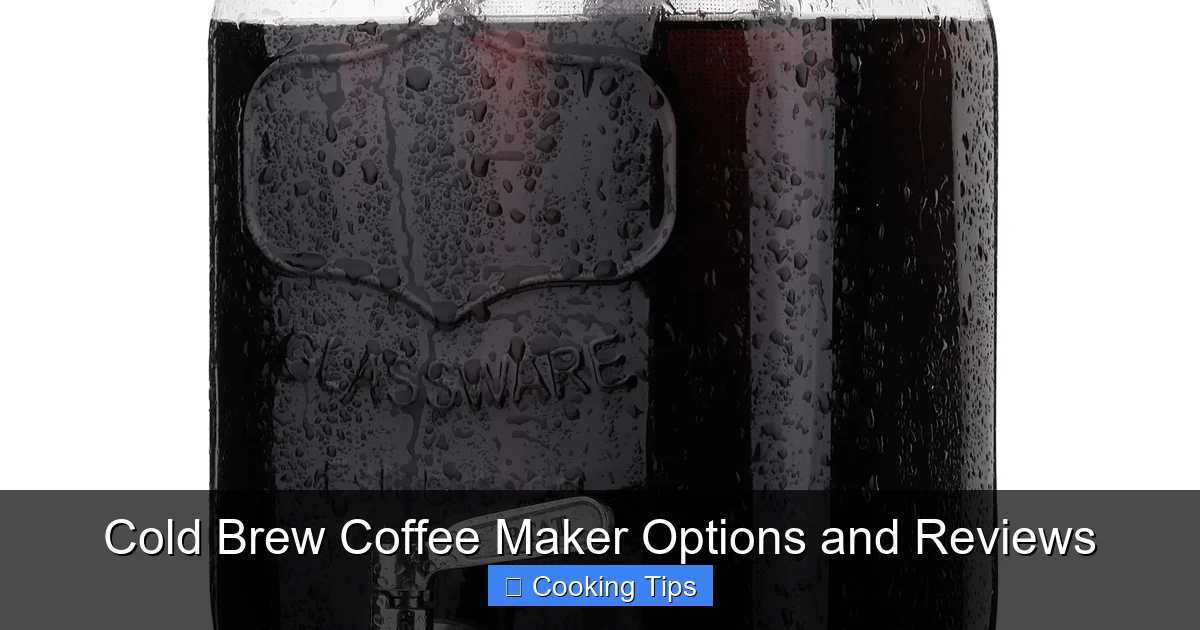
Making delicious cold brew coffee at home is easier than ever with the right equipment. This guide explores the top cold brew coffee maker options for 2026, from simple immersion methods to advanced automatic machines. We’ll break down how each type works, their pros and cons, and offer expert reviews to help you choose the perfect brewer for your taste and budget. Get ready to elevate your iced coffee game!
Are you ready to ditch the expensive coffee shop runs and craft your own incredibly smooth, low-acid cold brew coffee at home? In 2026, the world of cold brew coffee makers is more exciting and accessible than ever before. Whether you’re a seasoned coffee enthusiast or just starting your cold brew journey, this comprehensive guide will help you navigate the options, understand the differences, and find the perfect cold brew coffee maker for your kitchen.
We’ll explore the various types of cold brew coffee makers available, delve into their unique brewing processes, and provide honest reviews to empower your decision. By the end of this guide, you’ll have a clear understanding of what makes a great cold brew maker and how to choose one that fits your lifestyle, budget, and coffee cravings.
Key Takeaways
- Variety of Cold Brew Makers: From simple immersion jars to sophisticated automatic machines, there’s a cold brew coffee maker to suit every preference and budget.
- Immersion vs. Drip: Understand the fundamental differences between immersion (grounds steeped in water) and drip (water slowly drips through grounds) methods, as they affect flavor and brewing time.
- Material Matters: Consider the benefits of different materials like glass (neutral flavor), stainless steel (durability, insulation), and BPA-free plastic (affordability, lightness).
- Brewing Capacity: Choose a maker that matches your coffee consumption. Smaller options are great for single servings, while larger ones are ideal for households or entertaining.
- Ease of Use and Cleaning: Prioritize makers with simple setups and dishwasher-safe parts for a hassle-free experience.
- Budget Considerations: Cold brew makers range from under $30 for basic jars to over $200 for high-tech options, allowing for choices at every price point.
- Key Features to Look For: When selecting a maker, pay attention to filter type (reusable vs. disposable), lid design for airtight storage, and any smart features in automatic models.
Understanding Cold Brew Coffee
Before we dive into the makers, let’s quickly touch upon why cold brew is so popular. Unlike traditional hot coffee, which is brewed with hot water that can extract bitter compounds, cold brew coffee is steeped in cold or room-temperature water for an extended period (typically 12-24 hours). This gentle extraction process results in a coffee concentrate that is:
* Smoother: Significantly less acidic and bitter than hot-brewed coffee.
* Naturally Sweeter: The lower acidity brings out the inherent sweetness of the coffee beans.
* Rich and Bold: Delivers a robust flavor profile.
* Versatile: Can be diluted with water or milk, served hot or cold, and used as a base for various coffee drinks.
This smooth, less acidic nature makes cold brew a favorite for those with sensitive stomachs or anyone who simply prefers a less intense coffee experience.
Types of Cold Brew Coffee Makers
Visual guide about Cold Brew Coffee Maker Options and Reviews
Image source: m.media-amazon.com
The market offers a delightful array of cold brew coffee makers, each employing slightly different methods. We’ll break them down into two main categories: immersion and drip.
Immersion Cold Brew Coffee Makers
Immersion brewers are the most common and straightforward type. The coffee grounds are fully submerged in water for the entire brewing time.
1. Cold Brew Jars with Built-in Filters
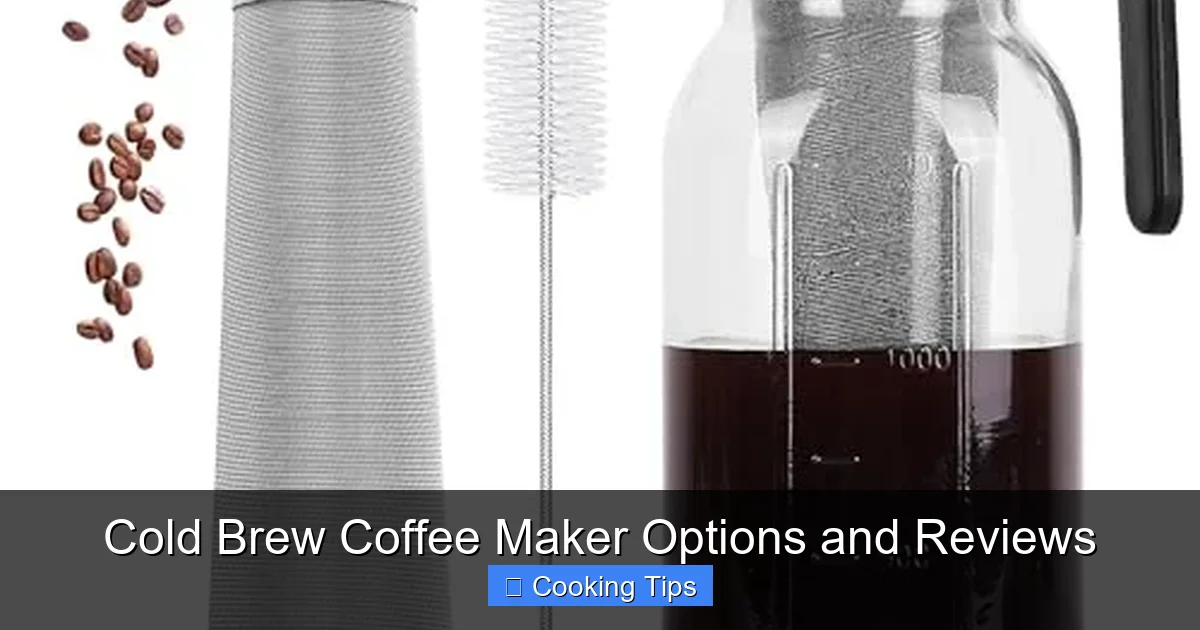
These are perhaps the most popular and budget-friendly option. They typically consist of a glass jar with a lid and an internal mesh filter basket.
How They Work:
You add coarse coffee grounds to the filter basket, place the basket inside the jar, add cold water, and secure the lid. After the brewing time (usually 12-24 hours in the refrigerator), you remove the filter basket containing the grounds, leaving you with cold brew concentrate.
Pros:
* Affordable: Many excellent options are available for under $40.
* Simple to Use: Very beginner-friendly with minimal steps.
* Compact: Take up minimal counter or fridge space.
* Easy to Clean: Most have removable, easy-to-wash filter baskets.
* Glass Construction: Preserves the pure taste of your coffee.
Cons:
* Manual Process: Requires you to be present to remove the filter.
* Potential for Sediment: If the filter isn’t fine enough or if grounds are too fine, you might get a little sediment.
* Limited Capacity: Usually makes about 1-2 liters of concentrate at a time.
Popular Brands/Models to Consider (2026):
* Oxo Good Grips Cold Brew Coffee Maker: Known for its durable construction and user-friendly design.
* Toddy Cold Brew System: A classic and highly regarded option that uses a felt filter for excellent clarity.
* Hario Cafe Press (for cold brew): While known for pour-over, Hario also offers immersion brewers.
2. French Press (Modified for Cold Brew)
Yes, you can use your existing French press for cold brew! It’s a fantastic way to repurpose a common coffee tool.
How It Works:
Add coarse coffee grounds to the bottom of your French press. Pour cold water over the grounds, stir gently, and place the lid on top (without pressing the plunger). Let it steep for 12-24 hours in the refrigerator. When ready, slowly press the plunger down to separate the grounds from the liquid.
Pros:
* No Extra Purchase: If you already own a French press, this is a free method!
* Simple: Uses a familiar brewing method.
* Good for Small Batches: Typically brews 1-3 cups of concentrate.
Cons:
* Metal Filter: The mesh filter of a French press can let through very fine particles, leading to sediment.
* Manual Process: Requires pressing the plunger.
* Not Specifically Designed for Cold Brew: May not yield the absolute smoothest results compared to dedicated cold brew makers.
3. Growler-Style Brewers
These makers often resemble a stylish glass growler with a built-in fine-mesh strainer. They offer a more aesthetically pleasing way to brew and store your cold brew.
How They Work:
Similar to cold brew jars, you place coffee grounds in the internal filter and add water. The entire unit steeps, and then you remove the filter, leaving ready-to-drink concentrate.
Pros:
* Attractive Design: Looks great on a kitchen counter or in the fridge.
* Integrated Filter: Convenient and effective.
* Good Capacity: Often come in 1-2 liter sizes.
Cons:
* Can be Pricier: Due to their design, they might cost more than basic jars.
* Material Limitation: Often exclusively glass, which is breakable.
Popular Brands/Models to Consider (2026):
* **Asobu Cold Brew Coffee Maker:** Known for its sleek, insulated designs.
Drip Cold Brew Coffee Makers
Drip cold brew makers use gravity to slowly pass cold water through coffee grounds, extracting the flavor over several hours. This method often uses more coffee grounds and takes longer than immersion.
1. Slow Drip Towers (Kyoto-Style Brewers)**
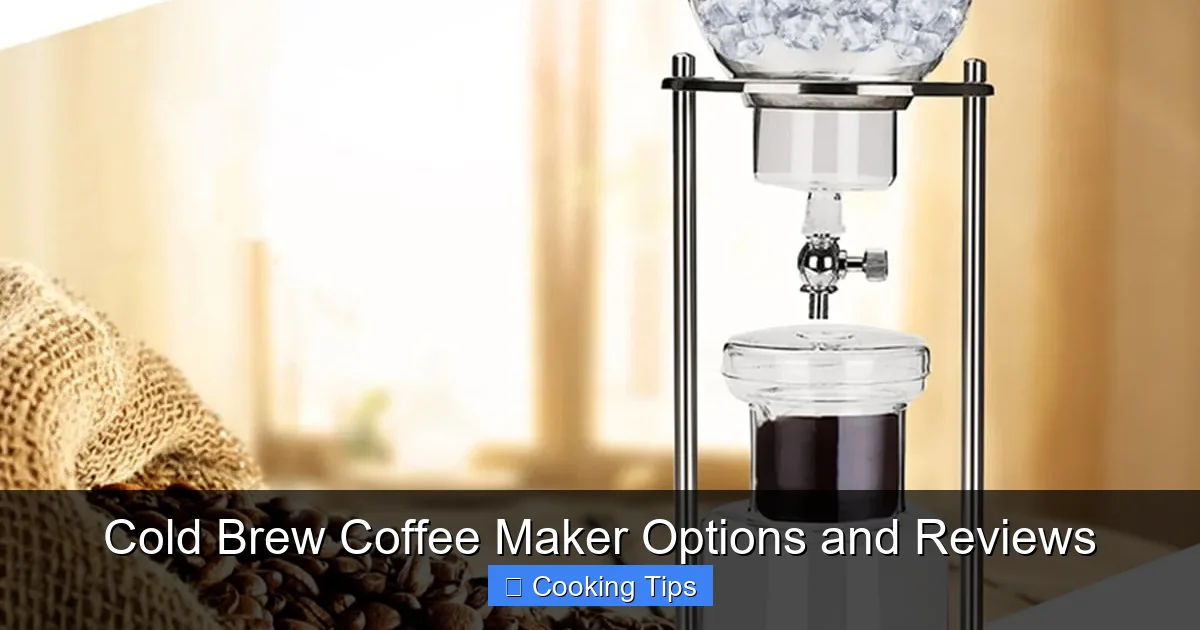
These are the showstoppers of the cold brew world, often resembling laboratory beakers stacked vertically. They are known for producing exceptionally clean and nuanced cold brew.
How They Work:
Water is placed in the top chamber and slowly drips, one drop at a time, through a bed of coffee grounds in the middle chamber and then into the collection vessel below. The slow, controlled drip rate is key to extracting the coffee’s flavors without bitterness.
Pros:
* Exceptional Flavor Clarity: Produces a very clean, smooth, and nuanced cup.
* Visually Appealing: A beautiful piece for any coffee connoisseur’s home.
* Customizable: Allows for precise control over drip rate and water-to-coffee ratio.
Cons:
* Expensive: These are the most costly cold brew makers, often starting at $100 and going much higher.
* Time-Consuming Brewing: Can take 3-12 hours depending on the desired strength and drip rate.
* Fiddly Setup: Requires careful attention to detail to set up correctly.
* Cleaning: Can be more involved due to multiple parts.
Popular Brands/Models to Consider (2026):
* **Yama Glass Cold Brew Drippers:** A premium brand with beautiful glass towers.
* **Ovalware Kyoto Style Cold Brew Coffee Maker:** Offers a more accessible price point for this style.
2. Automatic Drip Cold Brew Machines**
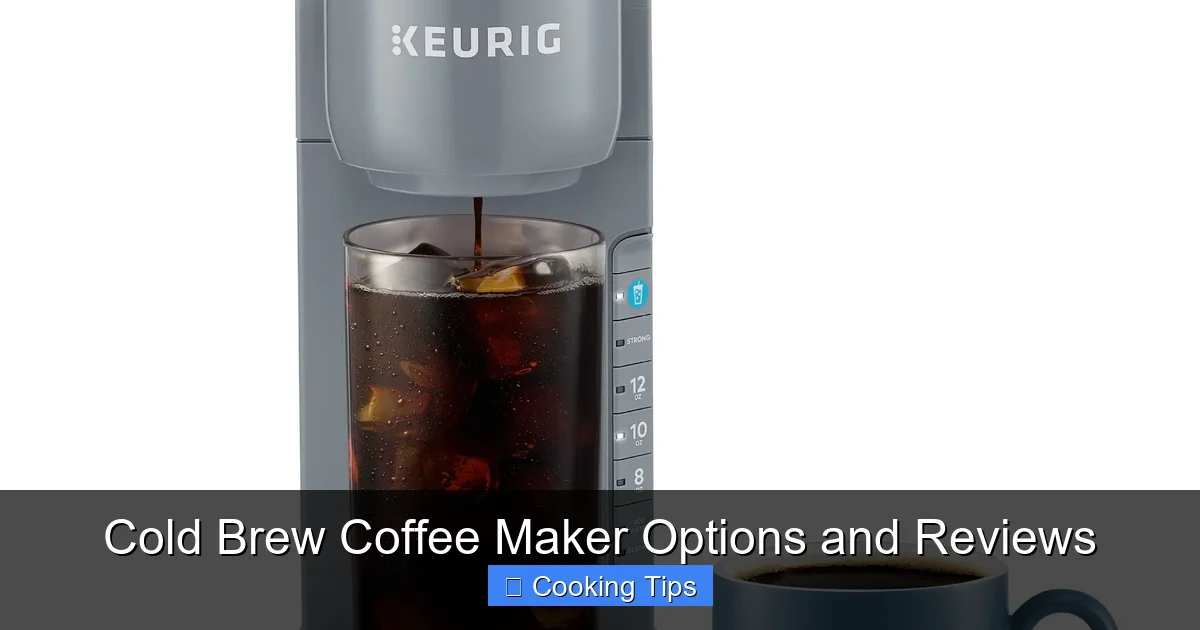
These are the most modern and convenient options, automating the entire drip process. They often use a pump to circulate water or have a system that mimics the slow drip.
How They Work:
You add coffee grounds and water to designated compartments. The machine then circulates the water over the grounds for a set period, typically several hours, to create cold brew concentrate. Some machines offer different strength settings and brew times.
Pros:
* Ultimate Convenience: Set it and forget it.
* Consistent Results: Automated process ensures repeatable quality.
* Faster Brewing (compared to manual drip): Some models can brew in as little as 30 minutes, though for true cold brew extraction, longer times are better.
* Sleek Designs: Often feature modern aesthetics.
Cons:
* Most Expensive: These are the priciest options, often $150+.
* Requires Electricity: Needs to be plugged in.
* Potential for Mechanical Issues: As with any appliance, there’s a risk of malfunctions.
* Cleaning Can Be Complex: Internal mechanisms may require more detailed cleaning.
Popular Brands/Models to Consider (2026):
* **Ninja Specialty Coffee Maker (with cold brew function):** While not solely a cold brew maker, many Ninjas offer excellent cold brew settings.
* **De’Longhi Automatic Cold Brew Maker:** A popular choice for convenience and quality.
Key Features to Consider When Buying
Visual guide about Cold Brew Coffee Maker Options and Reviews
Image source: kindcooking.com
Now that you know the types, let’s look at what to prioritize when choosing your cold brew coffee maker:
1. Filter Type
* Mesh Filters (Stainless Steel/Nylon): These are reusable and eco-friendly. They come in various mesh sizes. Finer mesh means less sediment but can be harder to clean.
* Paper Filters: Some drip systems use paper filters, which result in a very clean cup with no sediment but are an ongoing cost and not environmentally friendly.
* **Felt Filters:** Used in systems like the Toddy, these provide excellent filtration and a very clean brew, but require specific care and replacement.
2. Material of the Brewer
* Glass: Offers a neutral flavor profile, easy to see how clean it is, but is fragile.
* Stainless Steel: Durable, often insulated, and looks sleek, but can be heavier and more expensive.
* **BPA-Free Plastic:** Lightweight, affordable, and durable, but some people prefer to avoid plastic for their food and beverages.
3. Brewing Capacity
How much coffee do you typically drink?
* Single Serve/Small Batch (1-2 cups): Ideal for individuals or couples.
* Medium Batch (4-6 cups): Good for small families or if you drink a few cups daily.
* **Large Batch (8+ cups): Best for larger households, entertaining, or if you like to have cold brew on hand all week.
4. Ease of Use and Cleaning
This is crucial for daily use.
* **Simple Assembly:** Can you put it together quickly?
* **Dishwasher Safe Parts:** A huge time-saver!
* **Accessible Filter Basket:** Is it easy to remove and clean the grounds?
5. Lid and Storage**
* **Airtight Lid:** Essential for keeping your cold brew fresh in the refrigerator.
* **Integrated Handle/Spout:** For easy pouring.
Reviews of Top Cold Brew Coffee Makers (2026 Outlook)**
Visual guide about Cold Brew Coffee Maker Options and Reviews
Image source: m.media-amazon.com
Based on user feedback and industry trends leading into 2026, here are some highly-rated cold brew coffee makers:
1. Best Overall Immersion: Oxo Good Grips Cold Brew Coffee Maker
* Why it’s great: This maker consistently receives rave reviews for its thoughtful design. It features a double-filter system that significantly reduces sediment, a comfortable pouring spout, and an automatic shut-off for the filter when you lift it. It’s incredibly easy to use and clean.
* Capacity: 1.8 quarts (makes about 5-6 cups of concentrate).
* Material: BPA-free plastic carafe, stainless steel and plastic filter.
* Price Point: $$ (around $50)
2. Best Premium Immersion: Toddy Cold Brew System (Commercial or Home)**
* **Why it’s great:** A long-time favorite among baristas and home brewers alike. The Toddy uses a felt filter and paper filter combination to produce an exceptionally smooth and sediment-free concentrate. It’s incredibly effective but requires a bit more ritual for cleaning and filter preparation.
* **Capacity:** 1.5 quarts (makes about 4-5 cups of concentrate).
* **Material:** BPA-free plastic.
* **Price Point: $$ (around $40 for the home version)
3. Best Drip Tower: Yama Glass Cold Brew Coffee Maker (4-Cup)**
* **Why it’s great:** For those who appreciate the art of coffee making and the visual appeal, Yama towers are stunning. They produce an incredibly clear and delicate cold brew that highlights the subtle notes of high-quality beans. It’s a commitment in terms of time and cost, but the results are unparalleled for drip cold brew.
* Capacity: 4 cups (makes concentrate).
* Material: Borosilicate glass, ceramic, and stainless steel.
* Price Point: $$$$ (around $180-$250)
4. Best Automatic Convenience: De’Longhi Automatic Cold Brew Coffee Maker**
* **Why it’s great:** This machine takes the guesswork out of cold brew. You add your ingredients, select your brew strength, and let it do its thing. It’s fast, efficient, and delivers consistent results with minimal effort. Perfect for busy mornings.
* Capacity: Varies by model, typically 1-2 liters.
* **Material:** Primarily BPA-free plastic with stainless steel accents.
* **Price Point: $$$ (around $150-$200)
5. Best Budget-Friendly: Hario TCA-5 Water Drip Coffee Maker (for Cold Brew)**
* **Why it’s great:** While technically a slow-drip coffee maker, the Hario TCA-5 is often adapted for cold brewing. It’s a more affordable entry into the world of drip cold brew, offering a good balance of aesthetics and functionality. It requires manual water flow control but rewards you with a clean brew.
* Capacity: 5 cups.
* **Material:** Glass, ABS resin, and stainless steel.
* **Price Point: $$ (around $70-$90)
How to Make Cold Brew Coffee: A Simple Step-by-Step Guide (Using an Immersion Maker)**
* **Why it’s great:** This machine takes the guesswork out of cold brew. You add your ingredients, select your brew strength, and let it do its thing. It’s fast, efficient, and delivers consistent results with minimal effort. Perfect for busy mornings.
* Capacity: Varies by model, typically 1-2 liters.
* **Material:** Primarily BPA-free plastic with stainless steel accents.
* **Price Point: $$$ (around $150-$200)
5. Best Budget-Friendly: Hario TCA-5 Water Drip Coffee Maker (for Cold Brew)**
* **Why it’s great:** While technically a slow-drip coffee maker, the Hario TCA-5 is often adapted for cold brewing. It’s a more affordable entry into the world of drip cold brew, offering a good balance of aesthetics and functionality. It requires manual water flow control but rewards you with a clean brew.
* Capacity: 5 cups.
* **Material:** Glass, ABS resin, and stainless steel.
* **Price Point: $$ (around $70-$90)
How to Make Cold Brew Coffee: A Simple Step-by-Step Guide (Using an Immersion Maker)**
Let’s assume you’ve chosen a popular immersion-style cold brew coffee maker like the Oxo or a Toddy.
1. **Grind Your Beans:** Use a **coarse grind**. This is crucial to prevent over-extraction and sediment. A grind similar to coarse sea salt or breadcrumbs is ideal. If you only have a fine grinder, pulse it briefly to achieve a coarse consistency.
* *Tip:* Pre-ground coffee is usually too fine for cold brew. Invest in a burr grinder for the best results.
2. **Add Coffee Grounds to the Filter:** Place your coarse coffee grounds into the designated filter basket of your cold brew maker.
* *Ratio:* A good starting point is a 1:4 ratio of coffee to water (by weight or volume). For example, 1 cup of coffee grounds to 4 cups of water. You can adjust this based on your preferred strength.
3. **Add Cold Water:** Pour cold or room-temperature filtered water over the coffee grounds in the filter basket. Make sure all the grounds are saturated.
* *Tip:* Using filtered water will result in a cleaner-tasting brew.
4. **Steep:** Place the lid on the brewer and let it steep. The most common recommendation is to steep for **12 to 24 hours**.
* *Where:* Refrigerating the brewer during steeping helps control the extraction and is generally recommended for safety. However, some prefer room temperature for the first few hours before refrigerating.
* *Experiment:* Shorter steeping times will yield a milder brew, while longer times will result in a stronger, more concentrated flavor.
5. **Remove the Filter:** Once the steeping time is complete, carefully remove the filter basket containing the coffee grounds. Let it drain for a minute or two to get all the concentrate.
* *Discard Grounds:* Dispose of the used grounds (they make great compost!).
6. **Dilute and Serve:** You now have cold brew concentrate. It’s very strong! Dilute it with water, milk, or your preferred liquid. A common starting dilution is 1:1 (equal parts concentrate and water/milk).
* *Serve:* Pour over ice and enjoy!
Troubleshooting Common Cold Brew Issues
* **Coffee is too weak:**
* *Solution:* Use more coffee grounds or steep for a longer period. Ensure your grind is coarse enough (too coarse might lead to weak flavor).
* **Coffee is too bitter:**
* *Solution:* Your grind might be too fine, leading to over-extraction. Try a coarser grind. Also, reduce steeping time. Ensure you are using cold water throughout the process.
* **Too much sediment:**
* *Solution:* Use a coarser grind. If using a mesh filter, consider a finer mesh or double-filtering (though this can remove some oils that contribute to flavor). Some makers have secondary filters designed to catch fine particles.
* **Off-flavor:**
* *Solution:* Ensure your brewer is thoroughly cleaned after each use. Use fresh, high-quality coffee beans and filtered water.
Conclusion
Choosing the right cold brew coffee maker in 2026 is an exciting step towards enjoying exceptional coffee at home. Whether you’re drawn to the simplicity and affordability of immersion jars, the visual artistry of drip towers, or the ultimate convenience of automatic machines, there’s a perfect brewer waiting for you.
Consider your brewing habits, your budget, and the taste profile you desire. With a little research and by following the tips in this guide, you’ll be well on your way to crafting delicious, smooth, and invigorating cold brew coffee that rivals your favorite café. Happy brewing!
