

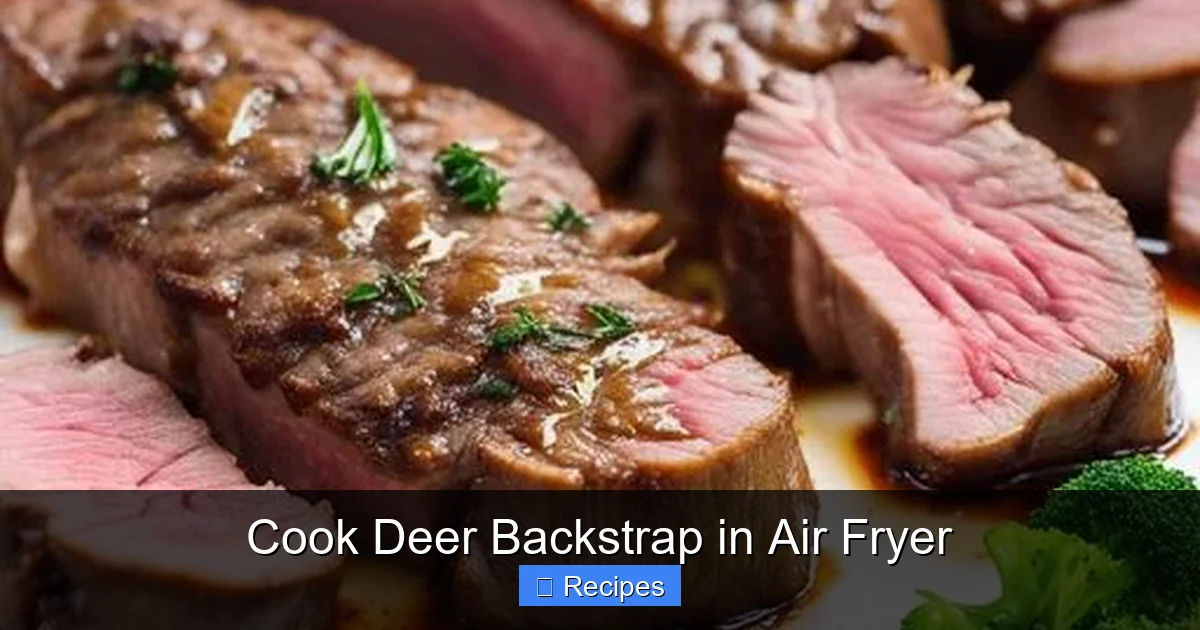
Cooking deer backstrap in an air fryer is a fast, healthy, and delicious way to enjoy this lean, flavorful cut of venison. With minimal prep and no mess, you can achieve restaurant-quality results at home using simple seasonings and the right technique.
If you’re a hunter or a fan of wild game, you know that deer backstrap is the crown jewel of the harvest. It’s lean, tender, and packed with rich, natural flavor—but it can be tricky to cook just right. Overcook it, and you’re left with dry, tough meat. Undercook it, and you miss out on that perfect balance of juiciness and texture. That’s where the air fryer comes in.
The air fryer has revolutionized home cooking, offering crispy results with little to no oil. But can it handle delicate cuts like deer backstrap? Absolutely. In fact, the air fryer’s rapid circulation of hot air creates a beautiful crust on the outside while keeping the inside moist and tender. It’s one of the best tools for cooking venison quickly and evenly, especially when you’re short on time or don’t want to fire up the grill.
In this guide, we’ll walk you through everything you need to know to cook deer backstrap in an air fryer—from prep and seasoning to timing and serving. Whether you’re a seasoned cook or new to game meat, you’ll find this method simple, reliable, and incredibly tasty.
Key Takeaways
- Deer backstrap is one of the most tender cuts of venison, making it ideal for quick-cooking methods like air frying.
- Air frying preserves moisture and flavor while creating a deliciously seared exterior without added oil.
- Marinating enhances tenderness and taste—even a short 30-minute soak in a simple marinade makes a big difference.
- Cooking time is short—usually 8 to 12 minutes—so timing and temperature are crucial to avoid overcooking.
- Use a meat thermometer for perfect doneness; aim for 130°F (54°C) internal temperature for medium-rare.
- Let the meat rest after cooking to lock in juices and ensure every bite is tender and flavorful.
- Pair with simple sides like roasted vegetables or mashed potatoes for a complete, satisfying meal.
📑 Table of Contents
Why Cook Deer Backstrap in an Air Fryer?
The air fryer isn’t just for fries and chicken wings. Its precision and efficiency make it a great choice for cooking lean meats like deer backstrap. Unlike traditional frying or grilling, the air fryer uses convection heating to cook food evenly from all sides. This means you get that coveted golden-brown crust without the risk of flare-ups or uneven cooking.
Another advantage? Cleanup is a breeze. No greasy stovetop or grill grates to scrub. Just pop the basket out, give it a quick rinse, and you’re done. Plus, because the air fryer cooks food faster than an oven, you save time without sacrificing quality.
And let’s talk about health. Deer meat is naturally low in fat and high in protein, making it a nutritious choice. By using the air fryer, you avoid adding extra oils or butter, keeping the dish lean and heart-healthy. It’s a win-win for flavor and wellness.
Choosing and Preparing Your Deer Backstrap
Not all backstraps are created equal. The quality of your meat starts with how it’s handled after the hunt. Ideally, the backstrap should be removed cleanly, trimmed of silver skin and excess fat, and stored properly to prevent spoilage.
When selecting your cut, look for a firm, reddish piece of meat with minimal marbling—this is normal for venison. Avoid any that smell overly gamey or have a slimy texture. A mild, earthy scent is perfectly fine and expected.
Trimming and Cleaning
Before cooking, inspect the backstrap for any remaining silver skin or connective tissue. These parts don’t break down during cooking and can make the meat chewy. Use a sharp knife to carefully remove them. Rinse the meat under cold water and pat it dry with paper towels. Moisture on the surface can prevent proper browning, so drying is a crucial step.
Slicing for Even Cooking
Backstraps can vary in thickness, which affects cooking time. For best results, slice the meat into 1-inch thick medallions or leave it whole if it’s not too thick. If you’re cooking a whole strip, consider scoring the surface lightly with a knife to help it cook evenly and allow seasonings to penetrate.
Marinating for Maximum Flavor and Tenderness
Because deer meat is so lean, it benefits greatly from a good marinade. A marinade not only adds flavor but also helps tenderize the meat and keep it moist during cooking.
Simple Marinade Recipe
Here’s a quick and effective marinade you can whip up in minutes:
- 1/4 cup olive oil
- 2 tablespoons soy sauce
- 2 tablespoons balsamic vinegar
- 2 cloves garlic, minced
- 1 teaspoon black pepper
- 1 teaspoon dried rosemary or thyme
Mix all ingredients in a bowl or zip-top bag, add the backstrap, and let it marinate for at least 30 minutes—or up to 4 hours in the fridge. Avoid marinating too long, as the acidity can start to break down the meat and make it mushy.
No Time to Marinate?
If you’re in a hurry, a dry rub works too. Combine salt, pepper, garlic powder, onion powder, and a pinch of smoked paprika. Rub it generously over the meat and let it sit for 10–15 minutes before cooking. While not as effective as a liquid marinade, it still boosts flavor and helps form a nice crust.
Seasoning and Air Fryer Setup
Once your backstrap is prepped and marinated, it’s time to season and set up your air fryer. Keep seasonings simple to let the natural flavor of the venison shine.
Recommended Seasonings
A classic blend of salt, black pepper, and garlic powder is all you need. For a little extra depth, add a pinch of dried thyme or rosemary. If you like a bit of heat, a dash of cayenne or red pepper flakes works well.
Air Fryer Temperature and Rack Position
Preheat your air fryer to 390°F (200°C) for optimal searing. Place the backstrap in a single layer in the basket, leaving space between pieces for air circulation. If your air fryer has multiple rack levels, use the middle or lower rack to prevent over-browning on top.
Cooking Time and Temperature Guide
Timing is everything when cooking deer backstrap. Because it’s so lean, it cooks quickly and can go from perfect to overcooked in minutes.
Recommended Cooking Times
For 1-inch thick slices:
- Medium-rare: 8–10 minutes at 390°F (200°C)
- Medium: 10–12 minutes
- Medium-well: 12–14 minutes (not recommended—can dry out easily)
Use a meat thermometer to check the internal temperature. For medium-rare, aim for 130°F (54°C). The temperature will rise a few degrees as the meat rests, so remove it when it reaches about 125°F (52°C).
Flipping and Monitoring
Flip the backstrap halfway through cooking to ensure even browning. Keep an eye on it, especially during the last few minutes. Air fryers vary in power, so your cook time may differ slightly.
Resting and Slicing for Best Results
Once your backstrap is cooked, resist the urge to slice it immediately. Letting the meat rest is one of the most important steps in cooking any protein.
Why Resting Matters
When meat cooks, the juices are pushed toward the center. Resting allows those juices to redistribute, resulting in a more tender and flavorful bite. For deer backstrap, rest for at least 5–10 minutes before slicing.
How to Slice
Use a sharp knife to cut the backstrap against the grain into 1/2-inch thick slices. This ensures maximum tenderness. Serve immediately while warm.
Serving Suggestions and Pairings
Deer backstrap pairs beautifully with a variety of sides. Keep it simple to let the meat be the star.
Recommended Sides
- Roasted Brussels sprouts or carrots
- Creamy mashed potatoes or garlic mashed cauliflower
- Wild rice pilaf or quinoa salad
- Fresh green salad with a balsamic vinaigrette
For a complete meal, consider serving with a glass of red wine like Pinot Noir or Cabernet Franc, which complement the rich flavor of venison.
Tips for Success
- Don’t overcrowd the basket—cook in batches if needed.
- Use a meat thermometer to avoid guesswork.
- Preheat the air fryer for consistent results.
- Avoid opening the basket too often—it drops the temperature and extends cook time.
- Save the drippings to make a quick pan sauce with butter, garlic, and a splash of broth.
Conclusion
Cooking deer backstrap in an air fryer is a game-changer for anyone who loves wild game but wants a quick, easy, and delicious preparation method. With the right prep, seasoning, and timing, you can enjoy tender, juicy venison that rivals any restaurant dish—all from the comfort of your kitchen.
Whether you’re cooking for a special occasion or just a weeknight dinner, this method delivers consistent results every time. So fire up your air fryer, grab that backstrap, and get ready to impress your family and friends with a meal that’s as healthy as it is flavorful.
Frequently Asked Questions
Can you cook frozen deer backstrap in an air fryer?
It’s not recommended to cook frozen deer backstrap directly in the air fryer. Thaw it completely in the refrigerator first to ensure even cooking and food safety. Cooking from frozen can lead to uneven results and potential overcooking on the outside while the inside remains undercooked.
How do I prevent deer backstrap from drying out?
To keep deer backstrap moist, avoid overcooking by using a meat thermometer and aiming for medium-rare. Marinating beforehand and letting the meat rest after cooking also help retain juiciness.
What’s the best way to reheat leftover deer backstrap?
Reheat gently in the air fryer at 300°F (150°C) for 3–5 minutes, or in a covered skillet with a splash of broth to add moisture. Avoid the microwave, as it can make the meat tough.
Can I use the same method for other venison cuts?
Yes, this method works well for other tender cuts like tenderloin or hindquarter steaks. Just adjust cooking time based on thickness and desired doneness.
Do I need to add oil to the air fryer?
No, the air fryer doesn’t require added oil. However, lightly brushing the meat with oil before seasoning can help promote browning and crispiness.
What if my air fryer runs hot or cold?
Every air fryer is different. Use a meat thermometer to verify doneness, and consider reducing or increasing cook time by 1–2 minutes based on your model’s performance.
