

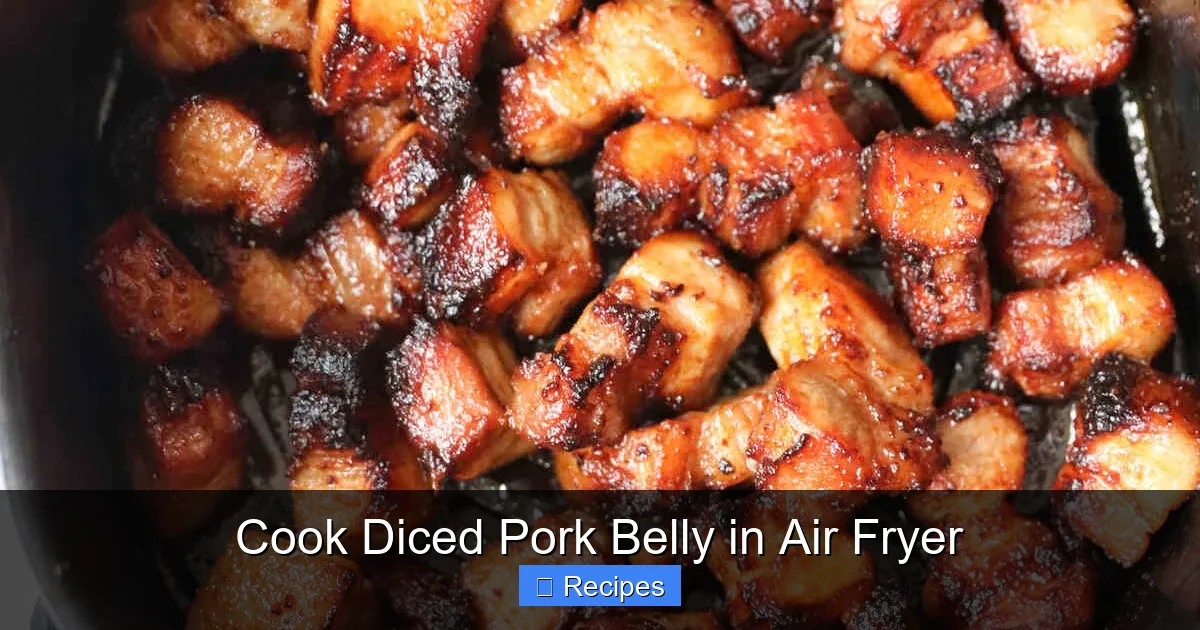
Cooking diced pork belly in an air fryer is a game-changer for busy home cooks. It delivers crispy, juicy results with minimal oil and effort. This method saves time, reduces mess, and still gives you that rich, savory flavor you love.
If you’ve ever tried cooking pork belly on the stove or in the oven, you know it can be messy, time-consuming, and inconsistent. The fat renders slowly, the skin might not crisp up, and you’re left with a greasy pan to clean. But what if there was a faster, cleaner, and equally delicious way? Enter the air fryer—a kitchen gadget that’s revolutionized how we cook everything from fries to chicken wings. And yes, it works wonders for diced pork belly too.
Diced pork belly is rich, flavorful, and packed with marbling that turns melt-in-your-mouth tender when cooked right. When you cook diced pork belly in an air fryer, the hot circulating air crisps the exterior while keeping the inside juicy. It’s like getting the best of both worlds: the satisfying crunch of fried pork with the ease of modern cooking. Plus, you skip the oil splatter and long cook times. Whether you’re making a quick dinner or prepping ingredients for a bigger dish, this method is a total win.
Key Takeaways
- Perfectly crispy texture: The air fryer circulates hot air to crisp up the fat and skin without deep frying.
- Healthier than frying: Uses up to 70% less oil, making it a lighter option without sacrificing taste.
- Quick and convenient: Cooks in under 25 minutes, ideal for weeknight dinners or meal prep.
- Easy cleanup: No splattering oil or greasy stovetops—just wipe down the basket.
- Versatile ingredient: Use cooked diced pork belly in stir-fries, salads, tacos, or rice bowls.
- No thawing needed: You can cook frozen diced pork belly directly in the air fryer with adjusted timing.
- Consistent results: Air frying ensures even cooking every time, avoiding burnt or undercooked spots.
📑 Table of Contents
Why Use an Air Fryer for Diced Pork Belly?
The air fryer isn’t just for frozen snacks—it’s a powerhouse for cooking fresh meats too. When it comes to diced pork belly, the air fryer offers several advantages over traditional methods. First, it cooks food quickly and evenly. The rapid air circulation ensures that every piece gets exposed to heat from all sides, so you don’t end up with some chunks burnt and others undercooked.
Another big plus? Health. Pork belly is naturally fatty, but you don’t need to add extra oil when using an air fryer. The fat renders out during cooking, basting the meat from within. This means you get that rich, savory flavor without the guilt of deep frying. Plus, cleanup is a breeze. No greasy stovetop or oven to scrub—just remove the basket, give it a quick wash, and you’re done.
Air Fryer vs. Oven vs. Stovetop
Let’s compare. In the oven, diced pork belly can take 45 minutes to an hour to crisp up, and you often need to flip it halfway through. On the stovetop, it’s faster but messy—oil splatters everywhere, and it’s easy to overcook or burn. The air fryer cuts the time in half and keeps your kitchen clean. For example, while oven-roasted pork belly might need 50 minutes at 375°F (190°C), the air fryer does the job in just 20–25 minutes at 400°F (200°C).
Ingredients and Equipment You’ll Need
You don’t need fancy tools or hard-to-find ingredients to cook diced pork belly in an air fryer. Here’s what you’ll need:
- 1 pound (450g) diced pork belly: Look for pieces with a good mix of meat and fat. You can buy pre-diced or cut it yourself from a slab.
- Salt and pepper: Basic seasoning goes a long way. Add garlic powder or smoked paprika for extra flavor.
- Optional marinade: A splash of soy sauce, honey, or rice vinegar can add depth. Marinate for 30 minutes if you have time.
- Air fryer: Any model works—basket-style or oven-style. Just make sure it’s big enough to hold the pork in a single layer.
- Tongs or silicone spatula: For flipping the pieces halfway through cooking.
Choosing the Right Pork Belly
Not all pork belly is created equal. For best results, choose fresh, high-quality cuts with even marbling. Avoid overly lean pieces—fat is what gives pork belly its signature richness. If you’re using frozen diced pork belly, no need to thaw. Just add a few extra minutes to the cook time and shake the basket once or twice.
Step-by-Step Cooking Instructions
Now for the fun part—cooking! Follow these simple steps for perfectly crispy diced pork belly every time.
Step 1: Prep the Pork
Pat the diced pork belly dry with paper towels. Moisture is the enemy of crispiness, so this step is crucial. If you’re marinating, do it now for 30 minutes to an hour. Otherwise, just season generously with salt, pepper, and any other spices you like.
Step 2: Preheat the Air Fryer
Preheat your air fryer to 400°F (200°C) for 3–5 minutes. Preheating ensures even cooking from the start. While it’s heating, arrange the pork pieces in a single layer in the basket. Don’t overcrowd—leave a little space between each piece so the hot air can circulate.
Step 3: Cook and Flip
Cook the pork for 10 minutes. Then, use tongs to flip each piece or shake the basket gently. Cook for another 8–12 minutes, depending on the size of your dice. Smaller pieces will cook faster; larger ones may need a bit more time. You’ll know it’s done when the edges are golden brown and crispy, and the internal temperature reaches 145°F (63°C).
Step 4: Rest and Serve
Let the pork rest for 2–3 minutes after cooking. This allows the juices to redistribute, keeping the meat tender. Serve hot as a snack, or use it in your favorite dishes.
Tips for Perfect Results
Even with a simple recipe, a few tricks can take your diced pork belly from good to great.
Don’t Overcrowd the Basket
Crowding prevents proper airflow, leading to uneven cooking. If you have a lot of pork, cook in batches. It’s better to take a few extra minutes than end up with soggy, undercooked pieces.
Shake or Flip Halfway
Flipping ensures all sides get crispy. If you don’t flip, one side might stay soft while the other burns. A quick shake of the basket works too—just be careful not to spill hot oil.
Use a Meat Thermometer
While visual cues help, a thermometer guarantees safety and doneness. Insert it into the thickest piece. At 145°F (63°C), the pork is safe to eat and still juicy.
Save the Rendered Fat
Don’t toss that golden liquid in the basket! Pork fat is flavorful and can be used for roasting vegetables or frying eggs. Strain it through a fine mesh sieve and store in the fridge for up to a week.
Serving Suggestions and Recipe Ideas
Once your diced pork belly is cooked, the possibilities are endless. Here are a few delicious ways to use it:
- Stir-fries: Toss with bok choy, snap peas, and soy sauce for a quick Asian-inspired meal. Pair with rice or noodles.
- Tacos or Banh Mi: Use as a protein in tacos with pickled onions, cilantro, and lime. Or stuff into a banh mi sandwich with cucumber and sriracha mayo.
- Salads: Add warm pork belly to a kale or arugula salad with apples, walnuts, and a maple vinaigrette.
- Rice bowls: Serve over jasmine rice with steamed broccoli, a fried egg, and a drizzle of hoisin sauce.
- Snack platter: Enjoy on its own with a side of kimchi or pickled vegetables for a savory appetizer.
Pairing with Other Air Fryer Dishes
Since the air fryer is so versatile, why not make a full meal in one go? While the pork belly cooks, you can prepare crispy Brussels sprouts or golden potato wedges in a separate basket or during a second batch. This saves time and keeps everything hot and fresh.
Common Mistakes to Avoid
Even simple recipes can go wrong if you’re not careful. Here are a few pitfalls to watch out for:
- Skipping the dry step: Wet pork won’t crisp. Always pat it dry before cooking.
- Cooking at too low a temperature: You need high heat to render fat and crisp the skin. Stick to 400°F (200°C).
- Not flipping the pieces: Uneven cooking leads to some pieces being burnt and others undercooked.
- Using too much oil: Pork belly has plenty of fat—adding oil can make it greasy instead of crispy.
- Ignoring cook time variations: Smaller dice cook faster. Adjust timing based on size.
How to Fix Undercooked or Overcooked Pork
If your pork is still soft after cooking, return it to the air fryer for 3–5 more minutes. If it’s too crispy or burnt, don’t panic—just chop it finer and use it as a topping for soups or salads where texture matters less.
Conclusion
Cooking diced pork belly in an air fryer is one of those kitchen hacks that feels almost too good to be true. It’s fast, easy, and delivers restaurant-quality results with minimal effort. Whether you’re a busy parent, a meal prepper, or just someone who loves good food, this method is worth trying. You’ll get crispy, juicy pork belly every time—without the mess or guilt of frying.
So next time you’re at the grocery store, grab a pack of diced pork belly and fire up your air fryer. In less than 30 minutes, you’ll have a flavorful, versatile ingredient ready to elevate any dish. And if you’re looking for more air fryer inspiration, check out our guide on how to cook pork chops in air fryer or how to cook ribs in air fryer for more delicious pork recipes. Happy cooking!
Frequently Asked Questions
Can I cook frozen diced pork belly in an air fryer?
Yes, you can cook frozen diced pork belly directly in the air fryer. Increase the cook time by 5–7 minutes and shake the basket once or twice during cooking to ensure even heating.
Do I need to add oil when cooking diced pork belly in an air fryer?
No, you don’t need to add oil. Pork belly has enough natural fat that renders during cooking, creating a crispy exterior without extra oil.
How do I know when the pork belly is fully cooked?
The pork is done when it reaches an internal temperature of 145°F (63°C) and the edges are golden brown and crispy. Use a meat thermometer for accuracy.
Can I marinate the pork belly before air frying?
Absolutely! Marinating for 30 minutes to an hour with soy sauce, garlic, or honey adds extra flavor. Just pat it dry before cooking to ensure crispiness.
What’s the best way to reheat leftover air-fried pork belly?
Reheat in the air fryer at 350°F (175°C) for 3–5 minutes. This restores crispiness better than a microwave, which can make it soggy.
Can I use this method for other cuts of pork?
Yes! This technique works well for other fatty pork cuts. For example, try it with pork tenderloin or pork loins, adjusting time and temperature as needed.
