

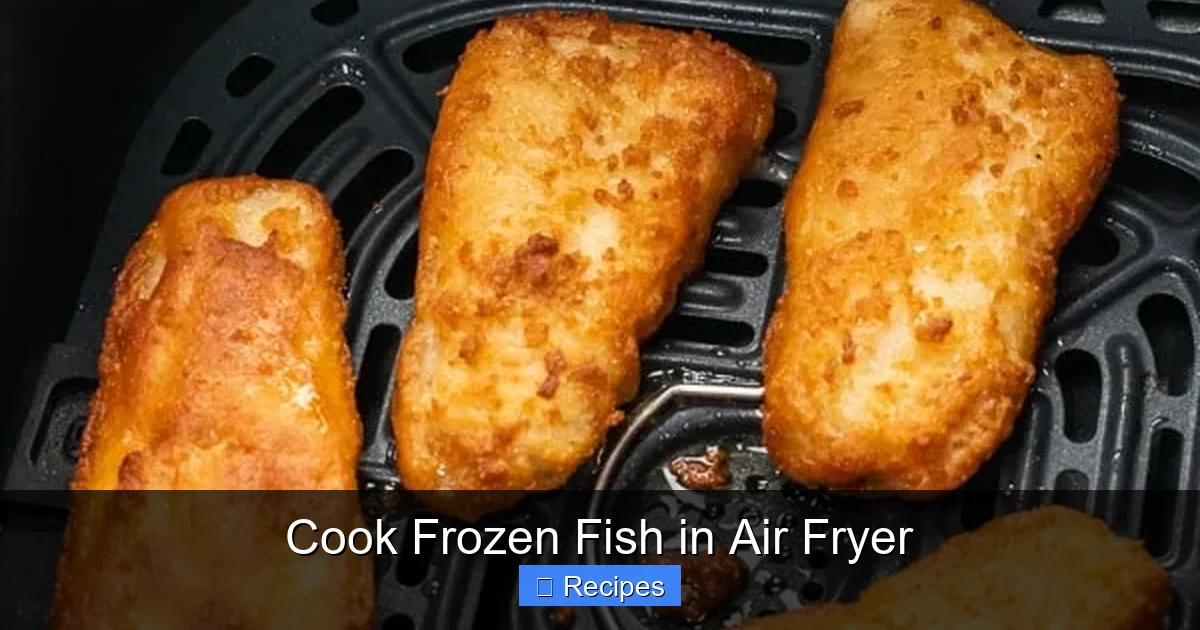
Cooking frozen fish in an air fryer is fast, easy, and delivers deliciously crispy results without thawing. With the right temperature and timing, you can enjoy restaurant-quality fish fillets, sticks, or nuggets in under 20 minutes—no oil overload or soggy texture.
Key Takeaways
- No thawing needed: You can cook frozen fish directly in the air fryer, saving time and reducing prep work.
- Crispy outside, tender inside: The air fryer’s circulating hot air creates a golden, crunchy coating while keeping the fish moist.
- Perfect for busy weeknights: Most frozen fish cooks in 12–18 minutes, making it ideal for quick dinners.
- Healthier than deep frying: Air frying uses little to no oil, cutting down on calories and fat while preserving flavor.
- Works with most types: From breaded cod to salmon patties, the air fryer handles a wide variety of frozen fish products.
- Easy cleanup: Non-stick baskets and minimal splatter mean less mess and faster washing up.
- Seasoning boosts flavor: A light spray of oil and your favorite spices can elevate plain frozen fish into a tasty meal.
📑 Table of Contents
Why Cook Frozen Fish in an Air Fryer?
Let’s face it—life gets busy. Between work, family, and everything in between, who has time to thaw fish for dinner? That’s where the air fryer shines. Cooking frozen fish in an air fryer isn’t just convenient; it’s also one of the healthiest and tastiest ways to enjoy seafood at home. Unlike traditional frying, which drenches food in oil, air frying uses rapid hot air circulation to crisp up the outside while locking in moisture inside. The result? Golden, flaky fish that tastes like it came straight from a diner—but without the guilt.
Another major perk? Speed. Most frozen fish fillets or sticks are ready in under 20 minutes. No waiting for the oven to preheat or dealing with greasy stovetops. Plus, cleanup is a breeze thanks to non-stick air fryer baskets and minimal splatter. Whether you’re feeding picky kids or trying to eat healthier, air-fried frozen fish checks all the boxes: fast, flavorful, and fuss-free.
What Types of Frozen Fish Work Best?
Not all frozen fish are created equal—but the good news is, most store-bought varieties work beautifully in the air fryer. Breaded or battered options like fish sticks, popcorn shrimp, or crab cakes get extra crispy thanks to the air fryer’s intense heat. Even unbreaded fillets such as salmon, tilapia, or cod can be cooked from frozen with excellent results, especially if you give them a light coating of oil and seasoning.
Breaded vs. Unbreaded Fish
Breaded fish tends to crisp up faster and more evenly because the coating absorbs heat quickly. Popular choices include frozen fish sticks, breaded cod fillets, or tempura-style shrimp. These usually require no extra oil—just place them in the basket and cook. On the other hand, unbreaded fillets (like plain salmon or tilapia) benefit from a quick spray of olive oil and a pinch of salt, pepper, or garlic powder to enhance browning and flavor.
Wild-Caught vs. Farm-Raised
Both wild-caught and farm-raised frozen fish work well in the air fryer. However, wild-caught fish often has a firmer texture and richer flavor, which some prefer. Farm-raised options tend to be milder and more consistent in size—great for even cooking. Regardless of origin, always check the packaging for added sodium or preservatives if you’re watching your intake.
Step-by-Step Guide to Cooking Frozen Fish in an Air Fryer
Cooking frozen fish in an air fryer is surprisingly simple, but a few key steps ensure perfect results every time. First, always preheat your air fryer if your model recommends it—many newer units do this automatically, but older models may need 3–5 minutes at 400°F (200°C). This helps create that initial sear that locks in moisture and jumpstarts crisping.
Prep Your Fish
There’s no need to thaw! Place your frozen fish directly into the air fryer basket in a single layer. Avoid overcrowding—this ensures hot air can circulate freely around each piece. If you’re cooking unbreaded fillets, lightly spray both sides with cooking oil (avocado or olive oil work great) and season with your favorite spices. For breaded items, you can skip the oil unless the package instructions suggest otherwise.
Set the Right Temperature and Time
Most frozen fish cooks best at 375°F to 400°F (190°C–200°C). Here’s a quick reference:
- Fish sticks or nuggets: 10–12 minutes at 400°F
- Breaded fillets (cod, tilapia): 12–15 minutes at 380°F
- Unbreaded salmon or trout: 14–18 minutes at 375°F
- Shrimp or crab cakes: 8–10 minutes at 400°F
Flip halfway through cooking for even browning. Use a meat thermometer to check doneness—fish should reach an internal temperature of 145°F (63°C).
Tips for Perfectly Crispy Results
Achieving that ideal crunch without drying out the fish comes down to a few pro tips. First, never overcrowd the basket. Air fryers rely on airflow, so stacking or crowding pieces leads to steaming instead of crisping. If you’re cooking a large batch, cook in two rounds—it’s worth the extra few minutes.
Use a Light Oil Spray
Even breaded fish benefits from a light mist of oil before cooking. This helps the coating brown evenly and prevents it from becoming pale or rubbery. For unbreaded fillets, oil is essential—it promotes caramelization and keeps the fish from sticking to the basket.
Don’t Skip the Flip
Flipping your fish halfway through ensures both sides get equally crispy. Use tongs or a spatula to gently turn each piece. If you’re worried about breaking delicate fillets, consider using a small mesh liner or parchment paper perforated with holes (just make sure it’s air fryer-safe).
Season After Cooking for Extra Flavor
While pre-seasoning works, adding a final sprinkle of lemon zest, fresh herbs, or a dash of hot sauce right after cooking elevates the dish. A squeeze of fresh lemon juice not only brightens the flavor but also helps cut through any residual fishiness.
Common Mistakes to Avoid
Even seasoned cooks can run into issues when air frying frozen fish. One of the biggest mistakes? Cooking at too high a temperature too quickly. While 400°F works for many items, delicate fish like salmon can dry out if exposed to intense heat for too long. Stick to 375°F–380°F for thicker, unbreaded fillets.
Another pitfall is not checking the fish early enough. Overcooked fish becomes tough and rubbery. Start checking at the lower end of the recommended time—especially if you’re using a smaller air fryer or cooking a thin fillet. And remember: it’s better to slightly undercook and let residual heat finish the job than to overdo it.
Lastly, avoid using wet marinades or heavy sauces before air frying. These can cause splattering and prevent proper crisping. If you want bold flavor, opt for dry rubs or apply sauces after cooking.
Pairing and Serving Suggestions
Air-fried frozen fish isn’t just a main course—it’s the foundation of a delicious, balanced meal. Serve it alongside crispy air-fried fries for a classic fish-and-chips experience, or pair with steamed veggies and a grain like quinoa or rice. For a lighter option, top with a fresh salad or coleslaw.
If you’re feeding kids, try making homemade tartar sauce with Greek yogurt, pickle relish, and a touch of lemon. Or go global with a spicy sriracha mayo or zesty mango salsa. Leftovers? Turn them into fish tacos the next day—just reheat in the air fryer for 3–4 minutes to restore crispness.
Conclusion
Cooking frozen fish in an air fryer is a game-changer for anyone who wants quick, healthy, and delicious meals without the hassle. With minimal prep, no thawing required, and results that rival deep-fried versions, it’s no wonder this method has become a kitchen staple. Whether you’re whipping up fish sticks for dinner or experimenting with seasoned salmon fillets, your air fryer delivers consistent, crispy perfection every time.
So next time you’re staring into the freezer wondering what to make, grab that bag of frozen fish and fire up your air fryer. In less than 20 minutes, you’ll have a satisfying, restaurant-quality meal that’s easy on your schedule—and your waistline. For more air fryer inspiration, check out our guide on how to cook fresh fish in an air fryer or explore what other frozen foods work well in this versatile appliance.
Frequently Asked Questions
Can you cook frozen fish in an air fryer without thawing?
Yes! One of the biggest advantages of using an air fryer is that you can cook frozen fish directly from the freezer. No thawing needed—just place the fish in the basket and follow the recommended time and temperature.
What temperature should I use to cook frozen fish in an air fryer?
Most frozen fish cooks best between 375°F and 400°F (190°C–200°C). Breaded items like fish sticks can handle 400°F, while thicker, unbreaded fillets like salmon do better at 375°F to prevent drying out.
How long does it take to cook frozen fish in an air fryer?
Cooking time varies by type: fish sticks take 10–12 minutes, breaded fillets 12–15 minutes, and unbreaded salmon 14–18 minutes. Always flip halfway and check for an internal temperature of 145°F.
Do I need to add oil when cooking frozen fish in an air fryer?
For breaded fish, usually not—the coating contains enough fat to crisp up. For unbreaded fillets, a light spray of oil helps with browning and prevents sticking.
Can I cook multiple types of frozen fish at once?
It’s best to cook similar items together to ensure even cooking. If you must mix types, choose ones with similar thickness and adjust timing accordingly—or cook in batches.
Is air-fried frozen fish healthier than deep-fried?
Absolutely. Air frying uses up to 80% less oil than deep frying, significantly reducing calories and fat while still delivering a crispy, satisfying texture.
