

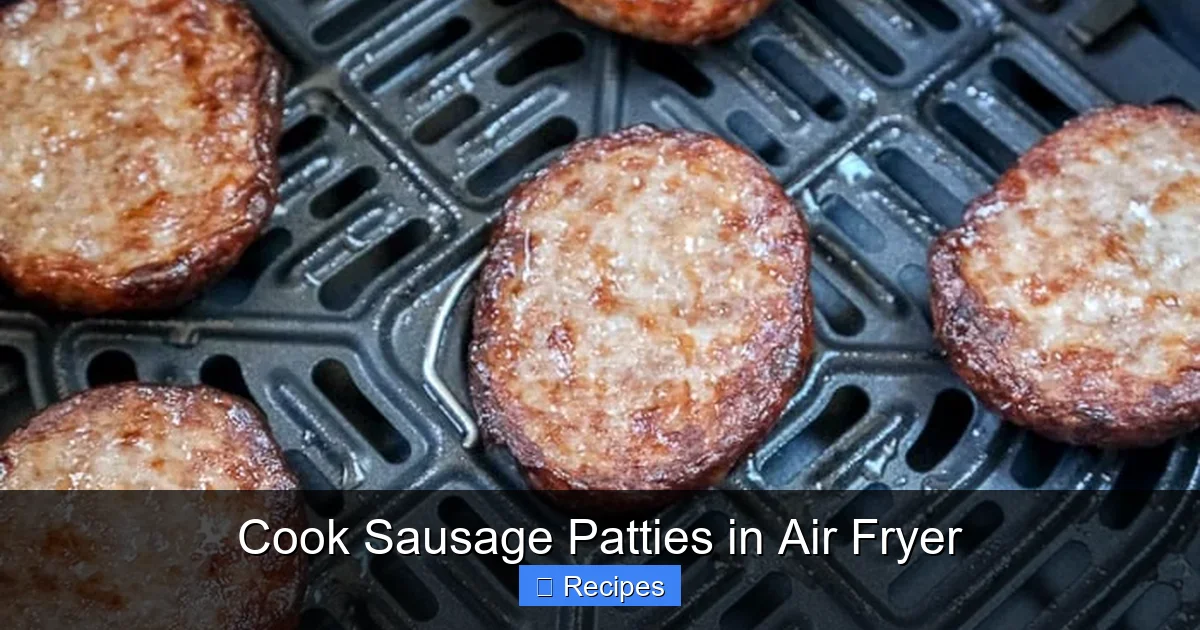
Cooking sausage patties in an air fryer is fast, easy, and delivers deliciously juicy results with a crispy exterior. With minimal prep and no flipping required, this method saves time and cleanup while keeping your kitchen cool.
If you’ve ever stood over a sizzling skillet, flipping greasy sausage patties while dodging oil splatters, you’ll love the simplicity of cooking sausage patties in an air fryer. This modern kitchen appliance transforms breakfast prep from a messy chore into a hands-off, efficient process. Whether you’re feeding a family or just making a quick solo meal, air frying delivers consistent results every time—crispy edges, juicy centers, and zero guesswork.
The beauty of the air fryer lies in its convection technology. Hot air circulates rapidly around the food, creating that desirable golden-brown crust without needing to drown your patties in oil. It’s like having a mini convection oven that fits on your countertop. And because the fat renders out during cooking, you end up with a leaner, less greasy bite—perfect if you’re watching your intake or just prefer cleaner flavors. Plus, cleanup is a breeze: no scrubbing sticky pans or dealing with lingering kitchen odors.
Key Takeaways
- Perfectly cooked sausage patties in under 15 minutes: Air frying cuts down cooking time significantly compared to stovetop or oven methods.
- No need to flip: The circulating hot air ensures even browning on both sides without manual turning.
- Healthier than pan-frying: Excess fat drips away during cooking, reducing overall grease and calories.
- Works with frozen patties: You can cook frozen sausage patties directly in the air fryer—just add a few extra minutes.
- Easy cleanup: No splattered oil or greasy pans—just wipe down the basket when done.
- Versatile for meal prep: Cook a batch ahead for breakfast sandwiches, salads, or snacks throughout the week.
- Great for all sausage types: Works well with pork, turkey, chicken, or plant-based sausage patties.
📑 Table of Contents
Why Use an Air Fryer for Sausage Patties?
Air fryers have become a staple in modern kitchens, and for good reason. They offer speed, convenience, and healthier cooking—all in one compact device. When it comes to sausage patties, the benefits are even more pronounced. Traditional stovetop cooking often leads to uneven browning, flare-ups from dripping fat, and constant attention to prevent burning. In contrast, the air fryer handles the heat distribution automatically, so you can set it and forget it.
Another major advantage is consistency. Whether you’re cooking one patty or a full batch, the air fryer maintains steady temperatures, ensuring each piece cooks evenly. This is especially helpful if you’re meal prepping or cooking for guests. You won’t have to worry about some patties being undercooked while others are overdone. And because the air fryer uses little to no added oil, you’re cutting down on unnecessary fats without sacrificing flavor or texture.
Choosing the Right Sausage Patties
Not all sausage patties are created equal—and your choice can impact cooking time and final taste. Most grocery stores carry pre-formed pork sausage patties, which are ideal for air frying due to their uniform thickness. However, you can also use turkey, chicken, or even plant-based alternatives. Just keep in mind that leaner meats like turkey may dry out faster, so monitor them closely.
If you’re using homemade patties, aim for about ¼ to ⅓ pound each and press them to an even thickness—around ½ inch thick. This ensures they cook through without burning on the outside. For store-bought options, check the label for added sugars or fillers, which can cause excessive browning or flare-ups in the air fryer. Opt for minimally processed varieties when possible for the best results.
Frozen vs. Thawed Patties
One of the biggest conveniences of air frying is that it works great with frozen sausage patties. You don’t need to thaw them beforehand—just add 2–3 minutes to the cooking time. This makes it perfect for those busy mornings when you forgot to pull something out of the freezer. That said, thawed patties will cook more evenly and reach safe internal temperatures faster. If you have the time, letting them sit in the fridge overnight is ideal.
Step-by-Step Instructions
Cooking sausage patties in an air fryer is refreshingly simple. Start by preheating your air fryer to 375°F (190°C). While it heats up, arrange the patties in a single layer in the basket, leaving a little space between each one for proper airflow. Overcrowding can lead to steaming instead of crisping, so avoid stacking or squeezing them in.
Once the air fryer is ready, place the basket inside and cook for 8–10 minutes for thawed patties, or 10–12 minutes for frozen ones. There’s no need to flip them—the circulating air does all the work. Halfway through, you can shake the basket gently if you notice uneven browning, but this usually isn’t necessary.
Checking for Doneness
The safest way to ensure your sausage patties are fully cooked is by using a meat thermometer. Pork sausage should reach an internal temperature of 160°F (71°C), while poultry-based versions (like turkey or chicken) need to hit 165°F (74°C). Insert the probe into the center of the thickest patty to get an accurate reading. If you don’t have a thermometer, cut into one patty to check that the meat is no longer pink and the juices run clear.
Tips for Perfect Results
Even with such a straightforward method, a few small tweaks can elevate your sausage patties from good to great. First, lightly spray the air fryer basket with non-stick cooking spray before adding the patties. This prevents sticking and helps achieve that golden crust. Avoid using aerosol sprays directly on hot surfaces, though—always apply it cold or use an oil mister.
Another pro tip: don’t overcrowd the basket. If you’re cooking a large batch, cook in two rounds rather than trying to fit everything in at once. This ensures each patty gets enough exposure to the hot air. Also, consider lining the basket with parchment paper designed for air fryers—it makes cleanup nearly effortless and reduces the chance of patties sticking.
Flavor Boosters
Want to add extra flavor? Try brushing the patties with a little maple syrup or honey before cooking for a sweet-and-savory glaze. Alternatively, sprinkle them with smoked paprika, garlic powder, or a dash of cayenne for a smoky or spicy kick. These additions won’t interfere with cooking time and can transform a basic breakfast into something special.
Serving Suggestions
Sausage patties are incredibly versatile. Serve them classic-style on a toasted English muffin with a fried egg and cheese for a hearty breakfast sandwich. Or slice them up and toss into a breakfast skillet with hash browns, peppers, and onions. They also pair beautifully with pancakes or waffles for a sweet-and-savory combo.
For lunch or dinner, crumble cooked sausage patties over salads, mix into pasta sauces, or use as a topping for loaded baked potatoes. Leftovers store well in the fridge for up to 4 days or can be frozen for up to 3 months. Reheat in the air fryer for 2–3 minutes to restore crispiness.
Common Mistakes to Avoid
Even simple recipes can go sideways if you’re not careful. One common mistake is skipping the preheat step. Just like with an oven, preheating ensures consistent cooking from the start. Another pitfall is opening the air fryer too often to check progress—this lets heat escape and extends cooking time.
Also, be cautious with heavily seasoned or sugary sausages. These can burn more easily due to caramelization. If you notice excessive smoking or charring, reduce the temperature by 25°F and keep a close eye on them. Finally, always use tongs or a spatula to remove patties—don’t poke them with a fork, as this can cause juices to escape and dry out the meat.
How It Compares to Other Methods
Compared to stovetop frying, air frying is cleaner, safer, and requires less active supervision. Oven baking takes longer and heats up your kitchen, while grilling can be inconsistent and messy. The air fryer strikes the perfect balance: fast, efficient, and user-friendly. For more details on timing differences, check out our guide on how long to cook sausage patties in air fryer.
If you’re curious about other sausage styles, we’ve also covered how to cook Italian sausage in air fryer and how long to cook sausage in air fryer for links and whole cuts. These resources can help you expand your air fryer repertoire beyond patties.
Final Thoughts
Cooking sausage patties in an air fryer is a game-changer for busy households and kitchen minimalists alike. It’s quick, healthy, and delivers restaurant-quality results with minimal effort. Whether you’re whipping up a weekend brunch or prepping proteins for the week ahead, this method saves time, reduces mess, and keeps your meals delicious.
Give it a try next time you’re craving that perfect sausage patty—you might never go back to the stovetop again.
Frequently Asked Questions
Can I cook frozen sausage patties in an air fryer?
Yes! You can cook frozen sausage patties directly in the air fryer without thawing. Simply increase the cooking time by 2–3 minutes and ensure they reach a safe internal temperature of 160°F for pork or 165°F for poultry.
Do I need to flip sausage patties in the air fryer?
No flipping is needed. The air fryer’s circulating hot air cooks both sides evenly, so you can set it and forget it for the most part.
What temperature should I use?
Set your air fryer to 375°F (190°C) for optimal results. This temperature ensures a crispy exterior while keeping the inside juicy and fully cooked.
How do I prevent sticking?
Lightly spray the air fryer basket with non-stick cooking spray or use air-fryer-safe parchment paper. Avoid overcrowding, as this can also cause patties to stick together.
Can I use plant-based sausage patties?
Absolutely! Plant-based sausage patties work well in the air fryer. Just follow the same timing and temperature guidelines, and check the package instructions for any specific recommendations.
How long do cooked sausage patties last in the fridge?
Properly stored in an airtight container, cooked sausage patties will stay fresh in the refrigerator for up to 4 days. You can also freeze them for up to 3 months.
