


Choosing between the Cuisinart Coffee Center and Keurig can be tough. This guide breaks down their key differences, helping you decide. Discover which machine offers the best brew for your buck, catering to your specific coffee needs and preferences. We’ll cover everything from single-serve convenience to carafe capacity.
Are you standing in front of the coffee aisle, feeling overwhelmed by the choices? The world of coffee makers can seem vast, especially when you’re trying to decide between two popular titans: the Cuisinart Coffee Center and the Keurig. Both promise delicious coffee with varying degrees of convenience, but which one is the right fit for your kitchen and your caffeine cravings? This comprehensive guide is here to demystify the Cuisinart Coffee Center vs. Keurig debate. We’ll walk you through their unique features, brewing styles, ease of use, and what makes each stand out. By the end, you’ll have a clear understanding to make an informed decision that leads to your perfect cup, every time.
Let’s dive deep into what each of these coffee machines brings to your morning routine.
Key Takeaways
- Versatile Brewing Options: The Cuisinart Coffee Center often offers both single-serve pod brewing and a full carafe brewing option in one unit, providing flexibility unmatched by most standard Keurig models.
- Carafe Brewing Capabilities: If you regularly brew coffee for multiple people or enjoy multiple cups throughout the day, the Cuisinart Coffee Center’s carafe function is a significant advantage.
- Single-Serve Convenience: Both systems excel at single-serve brewing, offering quick and easy access to a fresh cup of coffee. Keurig is the originator and has the widest range of compatible pods.
- Pod Variety and Compatibility: Keurig boasts a massive ecosystem of K-Cup pods from numerous brands, while Cuisinart’s Coffee Center is typically compatible with K-Cups but might also support reusable filters for ground coffee.
- Design and Footprint: Consider the counter space each machine requires. Some Cuisinart Coffee Center models can be larger due to their dual brewing capabilities.
- Price Point: Generally, Keurig machines can be found at a wider range of price points, from very basic models to more advanced ones. Cuisinart Coffee Centers may represent a higher initial investment due to their added functionality.
- Ease of Use: Both are designed for user-friendliness, but the specific interface and controls can vary, impacting your daily coffee ritual.
Understanding the Core Differences
At their heart, both Cuisinart Coffee Centers and Keurig machines are designed to simplify the coffee-making process. However, their approaches differ significantly, catering to different needs and preferences.
Keurig: The Single-Serve Pioneer
Keurig is synonymous with single-serve coffee. Their innovation revolutionized how many people brew their morning coffee.
- The K-Cup System: Keurig’s proprietary K-Cup pods contain pre-portioned coffee, tea, or hot chocolate. You simply pop a pod into the machine, select your brew size, and press a button. Within minutes, you have a fresh, hot cup.
- Extensive Variety: The biggest draw of Keurig is the sheer number of K-Cup options available. From major coffee brands like Starbucks and Dunkin’ to artisanal roasters and even specialty teas, there’s a K-Cup for almost everyone.
- Simplicity: Keurig machines are known for their straightforward operation. They are typically plug-and-play, with minimal buttons and settings.
However, most standard Keurig machines focus solely on single-serve brewing. If you need to make a full pot of coffee, you’d need a separate coffee maker.
Cuisinart Coffee Center: The Dual Champion
Cuisinart often takes a different approach, aiming to provide more versatility within a single appliance. Many Cuisinart Coffee Center models are designed as “dual brewers.”
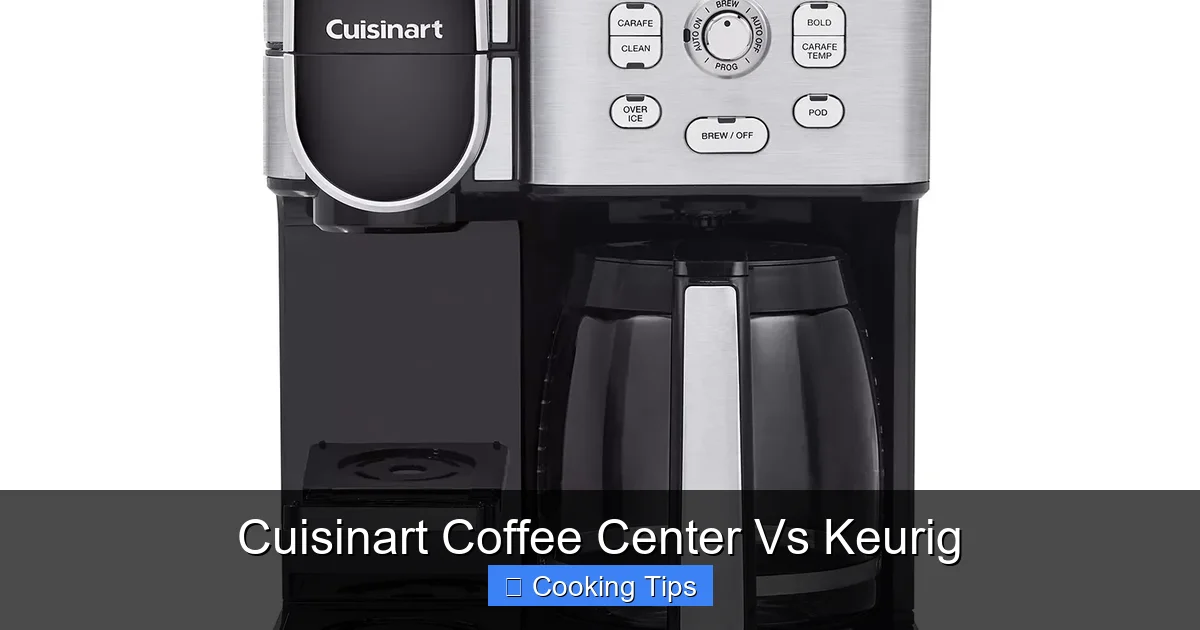
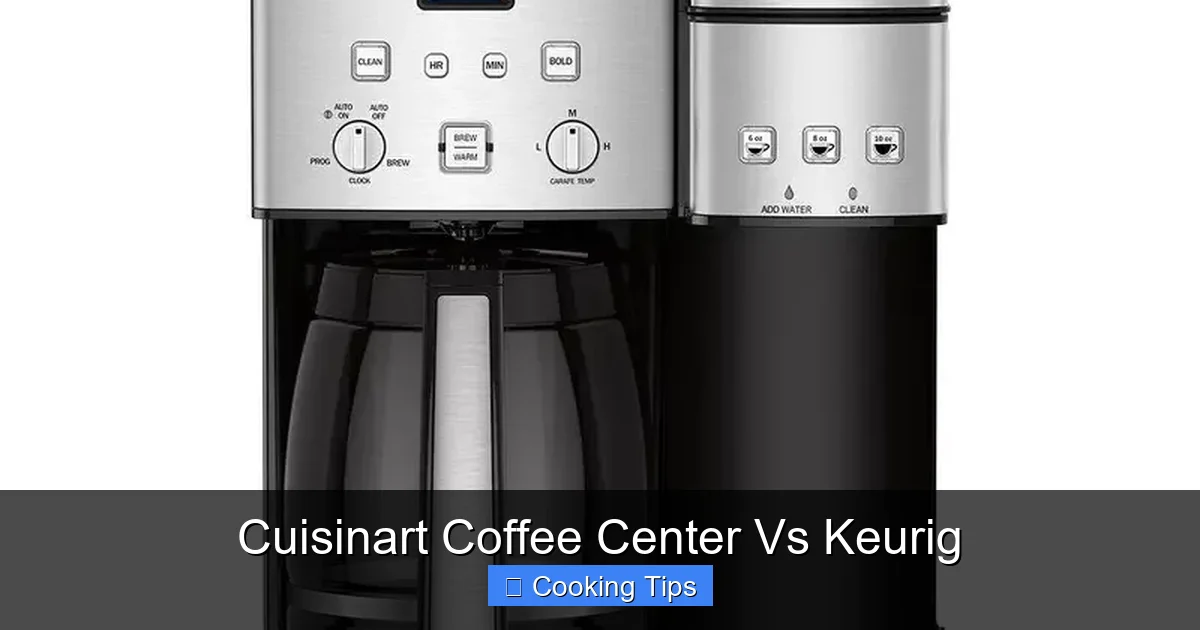
- Two Brewing Methods: This is the hallmark of the Cuisinart Coffee Center. It typically combines a single-serve brewer (often compatible with K-Cups or using a reusable filter) with a traditional drip coffee maker that brews a full carafe.
- Flexibility for All Occasions: Need a quick cup for yourself before heading out? Use the single-serve option. Having guests over or want multiple cups throughout the morning? Brew a full pot with the carafe side.
- Control and Customization: Cuisinart models often offer more control over brewing, such as brew strength, temperature settings, and brew timers for the carafe side.
While this dual functionality is a major plus, it can also mean a slightly larger footprint on your countertop and potentially a higher initial cost compared to a basic Keurig.
Brewing Methods: A Deep Dive
The way each machine brews your coffee is a fundamental difference that impacts taste, convenience, and waste.
Single-Serve Brewing
Both Cuisinart Coffee Centers and Keurig machines excel at single-serve brewing.
Keurig’s Single-Serve Excellence
Keurig machines are built around this. You insert a K-Cup pod, close the lid, select your cup size (e.g., 6, 8, 10 ounces), and press brew. The machine punctures the top and bottom of the pod, forcing hot water through the coffee grounds. The result is a single, fresh cup.
Pros:

Visual guide about Cuisinart Coffee Center Vs Keurig
Image source: manua.ls
- Speed: Typically brews in under a minute.
- Freshness: Each cup is brewed from fresh grounds, avoiding stale coffee.
- Variety: Access to an unparalleled selection of K-Cups.
Cons:
- Cost per cup: K-Cups can be more expensive than buying ground coffee.
- Waste: K-Cup pods create plastic waste, though recyclable options are becoming more common.
- Limited control: Less control over brewing variables like water temperature or saturation time.
Cuisinart’s Single-Serve Option
The single-serve side of a Cuisinart Coffee Center often works similarly to a Keurig. It might be designed to accept standard K-Cups, or it could come with its own reusable filter basket for ground coffee.
Pros:
- Convenience: Still offers quick, single cups.
- Choice of coffee: If it uses a reusable filter, you can use any ground coffee you like, potentially saving money and reducing waste.
- Integrated: It’s part of a larger system, so you don’t need a separate single-serve brewer.
Cons:
- Pod compatibility: If it accepts K-Cups, you’re still subject to K-Cup costs and waste.
- Learning curve: If it uses a reusable filter, it’s a tiny bit more involved than just popping in a pod.
Carafe Brewing
This is where the Cuisinart Coffee Center truly shines.
Cuisinart’s Carafe Brewing Advantage
The Cuisinart Coffee Center typically features a full-sized drip coffee maker on one side. This means a separate water reservoir, a filter basket for ground coffee, and a warming plate for a glass or thermal carafe.
How it works: You add water to the reservoir, place a filter in the basket, add your preferred amount of ground coffee, and select your brew size (e.g., 4, 8, 10, 12 cups). Many models offer features like programmable start times, brew strength selection (bold, regular), and pause-and-serve functions.
Pros:
- Cost-effective: Brewing with ground coffee is significantly cheaper per cup than using pods.
- Less waste: Reusable filters or paper filters are much more environmentally friendly than K-Cups.
- Volume: Perfect for families, offices, or entertaining.
- Better flavor control: Allows for more customization in terms of coffee-to-water ratio.
Cons:
- Time: Brewing a full pot takes longer than a single cup.
- Potential for stale coffee: If left on the warming plate for too long, the coffee can become bitter. (Thermal carafes mitigate this).
- Requires more effort: Measuring coffee and water is necessary.
Keurig’s Limitation
Standard Keurig machines do not have a carafe brewing function. If you need to brew a pot, you would need to purchase a separate drip coffee maker or a multi-pod brewer designed for carafes (which are less common and more specialized).
Ease of Use and Maintenance
When it comes to your daily coffee routine, simplicity and ease of cleaning are paramount.
Keurig: The Epitome of Simplicity
Keurig machines are designed for minimal effort.
- Operation: Fill the water reservoir, insert a K-Cup, select your size, and brew. That’s it!
- Cleaning: Regular cleaning involves rinsing the drip tray, wiping down the exterior, and descaling the machine every few months. The K-Cup holder needs occasional cleaning to remove any stray grounds.
- Descaling: Most Keurigs have a descaling indicator and a relatively straightforward descaling process, often using a vinegar solution or a dedicated descaling liquid.
Cuisinart Coffee Center: Slightly More Involved
While still user-friendly, the dual nature of the Cuisinart Coffee Center means a bit more to manage.
- Operation: For single-serve, it’s similar to a Keurig. For carafe brewing, you need to add water to the reservoir, add grounds to the filter basket, and select your brew. Programming a timer adds another step.
- Cleaning: You have two sides to clean. The single-serve side needs similar attention to a Keurig. The carafe side involves washing the carafe, filter basket, and drip tray. Descaling is required for both brewing systems, potentially making it a slightly longer process.
- Maintenance: Some Cuisinart models have removable water reservoirs, which are easier to fill and clean. Check the specific model for features like removable brew heads or self-cleaning cycles.
Cost and Value
The price tag and ongoing costs are significant factors for most consumers.
Keurig: Wide Range, Ongoing Pod Costs
Initial Cost: Keurig machines range from very affordable basic models (under $100) to premium versions with advanced features (over $200).
Visual guide about Cuisinart Coffee Center Vs Keurig
Image source: assets.surlatable.com
Visual guide about Cuisinart Coffee Center Vs Keurig
Image source: manuals.ca
Ongoing Cost: The primary ongoing cost is K-Cups. While they offer convenience, they are generally more expensive per cup than ground coffee. A box of 24 K-Cups can cost anywhere from $15 to $30+, depending on the brand and type.
Value: If your priority is speed, variety, and minimal effort for single cups, and you don’t mind the recurring pod cost, Keurig offers good value for its convenience.
Cuisinart Coffee Center: Higher Upfront, Lower Long-Term
Initial Cost: Cuisinart Coffee Centers typically represent a higher initial investment, often ranging from $150 to $300+, due to their dual functionality.
Ongoing Cost: The major advantage here is the cost of brewing. For the carafe side, you’re using ground coffee, which is significantly cheaper. For the single-serve side, you can use K-Cups or a reusable filter, offering flexibility. If you primarily use ground coffee for both brewing methods, your per-cup cost will be much lower.
Value: If you value versatility, want the option to brew both single cups and carafes, and are looking to save money on coffee in the long run, the Cuisinart Coffee Center offers excellent value, despite the higher upfront price.
Design and Counter Space
Consider how these machines will fit into your kitchen’s aesthetic and available space.
Keurig: Compact and Varied
Keurig offers a wide array of models, from very slim and compact designs to larger, more feature-rich units. You can find a Keurig that fits even a small countertop.
Cuisinart Coffee Center: Generally Larger
Due to their dual brewing systems, Cuisinart Coffee Centers tend to have a larger footprint. They are often wider than a standard Keurig machine. If counter space is at a premium, measure carefully before purchasing. However, the advantage is consolidating two machines into one.
Who is Each Machine Best For?
To make the decision easier, let’s summarize who might benefit most from each system.
Choose a Keurig If:
- You primarily drink one cup of coffee at a time and rarely need to brew a full pot.
- You love having a huge variety of coffee, tea, and hot chocolate options readily available.
- Speed and ultimate convenience are your top priorities.
- You’re on a tighter initial budget but don’t mind the ongoing cost of K-Cups.
- You appreciate a simple, no-fuss operation.
Choose a Cuisinart Coffee Center If:
- You need the flexibility to brew both single cups and full carafes.
- You often make coffee for multiple people or enjoy multiple cups throughout the day.
- You want to save money in the long run by using ground coffee.
- You appreciate more control over your brewing (e.g., brew strength, timer).
- You have adequate counter space for a slightly larger appliance.
- You want to consolidate appliances (combining single-serve and drip brewing into one machine).
Troubleshooting Common Issues
Both machines, like any appliance, can encounter minor issues. Here’s how to address them.
Keurig Troubleshooting
- Weak Coffee: Ensure you’re using the correct brew size for the amount of coffee in the pod. Try a different K-Cup brand. Check if the needle is clogged and needs cleaning.
- Not Brewing: Make sure the water reservoir is full and properly seated. Check if the K-Cup is inserted correctly. Descale the machine if it hasn’t been done recently.
- Leaking: Check the water reservoir seal. Ensure the drip tray is not overflowing. Inspect the K-Cup holder for cracks or damage.
- Error Codes: Consult your Keurig’s manual for specific error code meanings and solutions.
Cuisinart Coffee Center Troubleshooting
For the Single-Serve Side: Similar issues to Keurig – weak coffee, no brewing, leaking. Follow Keurig troubleshooting steps.
For the Carafe Side:
- Coffee Not Brewing: Check water reservoir level. Ensure the carafe is correctly positioned. Verify the filter basket is in place and the lid is closed. Clean the brew head if it seems clogged.
- Coffee Tastes Burnt: This is usually due to leaving coffee on the warming plate too long. Consider using a thermal carafe model or drinking coffee more promptly.
- Water Not Heating: This could be a more serious internal issue, potentially requiring service. Ensure it’s plugged in and the circuit breaker hasn’t tripped.
- Carafe Not Filling: Ensure the reservoir is full and the brew basket is correctly seated. Check for clogs in the drip mechanism.
General Maintenance Tip: Regular descaling and cleaning of both components will prevent most common problems.
Conclusion: Making Your Choice
The Cuisinart Coffee Center vs. Keurig debate isn’t about which machine is inherently “better,” but rather which one aligns best with your personal coffee habits and kitchen needs.
If your life revolves around quick, single cups and you revel in the sheer diversity of K-Cup flavors, a Keurig is likely your perfect companion. It’s the king of convenience for the individual coffee drinker.
However, if you crave the adaptability to brew a single cup for yourself one moment and a full pot for a crowd the next, all while enjoying the cost savings and environmental benefits of using ground coffee, then the Cuisinart Coffee Center is your undisputed champion. It offers a dual-threat capability that truly enhances your coffee-making experience.
Ultimately, consider your daily routine, how many people you typically brew for, your budget, and your desire for variety versus cost-effectiveness. Whichever you choose, a satisfying cup of coffee awaits!
