

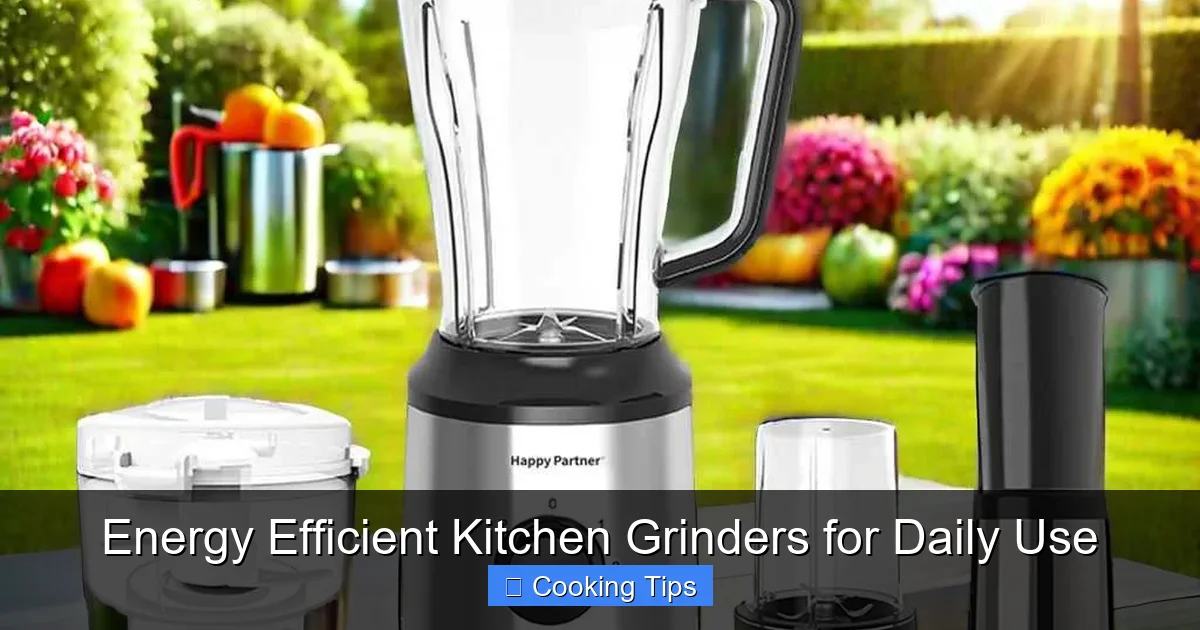
This guide explores energy-efficient kitchen grinders perfect for daily culinary tasks. We’ll help you understand what makes a grinder energy-conscious, guide you through the selection process, and offer practical tips for maximizing their lifespan and minimizing your energy footprint. By choosing wisely and using them effectively, you can enjoy fresh ingredients while saving on your electricity bills.
Welcome to your ultimate guide to energy-efficient kitchen grinders for daily use! In today’s world, being mindful of our energy consumption is more important than ever. Our kitchens, while hubs of creativity and delicious meals, can also be significant energy consumers. One often-overlooked appliance is the kitchen grinder. Whether you’re grinding coffee beans for your morning brew, spices for a flavorful dinner, or nuts for a healthy snack, the grinder you choose and how you use it can impact your energy bill.
This guide is designed to empower you with the knowledge to select, operate, and maintain kitchen grinders that are both effective and energy-conscious. We’ll delve into what truly makes a grinder “energy-efficient,” explore the different types available, and provide actionable tips to ensure you get the most out of your appliance while minimizing its environmental footprint. By the end of this guide, you’ll be well-equipped to make informed decisions that benefit both your wallet and the planet.
Key Takeaways
- Understanding Energy Efficiency: Look for grinders with higher wattage efficiency relative to their grinding power and features like shorter run times.
- Types of Grinders: Different grinders (burr vs. blade, manual vs. electric) have varying energy consumption patterns. Electric burr grinders often offer a balance of efficiency and quality.
- Key Features to Look For: Consider motor power, construction materials, speed settings, and ease of cleaning, all of which impact both performance and energy use.
- Smart Usage Habits: Grinding only what you need, pre-chopping tougher ingredients, and cleaning regularly contribute to efficient operation.
- Maintenance for Longevity: Proper care ensures your grinder operates at peak efficiency, reducing wear and tear and potential energy waste.
- Long-Term Savings: Investing in an energy-efficient model not only benefits the environment but also leads to reduced electricity costs over time.
Understanding Energy Efficiency in Kitchen Grinders
What does “energy-efficient” actually mean when it comes to kitchen grinders? It’s not just about the wattage listed on the box. True energy efficiency is a combination of factors that determine how effectively the grinder converts electrical energy into grinding power with minimal waste.
Motor Power vs. Energy Consumption
Often, people assume a higher wattage means a more powerful and therefore better grinder. While wattage indicates power draw, it doesn’t always correlate directly with efficiency. A high-wattage grinder might be inefficient if it requires a lot of power to achieve a moderate grind. Conversely, a lower-wattage grinder with a well-designed motor and grinding mechanism can be very efficient. The key is the **grinding performance per watt**.
Grinding Mechanism Efficiency
The way a grinder grinds materials significantly impacts its energy use.
- Blade Grinders: These use a spinning blade to chop ingredients. They are generally less energy-efficient for fine grinds as they tend to create inconsistent particle sizes and can overheat quickly, requiring shorter run times.
- Burr Grinders: These use two abrasive surfaces (burrs) to crush beans or spices. They offer more consistent grinds and are generally more energy-efficient for achieving specific textures because they grind more uniformly without generating as much heat.
Run Time and Heat Generation
An energy-efficient grinder will perform its task quickly and with minimal heat buildup. If a grinder needs to run for extended periods or becomes excessively hot, it’s likely wasting energy. Look for models designed for short, effective bursts of operation.
Choosing the Right Energy-Efficient Kitchen Grinder

Visual guide about Energy Efficient Kitchen Grinders for Daily Use
Image source: cadburykitchens.co.uk
Selecting the perfect grinder involves understanding your needs and matching them with the features of energy-efficient models.
Types of Kitchen Grinders and Their Energy Efficiency

Visual guide about Energy Efficient Kitchen Grinders for Daily Use
Image source: aysenergy.com
Let’s break down the common types of grinders and how they stack up in terms of energy use.
Blade Grinders
Blade grinders are the most common and typically the most affordable. They use a rotating blade similar to a blender.
- Pros: Versatile for general chopping, often more compact.
- Cons: Less precise grind, prone to overheating, can create dust and uneven particle sizes, especially for coffee. They can be inefficient if you need a consistent fine grind.
- Energy Consideration: While they have lower initial wattage, their inefficiency in producing a fine, consistent grind means they might need to be run longer, negating potential energy savings.
For daily use, especially for grinding coffee beans for consistent results, blade grinders are generally less recommended for energy efficiency and quality.
Burr Grinders
Burr grinders use two revolving abrasive surfaces to grind ingredients. They are the preferred choice for coffee enthusiasts and those seeking precise spice grinds.
- Types of Burr Grinders:
- Conical Burr Grinders: These have cone-shaped burrs and are known for being quieter and generating less heat. They are often considered more energy-efficient due to their design.
- Flat Burr Grinders: These have flat, parallel burrs. They can be very precise but may generate slightly more heat and noise than conical burrs.
- Pros: Highly consistent grind size, less heat generation, superior flavor extraction (for coffee), more durable.
- Cons: Can be more expensive and larger than blade grinders.
- Energy Consideration: Burr grinders excel in efficiency because they grind uniformly without excessive force or heat, leading to shorter run times and less energy wasted.
Manual Grinders
Manual grinders require you to turn a crank to operate the grinding mechanism.
- Pros: No electricity required, excellent for precise control, very quiet, portable.
- Cons: Requires physical effort, can be slow for larger quantities.
- Energy Consideration: Zero electricity consumption makes them the ultimate in energy efficiency. However, they are not practical for frequent, large-batch grinding if time is a factor.
Electric Spice Grinders
These are typically smaller, dedicated grinders for spices. They often use a blade mechanism.
- Energy Consideration: Similar to blade grinders, they are best for small batches and might not be the most energy-efficient if used excessively for tougher spices or if the motor isn’t well-designed.
Key Features to Look For in an Energy-Efficient Grinder

Visual guide about Energy Efficient Kitchen Grinders for Daily Use
Image source: m.media-amazon.com
When you’re shopping, keep these features in mind to ensure you’re getting an appliance that saves energy.
Motor Efficiency and Design
Look for grinders with motors designed for durability and efficiency. Manufacturers are increasingly incorporating energy-saving technologies. While specific energy ratings aren’t always provided for small appliances like grinders, a reputable brand with a focus on quality engineering is a good indicator.
Grind Settings and Adjustability
Grinders with multiple grind settings allow you to achieve the precise texture you need for different recipes. This means you can get the job done in one pass, rather than having to re-grind, which saves time and energy. Burr grinders typically offer superior adjustability.
Capacity and Batch Size
Consider how much you typically grind at once. If you usually grind small amounts for a single meal, a smaller, more compact grinder will be more energy-efficient than a large one. Grinding only what you need for each use is a key energy-saving practice.
Construction Materials
High-quality materials, such as stainless steel for burrs and durable housing, contribute to a grinder’s longevity and efficient operation. Well-made components are less likely to break down or require excessive force to grind, thereby saving energy.
Ease of Cleaning
A grinder that is easy to clean encourages regular maintenance. When parts are easily accessible and can be wiped down or washed, you’re more likely to keep the grinder in top condition. A clean grinder operates more smoothly and efficiently.
Practical Tips for Energy-Efficient Grinder Use
Choosing the right grinder is only half the battle. How you use it makes a big difference!
Maximize Your Grinder’s Efficiency in Daily Use
Implementing these habits will ensure your grinder performs optimally and uses energy wisely.
Grind Only What You Need
This is perhaps the most crucial tip. Grinding a large batch of coffee beans or spices and storing them can lead to a loss of freshness and flavor. More importantly, it means running your grinder longer than necessary. Grind enough for immediate use whenever possible.
Pre-Chop Tough Ingredients
If you’re grinding very hard ingredients, such as large, dense nuts or certain tough spices, consider breaking them down into smaller pieces before putting them in the grinder. This reduces the strain on the motor and allows the grinder to work more efficiently, potentially reducing run time.
Avoid Overfilling the Grinder
Don’t stuff the grinder with more ingredients than it’s designed to handle. Overfilling can strain the motor, lead to uneven grinding, and potentially cause the appliance to overheat. Stick to the recommended capacity for best results and energy efficiency.
Understand Grinding Times
Different ingredients require different grinding times. For coffee, a few seconds might be enough for a coarse grind, while a finer grind may take a bit longer. For spices, pulse the grinder in short bursts and check the consistency. Learn the optimal grinding time for your desired result to avoid over-grinding.
Clean Your Grinder Regularly
This is vital for both hygiene and efficiency.
- Coffee Grinders: Coffee oils and fine grounds can build up, affecting performance and potentially causing the motor to work harder.
- Spice Grinders: Spice residue can mix flavors and clog the grinding mechanism.
Cleaning instructions vary by model, but generally, using a brush to remove dry grounds and wiping down parts with a slightly damp cloth (ensuring the appliance is unplugged and completely dry before use) is recommended. For burr grinders, specific cleaning brushes are often available.
Store Your Grinder Properly
Ensure your grinder is stored in a dry place. Moisture can damage the motor and grinding components. If your grinder has removable parts, store them together to avoid loss and ensure reassembly is straightforward.
Troubleshooting Common Grinder Issues
Even energy-efficient grinders can encounter problems. Here are some common issues and how to address them.
Grinder Stops Working or Runs Slowly
- Cause: Overheating, jammed grinding mechanism, or motor overload.
- Solution: Unplug the grinder immediately. Let it cool down for at least 10-15 minutes. Check for any obstructions in the grinding chamber or between the burrs. Gently remove any blockages. If it’s a blade grinder, ensure the blade isn’t damaged. If the problem persists, the motor may be damaged.
Inconsistent Grinding
- Cause: Old or damaged burrs/blades, incorrect grind setting, overfilling, or not grinding uniformly.
- Solution: For blade grinders, this is common; try pulsing more. For burr grinders, check if the burrs are clean and properly aligned. Ensure you are using the correct grind setting for your needs. If burrs are worn, they may need replacing.
Excessive Noise or Vibration
- Cause: Loose parts, worn-out components, or an unbalanced load.
- Solution: Ensure all removable parts are securely fastened. Check for damage to the burrs or blades. If the noise is persistent and accompanied by poor performance, components may need to be serviced or replaced.
The Long-Term Benefits of Energy-Efficient Grinders
Investing in an energy-efficient kitchen grinder might seem like a small step, but the cumulative benefits are significant.
Environmental Impact
By using less electricity, you’re reducing your carbon footprint. This small change contributes to a larger effort to conserve resources and combat climate change.
Cost Savings
While the initial cost of a high-quality, energy-efficient grinder might be slightly higher, the long-term savings on your electricity bills can be substantial. Over the lifespan of the appliance, this difference becomes even more pronounced.
Improved Performance and Flavor
Energy-efficient grinders, particularly burr models, consistently produce better results. For coffee, this means a more flavorful cup. For spices, it means bolder aromas and tastes in your cooking. This improved performance enhances your overall culinary experience.
Durability and Longevity
Appliances built with efficiency in mind are often constructed with higher-quality components. This means they tend to be more durable, last longer, and require fewer repairs, saving you money and hassle in the long run.
Conclusion
Choosing and using energy-efficient kitchen grinders for your daily tasks is a smart and responsible decision. By understanding the nuances of grinder technology, prioritizing features that promote efficiency, and adopting mindful usage habits, you can significantly reduce your energy consumption in the kitchen. From the consistent grind of a well-maintained burr grinder to the simple act of grinding only what you need, every step contributes to a more sustainable lifestyle and a more flavorful culinary journey. Make informed choices today for a greener tomorrow and tastier meals every day.
