

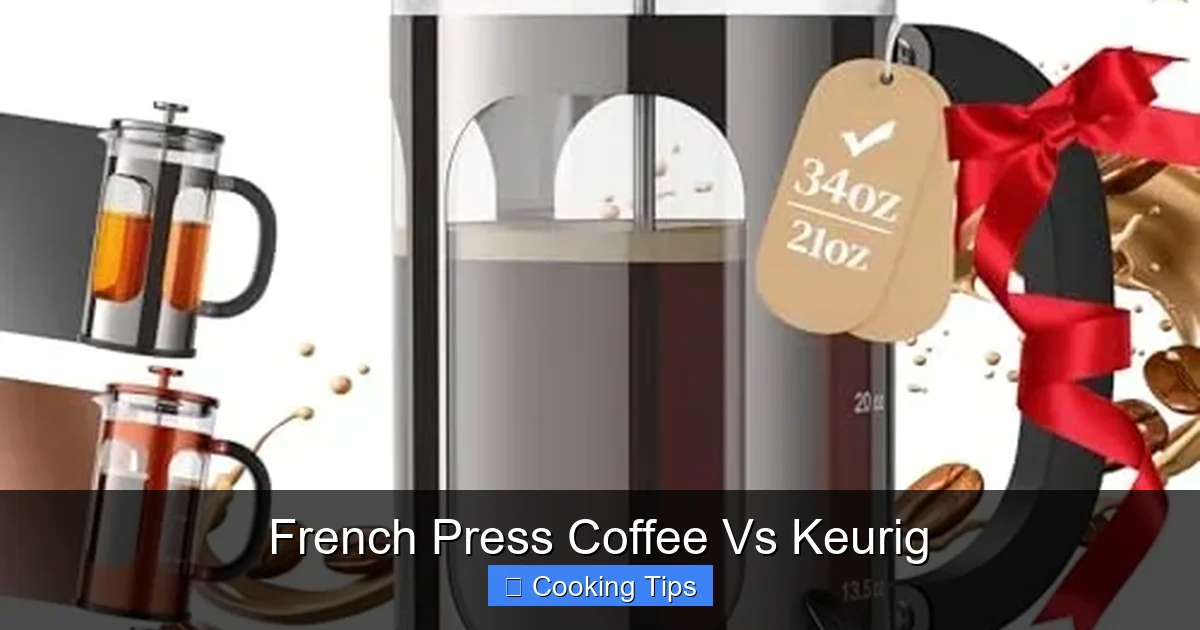
Choosing between a French press and a Keurig can transform your morning coffee ritual. This guide explores the nuances of French press coffee for a rich, full-bodied brew and the convenience of Keurig for a quick, single-serve cup. We’ll provide step-by-step instructions, compare taste profiles, discuss cost, and help you decide which brewing method is perfect for your lifestyle.
French Press Coffee Vs Keurig
Welcome to the ultimate guide to French Press coffee versus Keurig! Are you standing at the coffee counter, wondering which brewing method will best suit your morning routine and your taste buds? It’s a common dilemma. Both French press and Keurig coffee makers promise delicious coffee, but they deliver it in very different ways.
In this guide, we’ll dive deep into the world of French press coffee and Keurig brewing. You’ll learn exactly what makes each method unique. We’ll break down the brewing process for both, compare their flavor profiles, discuss the costs involved, and explore the environmental impact. By the end of this article, you’ll have a clear understanding of which coffee maker is the perfect fit for your lifestyle. Let’s get brewing!
Key Takeaways
- Full-Bodied Flavor: French presses excel at producing a rich, oily, and full-bodied coffee by allowing coffee oils to pass through the metal filter.
- Unmatched Control: The French press offers complete control over brewing variables like grind size, water temperature, and steep time, enabling customization.
- Simplicity and Sustainability: French presses are mechanically simple, require no electricity, and produce less waste than K-Cup pods, making them an eco-friendly choice.
- Speed and Convenience: Keurig machines offer unparalleled speed and ease of use, delivering a hot cup of coffee in under a minute with minimal cleanup.
- Variety of Options: Keurigs provide an extensive selection of coffee flavors, tea, and other beverages through a vast array of K-Cup pods.
- Consistency and Ease of Use: For those prioritizing a consistently good cup with minimal effort, Keurig is a strong contender due to its automated brewing process.
- Cost Considerations: While Keurig machines have an upfront cost and ongoing expense for pods, French presses are a low initial investment with only the cost of coffee beans.
Understanding the French Press
The French press is a classic coffee brewing device that has been around for over a century. Its design is elegantly simple. It consists of a cylindrical pot, usually made of glass or stainless steel, with a lid and a plunger. The plunger has a fine mesh filter attached to its base. This filter is what separates the coffee grounds from the brewed coffee.
The magic of the French press lies in its immersion brewing method. This means the coffee grounds steep directly in the hot water for a set period. This process extracts a rich spectrum of flavors and coffee oils that paper filters often absorb. The result is a cup of coffee that is often described as full-bodied, robust, and aromatic.
How to Brew Coffee with a French Press
Brewing with a French press is a hands-on experience. It allows for a great deal of control over the final cup. Here’s a step-by-step guide:
1. Gather Your Supplies
- A French press
- Freshly roasted coffee beans
- A coffee grinder
- Hot water (just off the boil, around 200°F or 93°C)
- A timer
- A mug
2. Grind Your Coffee Beans
For French press, you need a coarse, even grind. Think breadcrumbs or coarse sea salt. If your grind is too fine, it will slip through the mesh filter, creating a muddy cup. If it’s too coarse, the water won’t extract enough flavor. Use a burr grinder for the most consistent results. Aim for about 1 part coffee to 15 parts water (e.g., 30 grams of coffee for 450 grams of water).
3. Heat Your Water
Heat your water to just below boiling. The ideal temperature is between 195°F and 205°F (90°C to 96°C). If you don’t have a thermometer, bring the water to a boil, then let it sit for about 30-60 seconds before pouring.
4. Add Coffee Grounds to the French Press
Place your coarsely ground coffee into the empty French press. If you’re preheating your press, pour some hot water in, swirl it around, and discard it before adding your grounds. This helps maintain the brewing temperature.
5. Bloom the Coffee
Pour just enough hot water over the grounds to saturate them. This is called the “bloom.” You’ll see the grounds expand and release carbon dioxide, which looks like bubbles. Let it bloom for about 30 seconds. This step is crucial for developing the coffee’s flavor.
6. Add the Remaining Water and Steep
Gently pour the rest of the hot water over the bloomed grounds. Stir gently to ensure all grounds are submerged. Place the lid on top, but do not press the plunger down yet. Let the coffee steep for 4 minutes. This is the standard steeping time, but you can adjust it to your preference.
7. Press the Plunger
Once the 4 minutes are up, slowly and steadily press the plunger all the way down. Don’t force it. A smooth, even press is best. This action separates the coffee grounds from the liquid.
8. Serve and Enjoy
Pour your freshly brewed French press coffee immediately. Leaving it in the French press can lead to over-extraction and bitter coffee, as the grounds are still in contact with the water. Enjoy your rich, flavorful cup!
Pros and Cons of French Press
- Pros:
- Rich, Full-Bodied Flavor: The metal filter allows coffee oils and fine particles to pass through, creating a more complex and robust taste.
- Complete Control: You can precisely control grind size, water temperature, and steep time for a truly personalized brew.
- No Paper Filters Needed: This reduces waste and ongoing costs.
- Relatively Inexpensive: French presses are generally affordable to purchase.
- Durable and Long-Lasting: Made with simple mechanics, they tend to last a long time.
- No Electricity Required: Perfect for camping or areas with limited power.
- Cons:
- More Involved Process: Requires grinding beans, heating water, and a bit more attention to detail.
- Sediment in the Cup: Some fine grounds may escape the filter, leading to a slightly silty texture in the bottom of your cup.
- Cleanup Can Be Messier: Disposing of the wet grounds can be a bit more involved than with a Keurig.
- Steep Time Required: You need to wait 4 minutes for brewing, unlike the instant coffee from a Keurig.
Understanding the Keurig
The Keurig machine, often referred to as a “pod coffee maker,” revolutionized single-serve coffee brewing. Its popularity stems from its incredible speed, convenience, and ease of use. Keurig machines use small, sealed plastic pods called K-Cups, filled with pre-ground coffee, tea, or other beverages.
When you insert a K-Cup and press a button, the machine pierces the pod and forces hot water through it, brewing a single cup of coffee in under a minute. The process is almost entirely automated, making it ideal for busy mornings or for households where everyone prefers a different type of beverage.
How to Brew Coffee with a Keurig
Brewing with a Keurig is designed for maximum simplicity. Here’s how it works:
1. Fill the Water Reservoir
Ensure the Keurig’s water reservoir is filled with fresh, filtered water to the desired level. Some models have a maximum fill line.
Visual guide about French Press Coffee Vs Keurig
Image source: coffeevogue.com
2. Insert a K-Cup Pod
Open the brew head and insert your chosen K-Cup pod. Close the brew head firmly until it clicks.
3. Select Your Cup Size
Most Keurig machines allow you to choose the size of your coffee cup (e.g., 6 oz, 8 oz, 10 oz). Select your preferred size.
4. Choose Brew Strength (Optional)
Some Keurig models offer a brew strength option, allowing you to make your coffee stronger or milder.
5. Start Brewing
Press the brew button. The machine will heat the water and dispense your coffee directly into your mug.
6. Remove and Dispose of the K-Cup
Once brewing is complete, carefully open the brew head and remove the used K-Cup. Dispose of it appropriately.
Pros and Cons of Keurig
- Pros:
- Ultimate Convenience: Brews a cup of coffee in under a minute with just the push of a button.
- Ease of Use: Requires no special skills or knowledge of brewing techniques.
- Minimal Cleanup: Just toss the K-Cup and rinse the drip tray occasionally.
- Variety of Beverages: Offers a huge selection of coffee, tea, hot chocolate, and more from numerous brands.
- Consistent Results: Every cup brewed will be the same, provided you use the same K-Cup.
- Customizable Cup Size: You can choose the volume of your brew.
- Cons:
- Environmental Impact: K-Cups are typically made of plastic and are not easily recyclable in many areas, contributing to landfill waste.
- Coffee Quality Can Be Compromised: The pre-ground coffee in K-Cups may not be as fresh as freshly ground beans, and the brewing method can sometimes lead to a less complex flavor.
- Ongoing Cost of K-Cups: K-Cups are more expensive per cup than brewing with whole beans.
- Machine Cost: Keurig machines can have a significant upfront cost.
- Limited Customization: You have less control over grind size, water temperature, and steep time compared to a French press.
French Press Coffee vs Keurig: A Direct Comparison
Visual guide about French Press Coffee Vs Keurig
Image source: upsidelane.com
Let’s break down the key differences between these two popular brewing methods side-by-side.
1. Taste and Flavor Profile
- French Press: Known for its rich, full-bodied, and often complex flavor. The absence of a paper filter allows the natural oils and micro-fines of the coffee to contribute to the mouthfeel and taste, resulting in a more robust and aromatic cup.
- Keurig: Tends to produce a cleaner, brighter cup of coffee. However, the pre-ground coffee and the brewing method can sometimes lead to a less intense or nuanced flavor compared to fresh grounds brewed with a French press. The flavor can also be more consistent across cups due to the standardized brewing.
2. Convenience and Speed
- French Press: Requires more active participation and time. You need to grind beans, heat water, bloom the coffee, and steep for about 4 minutes. It’s a ritual that some coffee lovers cherish.
- Keurig: Unbeatable for speed and convenience. You can have a hot cup of coffee in your hands in less than a minute with minimal effort. This is its biggest selling point.
3. Cost
- French Press: The initial investment for a French press is relatively low. You’ll need to factor in the cost of good quality coffee beans and a grinder if you don’t have one. Over time, the cost per cup is generally lower than with K-Cups.
- Keurig: Keurig machines have an upfront cost that can range from moderate to high depending on the model. The ongoing cost of K-Cups is significantly higher per cup than buying whole beans, making it a more expensive option in the long run.
4. Environmental Impact
- French Press: Environmentally friendly. It requires no disposable filters and produces minimal waste, mainly coffee grounds which can be composted.
- Keurig: The environmental impact of K-Cups is a significant concern. Millions of plastic K-Cups end up in landfills each year. While reusable K-Cup filters exist, the primary mode of use is disposable pods.
5. Customization and Control
- French Press: Offers a high degree of control. You can experiment with grind size, water temperature, coffee-to-water ratio, and steep time to perfectly tailor the brew to your liking.
- Keurig: Offers limited customization, primarily choosing cup size and sometimes brew strength. The coffee grounds are pre-ground, and the water temperature and brewing time are fixed by the machine.
Troubleshooting Common Issues

Visual guide about French Press Coffee Vs Keurig
Image source: upsidelane.com
Even with the best intentions, you might encounter a few hiccups. Here are some common problems and how to fix them:
For French Press:
- Muddy Coffee (Too Fine Grind): If your coffee is consistently silty or has too much sediment, your grind is too fine. Ensure you are using a coarse grind.
- Weak Coffee (Under-Extraction): If your coffee tastes weak or sour, you might need a finer grind, a longer steep time, or hotter water.
- Bitter Coffee (Over-Extraction): If your coffee is too bitter, your grind might be too fine, your water too hot, or you steeped it for too long. Try a coarser grind, slightly cooler water, or a shorter steep time.
- Plunger is Hard to Press: This usually indicates a grind that is too fine.
For Keurig:
- Coffee Tastes Stale or Weak: Ensure you are using fresh K-Cups and that the water reservoir is clean and filled with fresh water. Some machines have a “strong” brew option.
- Machine Not Brewing: Check if the water reservoir is full, if the K-Cup is inserted correctly, and if there are any clogs in the needle. You might need to run a cleaning cycle.
- Water Not Hot Enough: Some machines have an adjustable temperature setting. If yours doesn’t, you might need to descale the machine, as mineral buildup can affect heating.
Which One Is Right For You?
The choice between a French press and a Keurig ultimately depends on your priorities:
- Choose a French Press if:
- You prioritize rich, full-bodied flavor and enjoy the ritual of coffee making.
- You want complete control over your brewing process.
- You are concerned about environmental waste.
- You are on a tighter budget for brewing equipment and ongoing costs.
- You don’t mind a slightly more involved brewing process and cleanup.
- Choose a Keurig if:
- Your top priority is speed and convenience.
- You want a simple, foolproof way to make coffee.
- You or others in your household enjoy a wide variety of beverages.
- You prefer minimal cleanup after brewing.
- You are willing to accept the higher ongoing cost and environmental impact.
Conclusion
Both the French press and the Keurig offer distinct advantages in the world of coffee brewing. The French press champions the art of coffee, offering a rich, customizable, and eco-friendly experience for those who savor their morning cup. It’s for the coffee enthusiast who enjoys the process as much as the result.
On the other hand, the Keurig machine is the undisputed champion of convenience and speed. It provides a quick, consistent, and varied coffee experience for those who need their caffeine fix with minimal fuss. It’s perfect for busy households or individuals who value efficiency.
Consider your lifestyle, your taste preferences, your budget, and your environmental concerns. Whether you opt for the artisanal charm of the French press or the modern ease of the Keurig, the most important thing is to enjoy your coffee! Happy brewing!
