

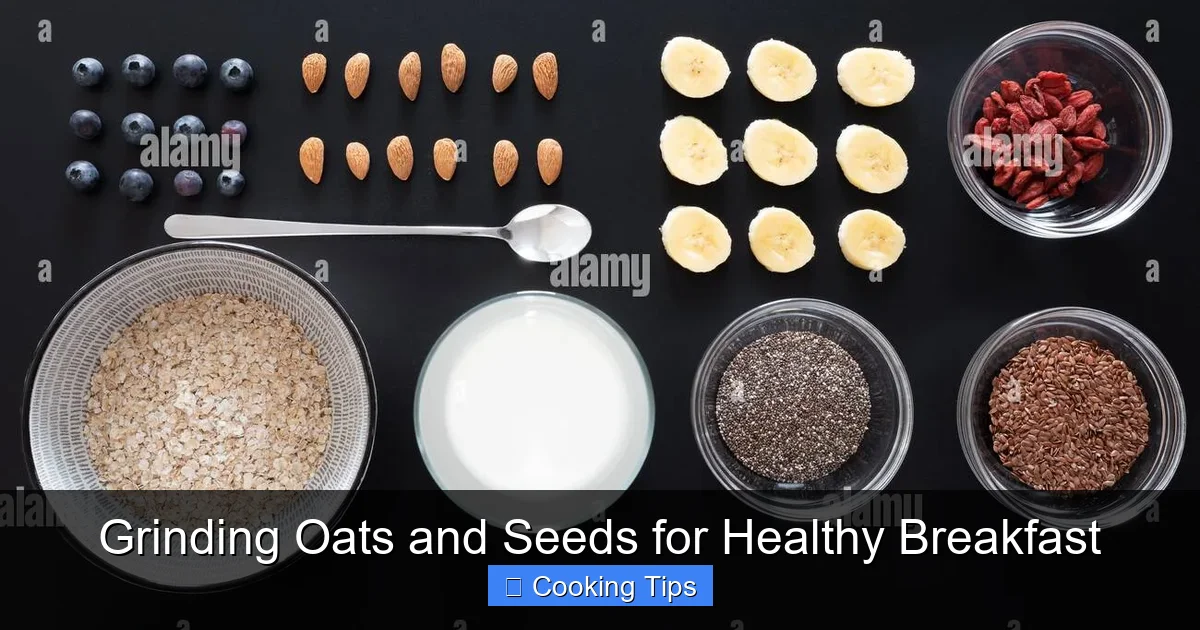
Learn the simple art of grinding oats and seeds to elevate your healthy breakfast. This guide provides step-by-step instructions for achieving the perfect texture, unlocking enhanced nutrient absorption and delicious flavor. Unlock a world of personalized breakfast options by grinding your own grains and seeds, creating wholesome and energizing meals tailored to your taste.
Key Takeaways
- Unlock Nutrient Potential: Grinding oats and seeds breaks down their cell walls, making essential nutrients more accessible for your body to absorb.
- Personalize Texture: You have complete control over the grind size, from coarse to fine, allowing you to create customized textures for porridges, granolas, and more.
- Boost Flavor and Freshness: Grinding ingredients just before use preserves their natural oils and aromas, resulting in a more vibrant and delicious breakfast.
- Reduce Food Waste: Grinding whole grains and seeds can be more cost-effective and reduces the need for pre-packaged, often processed, breakfast options.
- Dietary Flexibility: Grinding a variety of seeds and grains allows for easy customization to meet specific dietary needs and preferences, like gluten-free or nut-free options.
- Simple Equipment: You don’t need fancy tools; a basic blender, food processor, or coffee grinder can effectively grind oats and seeds.
Grinding Oats and Seeds for Healthy Breakfast
Waking up to a delicious and nutritious breakfast is the perfect way to start your day. While many of us rely on pre-packaged cereals or quick oats, there’s a whole world of flavor and health benefits waiting to be unlocked by grinding your own oats and seeds. This simple technique transforms whole ingredients into powerhouse breakfast components, offering superior taste, improved nutrient absorption, and endless customization.
In this comprehensive guide, we’ll walk you through everything you need to know about grinding oats and seeds for your healthy breakfast. You’ll learn about the best ingredients to choose, the different grinding methods, and how to achieve the perfect texture for a variety of breakfast dishes. Get ready to say goodbye to bland, processed mornings and hello to vibrant, wholesome, and truly satisfying starts!
Why Grind Your Own Oats and Seeds?
Before we dive into the “how,” let’s understand the “why.” Grinding whole oats and seeds offers several significant advantages:
- Enhanced Nutrient Absorption: Whole grains and seeds have tough outer layers that can make it harder for our bodies to access all their goodness. Grinding breaks down these protective barriers, making vitamins, minerals, and fiber more bioavailable. This means your body can utilize more of the nutrients packed within.
- Superior Flavor and Aroma: Imagine the difference between a whole spice and ground spice. The same applies to oats and seeds! Grinding releases their natural oils and aromas, resulting in a much richer, more vibrant flavor profile in your breakfast. Freshly ground ingredients simply taste better.
- Control Over Texture: Pre-ground oats and seeds often come in specific grinds. When you grind them yourself, you are in charge. Want a hearty, textured porridge? Go for a coarser grind. Prefer a smoother, more flour-like base for pancakes? Grind them finer.
- Cost-Effectiveness: Buying whole oats and seeds is often more economical than purchasing pre-ground versions or packaged breakfast mixes. You’re paying for the whole ingredient, not the processing.
- Reduced Additives and Preservatives: Many commercially available breakfast products contain added sugars, artificial flavors, and preservatives. By grinding your own, you ensure your breakfast is free from unwanted extras.
- Dietary Customization: This method is fantastic for those with specific dietary needs. You can easily create gluten-free oat flour from certified gluten-free oats or mix different seeds for a unique nutritional boost.
Choosing Your Ingredients
The foundation of a great ground breakfast starts with choosing high-quality ingredients.
Oats: The Breakfast Staple
Oats are a nutritional powerhouse, rich in soluble fiber (beta-glucan), which is great for heart health and keeps you feeling full. When grinding oats, you have a few options:
- Rolled Oats (Old-Fashioned Oats): These are the most common and versatile. They grind well and offer a good balance of texture and digestibility.
- Steel-Cut Oats (Irish Oats): These are whole oat groats that have been chopped into smaller pieces. They will take longer to grind than rolled oats and will produce a coarser flour.
- Oat Groats: These are the whole, unprocessed oat kernels. They have the toughest exterior and will require more power to grind effectively, resulting in a finer flour.
Important Note on Oats: If you have celiac disease or a severe gluten sensitivity, it is crucial to purchase oats that are certified gluten-free. While oats are naturally gluten-free, they are often processed in facilities that handle wheat, barley, and rye, leading to cross-contamination.
Seeds: Tiny Powerhouses of Nutrition
Seeds are packed with healthy fats, protein, fiber, vitamins, and minerals. They add fantastic flavor, crunch, and a nutritional punch to your breakfast.
- Flaxseeds: Rich in omega-3 fatty acids and fiber. They are best ground just before consumption as their oils can go rancid quickly.
- Chia Seeds: Another excellent source of omega-3s, fiber, and antioxidants. They can be ground or used whole, but grinding increases nutrient availability.
- Hemp Seeds (Hemp Hearts): A complete protein source with a mild, nutty flavor. They are soft and grind very easily.
- Sunflower Seeds: Provide vitamin E and magnesium. Ensure they are hulled before grinding.
- Pumpkin Seeds (Pepitas): Offer zinc and magnesium. Look for hulled varieties or remove the shells.
- Sesame Seeds: Known for their nutty flavor and calcium. Tahini is essentially ground sesame seeds!
Tip: When grinding seeds, especially those with higher oil content like flax and sunflower, avoid over-grinding, which can lead to a paste. Aim for a texture that suits your recipe.
Grinding Methods and Equipment
The beauty of grinding oats and seeds is that you likely already have the necessary equipment in your kitchen.
1. The Blender Method
A high-powered blender is an excellent tool for grinding both oats and seeds.
Step-by-Step Instructions:
- Add Ingredients: Place your chosen oats or seeds into the blender jar. Don’t overfill it; work in batches if necessary. For oats, about 1 to 2 cups is a good starting point. For seeds, a ½ cup is usually plenty.
- Select Grind Size: For a coarse grind (oatmeal texture), use a pulse setting or short bursts of blending. For a finer grind (oat flour or seed meal), blend continuously.
- Blend:
- For Coarse Grind: Pulse the blender 5-10 times, checking the texture after each pulse. You want visible pieces of oats or seeds.
- For Fine Grind: Blend for 30-60 seconds, or until the ingredients reach your desired flour-like consistency. You may need to stop and scrape down the sides of the blender with a spatula.
- Check Texture: Pour the ground ingredients into a bowl and examine the texture. If it’s not fine enough, return it to the blender and process for a little longer.
- Store: Transfer your freshly ground oats or seeds to an airtight container.
Tips for Blenders:
- High-powered blenders are most effective.
- Ensure the blender is completely dry before adding ingredients to prevent clumping.
- Be mindful of heat generation; prolonged blending of oily seeds can warm them up, which is usually fine but worth noting.
2. The Food Processor Method
A food processor is another versatile option, especially for larger batches of oats.
Step-by-Step Instructions:
- Add Ingredients: Place your oats or seeds into the food processor bowl.
- Process:
- For Coarse Grind: Use the pulse function. Pulse 5-10 times, checking the consistency. This is great for creating a textured oat base.
- For Fine Grind: Process continuously for 1-2 minutes, or until the desired fineness is achieved. Similar to a blender, you may need to scrape down the sides.
- Monitor Consistency: Watch the ingredients closely. Oats will transform into a flour-like substance, while seeds will break down into a meal.
- Storage: Once ground, transfer to an airtight container.
Tips for Food Processors:
- Food processors are generally better for grinding larger quantities of oats.
- Avoid over-processing, especially with oily seeds, as it can create a butter or paste.
3. The Coffee Grinder Method
A dedicated coffee grinder is excellent for small batches of seeds.
Step-by-Step Instructions:
- Add Seeds: Place a small amount of seeds (e.g., ¼ cup) into the coffee grinder.
- Grind: Pulse in short bursts (3-5 seconds at a time) until you reach your desired texture. Coffee grinders are powerful, so be brief to avoid turning seeds into a paste.
- Check and Repeat: Tap the grinder to settle the seeds and check the texture. Repeat pulsing as needed.
- Transfer: Empty the ground seeds into a bowl.
- Clean Thoroughly: It’s essential to clean your coffee grinder immediately after use, especially if you grind coffee beans in it as well. A brush or damp cloth can work, but consider having a separate grinder for spices and seeds if possible to avoid flavor transfer.
Tips for Coffee Grinders:
- Best for small quantities of seeds.
- Can be prone to overheating with prolonged use.
- Thorough cleaning is crucial for hygiene and flavor.
4. The Mortar and Pestle Method
For a traditional approach and a truly coarse grind, a mortar and pestle can be used. This is best for small amounts.
Step-by-Step Instructions:
- Add Ingredients: Place a small amount of oats or seeds into the mortar.
- Grind: Use the pestle to crush and grind the ingredients against the sides of the mortar.
- Work Gradually: This method requires patience and effort. Move the pestle in a circular motion, pressing down and grinding.
- Achieve Desired Texture: Continue until you reach your preferred coarse consistency.
Tips for Mortar and Pestle:
- Excellent for achieving a very coarse, artisanal grind.
- Requires physical effort and is best for small batches.
- Ideal for seeds you want to slightly crack rather than pulverize.
Achieving the Perfect Grind: Tips and Tricks
No matter which equipment you choose, here are some tips for optimal results:
- Start with Dry Ingredients: Ensure your oats and seeds are completely dry. Moisture can lead to clumping and affect the grind consistency.
- Work in Batches: Don’t overload your grinder. Grinding smaller amounts allows for more even processing and prevents strain on your equipment.
- Listen to Your Equipment: Pay attention to the sound your blender or food processor makes. If it sounds like it’s struggling, stop and break up any large clumps or reduce the batch size.
- Shake and Scrape: Periodically stop your grinder and shake the jar or bowl to redistribute the ingredients. You may also need to scrape down the sides to ensure everything gets ground evenly.
- Be Patient with Coarse Grinds: Achieving a coarse, oatmeal-like texture for oats can sometimes take a few short pulses and checking.
- Be Cautious with Oily Seeds: Seeds like flax and sunflower can quickly turn into a butter or paste if over-ground. Blend in short bursts and check frequently.
Storing Your Ground Oats and Seeds
Proper storage is key to maintaining freshness and preventing spoilage.
- Airtight Containers are Essential: Use glass jars with tight-fitting lids, or high-quality resealable bags.
- Cool, Dark Place: Store your ground ingredients in a pantry or cupboard away from direct sunlight and heat.
- Refrigeration for Longer Shelf Life: For ground seeds, especially those high in natural oils like flaxseeds, refrigeration can significantly extend their shelf life and prevent them from going rancid.
- Label and Date: It’s always a good idea to label your containers with the contents and the date you ground them.
- Use Within a Few Weeks: For optimal flavor and nutritional benefit, it’s best to use ground oats and seeds within 2-3 weeks, especially if not refrigerated. Ground flaxseeds should be used within a week or two even when refrigerated.
Troubleshooting Common Issues
Even with the best intentions, you might encounter a few hiccups.
- Issue: My ground oats are clumpy.
- Solution: This usually happens if the oats were not completely dry or if you tried to grind too many at once, causing heat and moisture buildup. Ensure your oats are dry and work in smaller batches.
- Issue: My ground seeds have turned into a paste.
- Solution: You likely over-processed them, especially oily seeds. Next time, use shorter pulse bursts and check the texture more frequently.
- Issue: My ground ingredients taste stale.
- Solution: This indicates they may have gone rancid due to being stored improperly or for too long, especially if they are oily seeds. Ensure they are stored in an airtight container in a cool, dark place, and consider refrigeration. Always check the smell before using.
Delicious Ways to Use Your Ground Oats and Seeds
Now for the fun part – enjoying your creations!
- Hearty Porridge: Use your freshly ground oats as a base for a warm and comforting porridge. Adjust the grind to your preferred texture.
- Homemade Granola: Combine your ground oats and seeds with nuts, dried fruit, and a binder (like honey or maple syrup) and bake for a healthy, custom granola.
- Smoothie Boost: Add a tablespoon or two of ground flax, chia, or hemp seeds to your morning smoothie for an extra dose of fiber, protein, and healthy fats.
- Breakfast Pancakes or Waffles: Substitute some of your regular flour with oat flour for a nuttier flavor and added fiber.
- Baked Goods: Use oat flour in muffins, cookies, or breads for a wholesome twist.
- Toppings: Sprinkle a mix of coarsely ground seeds over yogurt, fruit salad, or even scrambled eggs for added texture and nutrients.
Conclusion
Grinding your own oats and seeds for breakfast is a simple yet profoundly rewarding practice. It empowers you to take control of your nutrition, enhance the flavor of your meals, and reduce waste. By following the steps in this guide, you can effortlessly transform humble whole ingredients into a delicious and health-boosting breakfast experience. So, dust off that blender or food processor, gather your favorite whole grains and seeds, and get ready to savor the benefits of freshly ground goodness every morning. Your body, and your taste buds, will thank you!
