


Feeding a large family means serious kitchen power. This guide helps you select a heavy-duty mixer grinder perfectly suited for your culinary needs. We’ll explore essential features, understand capacity requirements, and offer tips for maintenance and care, ensuring your appliance stands the test of time and keeps up with your busy kitchen. Invest wisely for effortless cooking.
Heavy Duty Mixer Grinders for Large Families
Feeding a large family is a labor of love, and in the heart of many kitchens lies the humble mixer grinder. But when your family size dictates larger portions and more frequent use, a standard appliance simply won’t cut it. You need a heavy-duty mixer grinder. These robust machines are designed to handle the demands of big batches, tough ingredients, and continuous operation. If you’re wondering how to choose the right one, you’re in the right place. This comprehensive guide will walk you through everything you need to know to make an informed decision, from understanding motor power to selecting the perfect jars and ensuring longevity.
Key Takeaways
- Understand Your Needs: Assess your family’s cooking habits, typical quantities, and the types of tasks you’ll perform most often to determine the ideal mixer grinder capacity and power.
- Prioritize Motor Power: For heavy-duty tasks, a motor wattage of 750W and above is generally recommended to handle tough grinding, pureeing, and mixing efficiently.
- Consider Jar Capacity and Material: Look for multiple jars of varying sizes (e.g., 1.5L, 1L, 0.5L) made from durable materials like stainless steel to suit different preparation needs.
- Safety Features are Crucial: Ensure the mixer grinder has essential safety features such as overload protection, sturdy locking mechanisms, and non-slip feet for secure operation.
- Blade Quality Matters: High-quality stainless steel blades, often with specialized designs for different functions (grinding, chutney, wet grinding), are vital for effective and long-lasting performance.
- Ease of Cleaning and Maintenance: Opt for models with detachable parts that are easy to clean and have simple maintenance requirements to save you time in the kitchen.
Why You Need a Heavy-Duty Mixer Grinder for a Large Family
For a large family, your kitchen is often a bustling hub. Meal preparation involves larger quantities of ingredients, from grinding spices for curries to pureeing vegetables for soups, or even making large batches of batter for dosas or idlis. A regular mixer grinder might struggle with these demands, leading to overheating, reduced efficiency, and a shorter lifespan. A heavy-duty model is built to withstand this continuous workload. They typically feature more powerful motors, sturdier construction, and larger capacity jars. This means you can grind larger amounts of ingredients at once, saving you time and effort. Plus, they are designed for durability, ensuring they can be a reliable workhorse in your kitchen for years to come.
Understanding the Essential Features
When you’re looking for a heavy-duty mixer grinder, several key features will determine its suitability for your large family. Let’s break them down:

Visual guide about Heavy Duty Mixer Grinders for Large Families
Image source: tiimg.tistatic.com
Motor Power: The Heart of the Machine
This is arguably the most critical factor for a heavy-duty mixer grinder. For large families, you’ll be grinding tougher ingredients and in larger quantities. A higher wattage motor translates to more power and efficiency.

Visual guide about Heavy Duty Mixer Grinders for Large Families
Image source: tiimg.tistatic.com
- What to Look For: Aim for a motor wattage of at least 750W. Many heavy-duty models go up to 1000W or even higher. The higher the wattage, the easier it will be for the mixer grinder to handle dense ingredients like turmeric, whole spices, or even kneading dough.
- Why it Matters: A powerful motor prevents strain on the appliance, reduces the risk of overheating, and ensures your ingredients are ground smoothly and quickly, even in large batches. It also means less stopping and starting, which is a huge time-saver when cooking for many.
Jar Capacity and Material: Versatility is Key
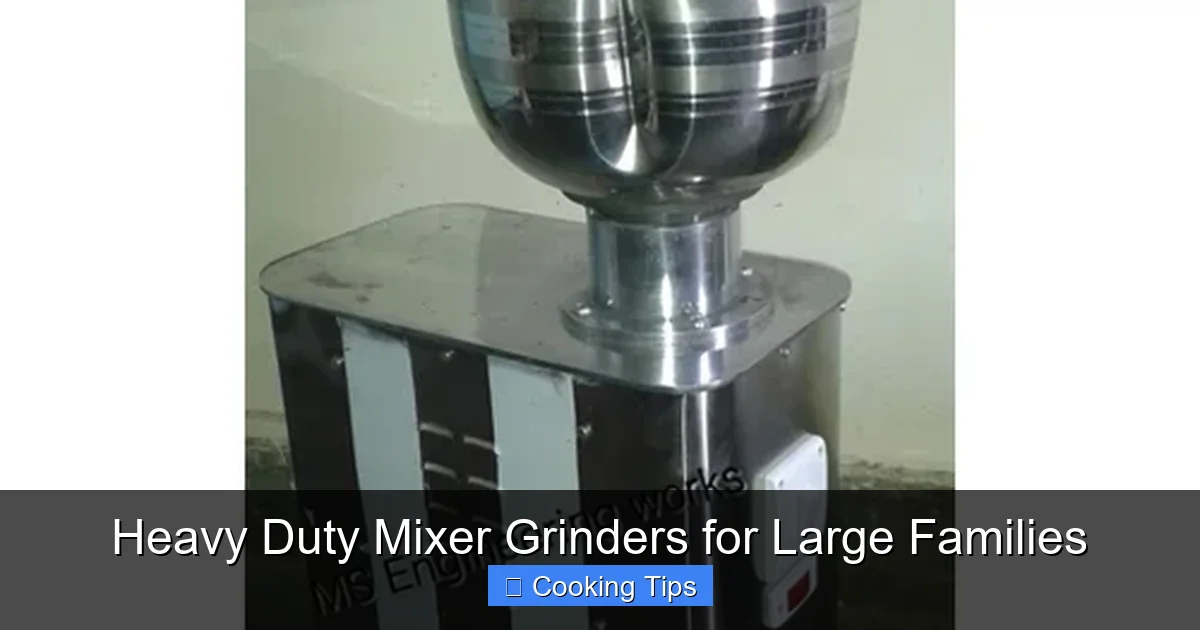
A good heavy-duty mixer grinder for a large family will come with multiple jars of different sizes and materials. This versatility allows you to tackle a wide range of culinary tasks.
Visual guide about Heavy Duty Mixer Grinders for Large Families
Image source: 5.imimg.com
- Jar Sizes: Typically, you’ll find jars ranging from small chutney jars (around 0.4L to 0.5L) to medium jars (around 1L) and larger wet grinding jars (1.5L or more). For a large family, having at least one jar that can handle 1.5L or more is essential for making large batches of batter or purees.
- Jar Material: The most common and recommended material is high-grade stainless steel. It’s durable, doesn’t react with food, is easy to clean, and resistant to rust and corrosion. Some models might offer polycarbonate jars, which are lighter and shatterproof, but stainless steel is generally preferred for its robustness in heavy-duty applications.
- Lid Design: Look for jars with secure-fitting lids, preferably with a locking mechanism or a snug fit that prevents splattering during operation. Some lids also have a small opening in the center, allowing you to add ingredients while the mixer is running, which can be very convenient.
Blade Design and Quality: The Cutting Edge
The blades are what do the actual work, and their design significantly impacts the mixer grinder’s performance. For heavy-duty tasks, robust and well-designed blades are paramount.
- Material: Always opt for blades made of high-quality stainless steel. They are sharp, durable, and resistant to corrosion.
- Specialized Blades: Many heavy-duty models come with specialized blades for different purposes:
- Grinding Blades: These are usually sharp and have a multi-blade design for efficient dry grinding of spices and nuts.
- Wet Grinding Blades: Often designed with a flatter profile and more surface area to effectively grind wet ingredients like soaked lentils and rice for batters.
- Chutney Blades: Smaller, sharper blades designed for fine grinding of chutneys and purees.
- Blade Durability: The blades should be firmly attached to the jar base and built to withstand consistent use without becoming dull or breaking.
Speed Settings and Controls: Precision at Your Fingertips
While high power is important, having control over the speed is equally crucial for achieving the desired texture for different recipes.
- Multi-Speed Control: Look for models with multiple speed settings. This allows you to adjust the speed based on the ingredient and the desired outcome, from a gentle mix to a vigorous grind.
- Pulse Function: A pulse function is incredibly useful. It allows you to give short bursts of power, which is great for controlling the texture of ingredients, especially when making chutneys or coarse masalas.
- Easy-to-Use Dials/Buttons: The controls should be intuitive and easy to operate, even with wet hands. Rotary knobs are often preferred for their tactile feedback and durability.
Safety Features: Protecting You and Your Appliance
When dealing with powerful machinery, safety should never be compromised. Heavy-duty mixer grinders come with several safety features to ensure secure operation.
- Overload Protection: This is a vital feature that automatically shuts off the motor if it overheats or if too much load is placed on it. This prevents damage to the motor and ensures your safety.
- Jar and Lid Locking Mechanisms: Ensure that the jars lock securely into the base, and the lids are firmly in place. This prevents accidental spills and keeps the appliance stable during operation.
- Sturdy Base and Non-Slip Feet: A heavy-duty mixer grinder can vibrate during operation. Look for a sturdy base and rubberized non-slip feet to keep the appliance firmly planted on your countertop.
- Heat-Resistant Body: The body of the mixer grinder should be made of durable, heat-resistant material to prevent any discomfort or hazards during extended use.
Build Quality and Durability: Investing for the Long Term
For a large family, your mixer grinder will be used frequently, so durability is paramount. A well-built appliance will withstand the test of time.
- Motor Housing: Look for models with robust motor housings, often made of ABS plastic or metal, designed to dissipate heat effectively.
- Material Strength: The overall construction should feel solid and well-engineered. Check for sturdy connections between the base, motor housing, and jars.
- Brand Reputation: Consider brands known for their reliability and good after-sales service. Reputable brands often use better quality components and have more stringent quality control.
How to Choose the Right Heavy-Duty Mixer Grinder: A Step-by-Step Approach
Now that you understand the key features, let’s outline a clear process for selecting the perfect heavy-duty mixer grinder for your large family.
Step 1: Assess Your Family’s Cooking Habits and Needs
Before you even start browsing, take some time to reflect on your daily cooking. This is the most crucial step.
- Quantities: How much do you typically cook? Do you make large batches of batter for breakfast or dinner? Do you grind spices for a week at a time? This will dictate the minimum jar capacity you need.
- Types of Food: What ingredients do you grind most often?
- Dry Grinding: Spices, nuts, coffee beans?
- Wet Grinding: Soaked lentils, rice, idli/dosa batter?
- Pureeing: Fruits, vegetables, tomatoes?
- Making Pastes: Ginger-garlic paste, coconut paste?
- Kneading Dough: Some powerful models can even knead dough.
- Frequency of Use: Will you be using it daily, a few times a week, or only for special occasions? Daily use for a large family demands a more robust and powerful machine.
Example: If you regularly make large batches of dosa batter for 8-10 people, you’ll need a mixer grinder with at least a 1.5L wet grinding jar and a powerful motor (900W+) to handle the load efficiently.
Step 2: Determine the Required Motor Power
Based on your assessment in Step 1, you can now determine the appropriate motor wattage.
- For basic grinding and pureeing: 750W – 900W might suffice.
- For heavy-duty tasks like grinding hard spices, making large batters, or kneading dough: 900W – 1200W or more is ideal.
Don’t be swayed solely by wattage; build quality and design also play a significant role. However, for large families and tough jobs, more power is generally better.
Step 3: Evaluate Jar Configurations
Consider the number and sizes of jars offered. Most heavy-duty models come with a set of 3-4 jars.
- Essential jars for large families:
- 1.5L Wet Grinding Jar: For batters, purees, and large quantities.
- 1L Medium Jar: Versatile for grinding masalas, making chutneys, or smaller batches.
- 0.5L Chutney Jar: For fine grinding of chutneys and dips.
- Check for features like unbreakable lids and secure locking mechanisms.
Step 4: Prioritize Safety Features
Always double-check for the safety features mentioned earlier, especially overload protection and sturdy construction.
- Read reviews focusing on safety experiences.
- Ensure the appliance feels stable and secure on your countertop.
Step 5: Check for Ease of Cleaning and Maintenance
A powerful appliance is only as good as its maintainability. You don’t want to spend more time cleaning than cooking.
- Detachable Jars and Blades: Can the blades be easily removed from the jars for thorough cleaning?
- Smooth Surfaces: Are the jars and the motor housing made of materials that are easy to wipe down?
- Dishwasher Safe Parts: While not always common for heavy-duty units, check if any parts are dishwasher safe, though hand-washing is often recommended for longevity.
Step 6: Read Reviews and Compare Models
Once you have a shortlist of models that meet your criteria, dive into user reviews.
- Look for reviews from users with similar family sizes or cooking needs.
- Pay attention to comments about durability, motor performance, noise levels, and ease of cleaning.
- Compare prices and warranties. A longer warranty can indicate the manufacturer’s confidence in the product’s durability.
Tips for Using and Maintaining Your Heavy-Duty Mixer Grinder
Once you’ve purchased your new appliance, proper usage and maintenance will ensure it serves you well for a long time.
Proper Usage Techniques
- Don’t Overload: Even with a heavy-duty machine, avoid overloading the jars. Fill them to the recommended level, usually about two-thirds full for wet grinding.
- Add Water for Wet Grinding: Always add sufficient water when wet grinding to help the blades move freely and prevent strain on the motor.
- Use the Right Jar for the Job: Employ the appropriate jar and blade combination for your specific task.
- Don’t Run Continuously for Too Long: While designed for durability, it’s good practice to give the motor short breaks, especially during very demanding tasks. Refer to the user manual for recommended running times.
- Secure Lids Tightly: Always ensure the lids are firmly in place before starting the mixer.
- Add Ingredients Gradually: For dry grinding, add ingredients gradually to avoid jamming the blades.
- Start on Low Speed: Begin with a lower speed setting and gradually increase it as needed.
Cleaning and Care
- Unplug Before Cleaning: Always unplug the mixer grinder before attempting to clean any part.
- Immediate Cleaning: Clean the jars and blades immediately after use. This prevents food from drying and sticking, making cleaning much easier.
- Hand-Wash Jars and Blades: While some parts might claim to be dishwasher safe, hand-washing with a mild detergent and a soft brush or sponge is generally recommended to preserve their quality and sharpness.
- Clean the Motor Base: Wipe the motor base with a damp cloth. Never immerse the motor base in water.
- Dry Thoroughly: Ensure all parts are completely dry before reassembling or storing them to prevent mold or mildew.
- Storage: Store the jars and blades in a dry place. You can also place a cloth or paper towel inside the jars to absorb any residual moisture.
Troubleshooting Common Issues
Even the best appliances can encounter minor issues. Here are a few common problems and their solutions:
- Overheating:
- Cause: Overloading the jar, running for too long, insufficient water for wet grinding.
- Solution: Let the appliance cool down for at least 15-20 minutes. Reduce the quantity of ingredients, ensure enough water is added, or take breaks during operation. Check if the overload protection has tripped; if so, it should reset after cooling.
- Motor Not Starting:
- Cause: Not plugged in, jar not seated correctly, overload protector tripped.
- Solution: Ensure it’s plugged in and the power is on. Make sure the jar is properly seated and locked onto the base. If the overload protector tripped, allow it to cool down completely.
- Leaking from the Jar:
- Cause: Lid not secured properly, gasket damaged, or jar cracked.
- Solution: Ensure the lid is tightly fitted. Inspect the gasket for any damage and replace if necessary. If the jar is cracked, it needs to be replaced.
- Unusual Noise:
- Cause: Loose blades, something obstructing the blades, motor issue.
- Solution: Check if the blades are securely tightened. Remove any foreign objects. If the noise persists and sounds like a motor issue, contact customer support.
Conclusion: Empower Your Large Family Kitchen
Investing in a heavy-duty mixer grinder is a wise decision for any large family. It’s not just an appliance; it’s a culinary partner that can significantly ease your cooking process, save you precious time, and empower you to create delicious, wholesome meals for your loved ones without the strain. By understanding the essential features like motor power, jar capacity, blade quality, and safety mechanisms, and by following a methodical selection process, you can find a machine that perfectly suits your needs. Remember to prioritize durability and ease of maintenance, and with proper care, your heavy-duty mixer grinder will become an indispensable tool in your kitchen for years to come, a true workhorse that helps you nurture your large family with love and delicious food.
