

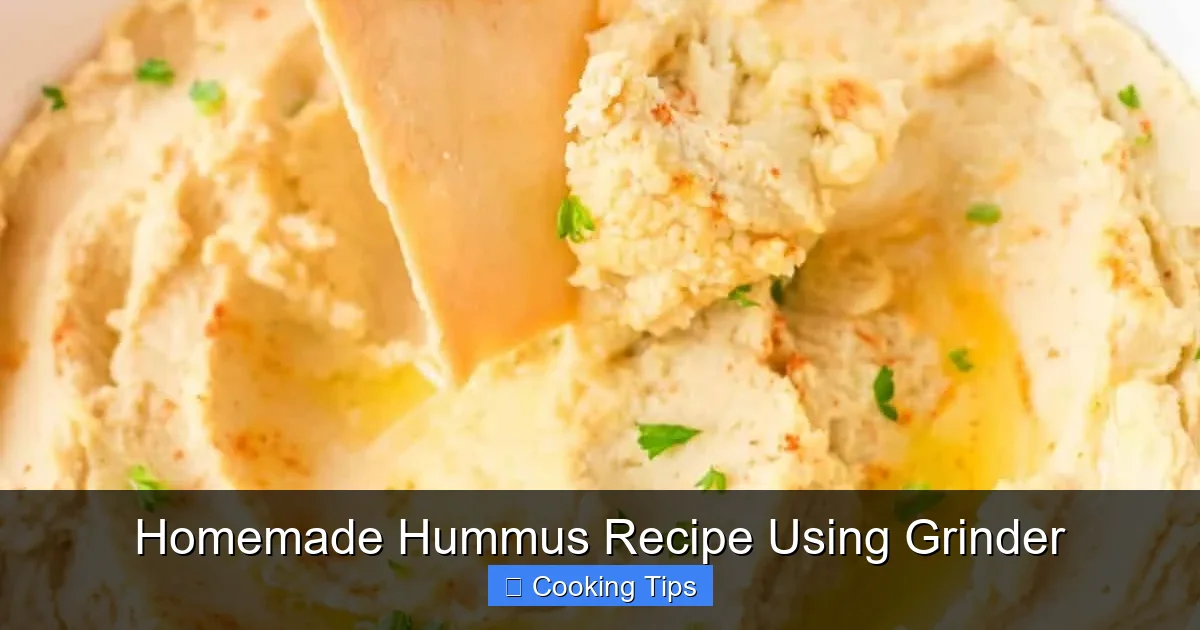
Learn how to make incredibly fresh and creamy homemade hummus using your trusty grinder! This guide breaks down the simple process, from preparing your ingredients to achieving the perfect texture. You’ll discover how to unlock a world of flavor with this versatile and healthy dip, all made with your own kitchen grinder. Get ready for the best hummus you’ve ever tasted!
Key Takeaways
- Effortless Preparation: Using a grinder simplifies the process of creating smooth hummus, eliminating the need for a high-powered blender.
- Ingredient Control: You have complete control over the quality and freshness of your ingredients, leading to superior flavor.
- Texture Customization: The grinder allows for easy adjustments to achieve your desired hummus consistency, from chunky to super smooth.
- Versatile Flavor Base: This basic recipe is a fantastic starting point for endless flavor variations and personalizations.
- Healthier Alternative: Homemade hummus is often healthier than store-bought options, with less sodium and preservatives.
- Budget-Friendly: Making hummus at home is significantly more cost-effective than purchasing it pre-made.
Homemade Hummus Recipe Using Grinder
Hello there, fellow food enthusiasts! Are you ready to elevate your snack game and impress your friends with a truly delicious and satisfying dip? Today, we’re diving into the wonderful world of homemade hummus, and we’re going to show you how to make it using a tool you might already have in your kitchen: a grinder! Forget those store-bought tubs that often lack the vibrant flavor and perfect texture of homemade goodness. With this guide, you’ll learn how to transform simple ingredients into a creamy, dreamy hummus that will have everyone asking for the recipe.
Making hummus from scratch might sound intimidating, but I promise it’s incredibly easy, especially when you harness the power of your grinder. This method is fantastic for those who might not have a food processor or a high-powered blender. We’ll walk you through each step, offering practical tips and insights to ensure your hummus is a resounding success. Get ready to experience the joy of creating something truly special with your own hands. Let’s get grinding!
Why Use a Grinder for Hummus?
You might be wondering, “Why a grinder?” While food processors are the typical go-to for hummus, a good quality grinder, especially one designed for grinding spices or grains, can do a surprisingly good job. The key is to work in batches and be patient. The grinder essentially pulverizes the chickpeas, breaking them down into a paste that forms the base of your hummus. It’s a testament to how versatile kitchen tools can be! This method is especially useful for creating a slightly coarser texture if that’s what you prefer, or you can grind for longer to achieve a smoother consistency. Plus, it gives you that satisfying feeling of making something from basic ingredients.
Gathering Your Ingredients
Before we begin the magical transformation, let’s gather everything we need. The beauty of homemade hummus is its simplicity. You only need a few core ingredients to get started, and from there, the flavor possibilities are endless.
The Essential Hummus Players:
- Chickpeas (Garbanzo Beans): This is the star of our show! You can use canned chickpeas for convenience or dried chickpeas that you’ve soaked and cooked yourself. Using dried chickpeas generally results in a fresher, better flavor and texture. If using canned, drain and rinse them very well.
- Tahini: This is a paste made from ground sesame seeds. It’s crucial for that authentic hummus flavor and creamy texture. Make sure to stir your tahini well before using, as the oil can separate.
- Lemon Juice: Freshly squeezed lemon juice is a must! It adds brightness and that essential tanginess. Avoid bottled lemon juice, as it can have a metallic taste.
- Garlic: A clove or two of fresh garlic will add a wonderful punch of flavor. You can adjust the amount to your preference.
- Olive Oil: Good quality extra virgin olive oil is key for both flavor and achieving a smooth consistency.
- Salt: To enhance all the flavors. Start with a pinch and add more to taste.
- Water (or Ice Water): This is our secret weapon for achieving that super creamy texture. Ice water is often recommended as it can help emulsify the hummus and make it lighter.
Optional Flavor Boosters:
- Cumin: A classic spice that complements the earthy flavor of chickpeas.
- Paprika: For garnish and a hint of smoky flavor.
- Fresh Herbs: Parsley or cilantro can be added for a burst of freshness.
- Spicy Elements: A pinch of cayenne pepper or a dash of hot sauce for a kick.
Step-by-Step Hummus Creation with Your Grinder
Now for the fun part! Let’s get our hands (and our grinder) dirty. Remember, patience is your friend when using a grinder for hummus.
Step 1: Prepare Your Chickpeas
If you’re using canned chickpeas, this step is straightforward.
- Drain and Rinse: Open your can of chickpeas and pour them into a colander. Rinse them thoroughly under cold running water. This removes excess salt and any “canned” taste.
- Consider Peeling (Optional but Recommended): For the creamiest hummus, you can peel the chickpeas. This is the most labor-intensive part, but it makes a noticeable difference. To peel, gently rub the chickpeas between your fingers. The skins will loosen and can be easily removed. It sounds tedious, but a batch of peeled chickpeas will yield incredibly smooth hummus. Don’t worry if you don’t peel them all; just do what you can.
If you’re using dried chickpeas:
- Soak: Place the dried chickpeas in a large bowl and cover them with plenty of water (at least three times the volume of the beans). Let them soak overnight, or use the quick soak method: cover with water, bring to a boil for 2 minutes, then let stand for 1 hour.
- Cook: Drain the soaked chickpeas and place them in a pot. Cover with fresh water and bring to a boil. Reduce the heat and simmer for 1-2 hours, or until the chickpeas are very tender and can be easily mashed. You can add a pinch of baking soda to the cooking water, which helps them soften faster. Drain and let them cool slightly.
Step 2: Grind the Garlic and Lemon Juice
This is a great way to start breaking down the tougher flavors before adding the chickpeas.
- Small Batch Grinding: Place your peeled garlic clove(s) and about half of your lemon juice into your grinder.
- Grind Until Paste-like: Pulse the grinder a few times until the garlic is finely minced and forms a rough paste with the lemon juice. This helps to “pre-process” the garlic and integrate it smoothly into the final hummus.
Tip: Some grinders are better suited for wet ingredients than others. If your grinder is primarily for dry spices, you might want to mince the garlic very finely with a knife before adding it to the main hummus mixture later.
Step 3: Grind the Chickpeas in Batches
This is where the grinder really shines. You’ll need to work in batches to avoid overloading your grinder.
- Fill the Grinder: Add a portion of your prepared chickpeas to the grinder. Don’t overfill it.
- Process Until Pasted: Grind the chickpeas. You’ll likely need to stop and scrape down the sides of the grinder with a spatula a few times. Pulse and grind, pulse and grind. The goal is to break down the chickpeas into a thick paste.
- Repeat: Once one batch is sufficiently ground, transfer it to a clean bowl. Repeat the process with the remaining chickpeas until all are ground.
Example: If you have 2 cans of chickpeas (about 3 cups), you might grind them in 2-3 batches, depending on the size of your grinder.
Step 4: Combine and Emulsify
Now it’s time to bring everything together and create that signature creamy texture.
- Combine in a Bowl: In a large mixing bowl, combine the ground chickpeas, the garlic-lemon paste from Step 2, the tahini, the remaining lemon juice, and a generous pinch of salt. You can also add a pinch of cumin at this stage if you like.
- Start Mixing: Using a sturdy spoon or a spatula, begin to mix these ingredients together. It will be quite thick at this point.
- Gradually Add Ice Water: This is where the magic happens. Slowly drizzle in the ice water, a tablespoon at a time, while continuously stirring and mixing. The water helps to emulsify the tahini and olive oil, creating a lighter, creamier texture.
- Achieve Desired Consistency: Keep adding water until you reach your desired consistency. For a thicker hummus, use less water. For a smoother, lighter hummus, use more water.
Step 5: Incorporate Olive Oil
The final touch for richness and smoothness.
- Drizzle and Mix: Once you have a good consistency from the water, drizzle in your extra virgin olive oil.
- Mix Thoroughly: Stir the olive oil into the hummus until it’s fully incorporated. This will give your hummus a beautiful sheen and a richer flavor.
Step 6: Taste and Adjust
Hummus is all about personal preference. This is your moment to shine.
- Taste Test: Take a small spoonful and taste.
- Adjust Seasoning: Does it need more salt? More lemon juice for tanginess? A bit more tahini for richness? Don’t be afraid to add a little more of any ingredient to get it just right for your palate.
Step 7: Serve and Garnish
Your homemade hummus is ready to be enjoyed!
- Transfer to Serving Dish: Spoon the hummus into a serving bowl.
- Create a Well: Use the back of your spoon to create a slight well or swirl in the center.
- Drizzle with Olive Oil: Drizzle a bit more extra virgin olive oil over the top.
- Garnish: Sprinkle with paprika, a pinch of cumin, chopped fresh parsley, or toasted pine nuts.
- Serve: Serve with pita bread, fresh vegetables (carrots, cucumbers, bell peppers), crackers, or use it as a spread in sandwiches and wraps.
Troubleshooting Common Hummus Issues
Even with the best intentions, sometimes things don’t turn out perfectly. Here are a few common issues and how to fix them:
Hummus is too thick/stiff:
Solution: This is an easy fix! Continue to add ice water, a tablespoon at a time, while stirring, until you reach your desired consistency. You might also find that a bit more olive oil helps to loosen it up.
Hummus is too thin/runny:
Solution: If you’ve accidentally added too much water, don’t despair. You can try adding a bit more tahini or a few more chickpeas (if you have some on hand, either canned or cooked from dried) and mix them in. You could also try letting it sit in the refrigerator for about 30 minutes, as it tends to thicken as it chills.
Hummus lacks flavor:
Solution: This is usually a salt or acid issue. Taste your hummus and see if it needs more salt to bring out the flavors, or more lemon juice to add brightness. A tiny bit more garlic can also boost the flavor.
Hummus is bitter:
Solution: Bitterness can sometimes come from over-processed garlic or tahini that isn’t good quality. If it’s a slight bitterness from the garlic, you can try adding a little more lemon juice and salt to balance it out. If the tahini is the culprit, there’s not much to do but start with a fresh batch using a better quality tahini.
Tips for the Best Grinder Hummus
* Use Good Quality Ingredients: The better your chickpeas, tahini, and olive oil, the better your hummus will taste.
* Don’t Skip the Peeling: While it’s an extra step, peeling the chickpeas makes a significant difference in the smoothness and texture.
* Chill Your Water: Using ice-cold water is a pro tip for achieving a lighter, fluffier hummus.
* Be Patient with the Grinder: Work in small batches and don’t be afraid to stop and scrape down the sides. This ensures everything gets properly processed.
* Season Generously: Taste and adjust your seasonings. Hummus is forgiving and can always be improved with a little more salt or lemon.
* Experiment with Flavors: Once you’ve mastered the basic recipe, have fun! Add roasted red peppers, sun-dried tomatoes, pesto, or even some chili for a spicy kick.
Conclusion
And there you have it! Your very own batch of delicious, homemade hummus made with the humble yet mighty grinder. You’ve proven that you don’t need fancy equipment to create something truly wonderful in the kitchen. This recipe is not just about making a dip; it’s about the satisfaction of transforming simple ingredients into a flavorful, healthy, and incredibly versatile dish.
Homemade hummus is perfect for any occasion – a healthy snack for a busy afternoon, an appetizer for a gathering, or a secret weapon in your lunchbox. Experiment with toppings, serve it with your favorite dippers, and savor the incredible taste that only homemade can offer. So, go ahead, grab your grinder, and get ready to enjoy the best hummus you’ve ever made. Happy grinding and happy eating!
