

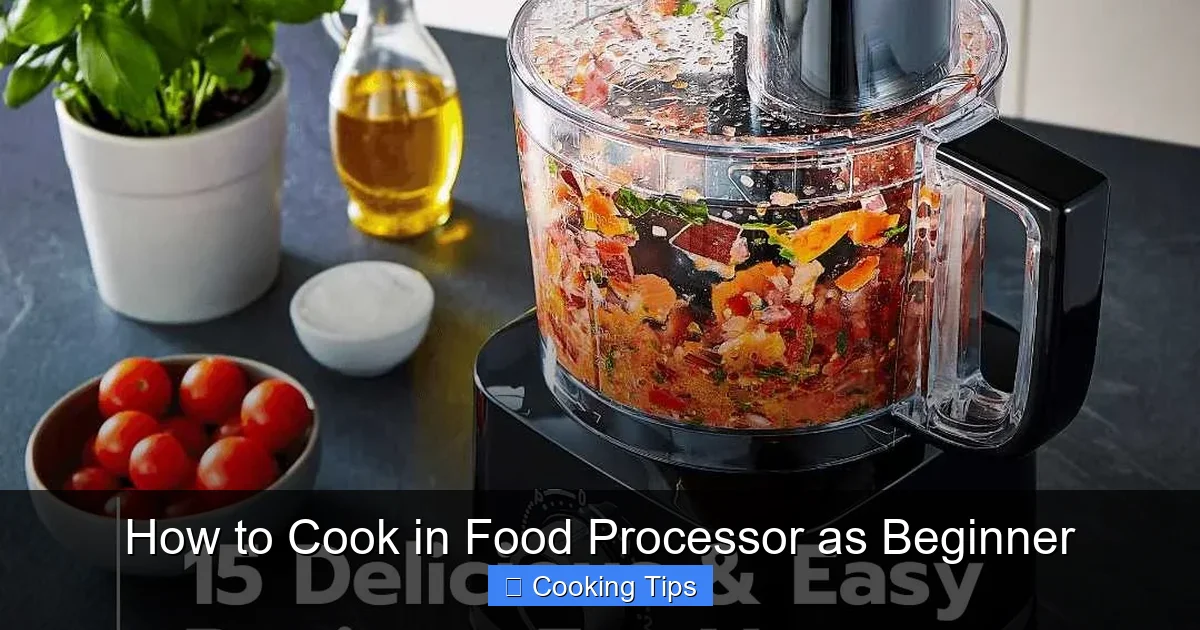
Discover how to cook with your food processor! This guide breaks down essential techniques, from chopping and pureeing to emulsifying, making meal prep a breeze for beginners. Learn to unlock the full potential of your appliance and create a variety of delicious dishes with confidence. From simple sauces to hearty soups, your food processor is your new kitchen best friend.
Key Takeaways
- Understand Your Food Processor’s Attachments: Different blades and discs perform specific tasks, from chopping to slicing. Knowing their purpose is crucial for success.
- Start Simple with Basic Functions: Begin with straightforward tasks like chopping vegetables or making purees before tackling more complex recipes.
- Safety First: Always ensure the machine is unplugged when assembling, disassembling, or cleaning to prevent accidents.
- Proper Ingredient Preparation: Cut ingredients into uniform sizes to ensure even processing. Don’t overfill the bowl.
- Master Pulse Functionality: The pulse button gives you control for achieving the right texture, especially for chopping and making doughs.
- Experiment with Recipes: Once comfortable, explore various recipes that leverage your food processor’s capabilities, like dips, pestos, and batters.
How to Cook in Food Processor as Beginner
Welcome to the exciting world of food processor cooking! If you’ve recently acquired one of these amazing kitchen gadgets, or if yours has been gathering dust, you’re in the right place. This guide is designed specifically for beginners, breaking down how to use your food processor effectively to create delicious meals with ease. By the end of this article, you’ll feel confident tackling a variety of recipes and understand how your food processor can truly revolutionize your cooking routine. Get ready to save time, reduce effort, and enjoy fantastic food!
What Can a Food Processor Actually Do?
Before we dive into the ‘how,’ let’s briefly touch upon the ‘what.’ Food processors are incredibly versatile. They excel at tasks that are tedious or time-consuming when done by hand. Think about it: finely chopping onions without tears, making smooth purees for soups and sauces, shredding cheese in seconds, or even kneading dough. Modern food processors often come with a range of attachments, each designed for a specific purpose. Understanding these attachments is the first step to unlocking your food processor’s potential.
Getting Started: Your Food Processor’s Anatomy
Every food processor is a little different, but they generally share common components. Familiarize yourself with these parts:
- The Base: This houses the motor and control panel (buttons for on, off, and pulse).
- The Bowl: This is where the magic happens! It attaches securely to the base.
- The Lid: This locks onto the bowl and usually has a feed tube.
- The Feed Tube: This allows you to add ingredients while the machine is running.
- The Pusher: This slides down the feed tube to safely guide ingredients towards the blade.
- The Blade(s) and Disc(s): These are the workhorses. Common ones include:
- S-Blade (Chopping Blade): The most common, used for chopping, mincing, pureeing, and mixing.
- Shredding Disc: For shredding vegetables, cheese, and fruits.
- Slicing Disc: For creating uniform slices of vegetables and fruits.
- Dough Blade: Sometimes a different shaped blade, designed for kneading dough.
Step 1: Safety First!
This is non-negotiable. Before you even think about plugging in your food processor, make sure you understand safety protocols.
Always Unplug When Assembling or Disassembling
This is the golden rule. Never put your fingers anywhere near the blades or moving parts when the appliance is plugged in. Ensure the unit is completely powered off and unplugged when you are attaching or removing the bowl, lid, blades, or discs.
Use the Pusher, Not Your Fingers
When using the feed tube, always use the provided pusher to guide food down. Your fingers are not designed to go into the feed tube while the machine is in operation.
Secure All Parts
Make sure the bowl is properly locked into the base and the lid is securely fastened. Most food processors have safety interlocks that prevent them from running if these parts aren’t correctly in place.
Step 2: Mastering Basic Functions
Let’s start with the most common and easiest tasks.
Chopping Vegetables
This is where your food processor truly shines. It can chop onions, garlic, carrots, celery, and more in a fraction of the time it would take by hand, and with less mess.
How to do it:
- Wash and roughly chop your vegetables into pieces that fit easily into the food processor bowl. Aim for pieces that are roughly the same size to ensure even chopping.
- Place the S-blade in the bowl.
- Add your chopped vegetables to the bowl. Don’t overfill it; work in batches if necessary.
- Secure the lid.
- Plug in the appliance and use the “Pulse” button. Pulse for a few seconds at a time, checking the texture after each pulse.
Tip: For finely minced garlic or onion, pulse until the pieces are very small. For roughly chopped vegetables for a stew, pulse fewer times.
Pureeing Ingredients
Smooth soups, sauces, and baby food are effortless with a food processor.
How to do it:
- Cook your ingredients until tender (e.g., roasted vegetables, cooked beans).
- Transfer the cooked ingredients to the food processor bowl, fitted with the S-blade.
- Add any liquids (broth, cream, water) needed for your recipe.
- Secure the lid and process on a continuous setting (or pulse repeatedly) until the mixture is smooth and creamy. You may need to scrape down the sides of the bowl a few times with a spatula.
Example: For a creamy tomato soup, roast your tomatoes, bell peppers, and onions, then puree them in the food processor with some vegetable broth.
Shredding and Slicing
These tasks are made simple with the dedicated discs.
How to do it (Shredding):
- Place the shredding disc (usually the one with small holes) onto the drive shaft in the food processor.
- Secure the lid.
- Place the ingredient (e.g., cheese, carrots, zucchini) into the feed tube.
- Turn the food processor on to a continuous setting.
- Use the pusher to gently guide the ingredient down the feed tube onto the spinning disc.
How to do it (Slicing):
- Insert the slicing disc (usually the one with a flat, sharp edge) onto the drive shaft.
- Secure the lid.
- Place the ingredient (e.g., potatoes, cucumbers, apples) into the feed tube.
- Turn the food processor on and use the pusher to guide the ingredient down for even slices.
Tip: For best results, ensure your cheese is cold when shredding; it won’t become mushy.
Step 3: Exploring More Advanced Techniques
Once you’re comfortable with the basics, you can branch out.
Making Sauces and Dips
From pesto to hummus, your food processor is a shortcut to restaurant-quality dips and sauces.
Example: Pesto Sauce
- Add basil leaves, garlic, pine nuts, and Parmesan cheese to the food processor bowl with the S-blade.
- Pulse a few times to chop everything coarsely.
- With the machine running on a continuous setting, slowly drizzle in olive oil through the feed tube until the pesto reaches your desired consistency.
- Season with salt and pepper.
Kneading Dough
Many food processors can handle simple dough recipes, saving you manual effort.
How to do it:
- Use the dough blade or the S-blade.
- Add your dry ingredients (flour, yeast, salt).
- Gradually add wet ingredients (water, oil) as the processor runs on a low speed or by pulsing.
- Process until the dough forms a ball and pulls away from the sides of the bowl. This usually takes about 30-60 seconds.
Tip: Don’t over-process dough, as this can make it tough.
Emulsifying (Mayonnaise & Salad Dressings)
Creating stable emulsions like mayonnaise can be tricky, but a food processor makes it much easier.
How to do it:
- Add egg yolk, mustard, lemon juice, and seasonings to the food processor with the S-blade.
- Process for a few seconds to combine.
- With the machine running continuously, *very slowly* and in a thin, steady stream, drizzle in your oil through the feed tube. This slow addition is key to creating a stable emulsion.
- Continue until all the oil is incorporated and the mayonnaise is thick.
Step 4: Cleaning Your Food Processor
Cleaning is often the least exciting part, but it’s crucial for maintaining your appliance.
Immediate Cleaning is Best
The longer food residue sits, the harder it is to remove. Aim to clean your food processor as soon as possible after use.
Disassemble Carefully
Ensure the machine is unplugged. Then, carefully remove the lid, bowl, and blades/discs.
Wash Components
Most bowls, lids, pushers, blades, and discs are dishwasher safe (check your manual for confirmation). If not, wash them by hand with warm, soapy water. Be extremely careful when handling the sharp blades and discs. Using a brush can help clean around the blade edges safely.
Clean the Base
Wipe down the motor base with a damp cloth. Never immerse the base in water.
Dry Thoroughly
Ensure all parts are completely dry before reassembling or storing to prevent mold or rust.
Troubleshooting Common Issues
* Food Processor Not Starting:
* Is it plugged in?
* Are the bowl and lid securely locked in place? (Safety interlocks may be preventing it from running.)
* Is the blade or disc properly seated on the drive shaft?
* Uneven Chopping:
* Did you cut ingredients into uniform sizes?
* Were you overfilling the bowl?
* Did you use the pulse function effectively?
* Ingredients Sticking to the Sides:
* Stop the machine, scrape down the sides with a spatula, and continue processing.
* You might need to add a little more liquid for pureeing tasks.
* Lid or Bowl Not Sealing Properly:
* Ensure there are no food particles obstructing the seal.
* Check for any cracks or damage to the bowl or lid.
Conclusion: Embrace Your Food Processor’s Power
Using a food processor as a beginner is less about complex techniques and more about understanding its core functions and safety. By starting with basic chopping, pureeing, and shredding, you’ll quickly build confidence. Remember to always prioritize safety, clean your appliance promptly, and don’t be afraid to experiment with new recipes. Your food processor is a powerful tool that can significantly simplify your kitchen tasks, allowing you to create more delicious food with less effort. So, dust it off, plug it in, and start cooking! You’ll be amazed at what you can achieve.
