

Safely transporting a sharp kitchen knife is crucial to prevent accidents. This guide provides clear, step-by-step instructions on how to hold a kitchen knife when walking, whether you’re moving across the kitchen or to another room. Follow these safety protocols to protect yourself and others.
How to Hold a Kitchen Knife When Walking
Welcome to our comprehensive guide on safely holding a kitchen knife when walking! In the fast-paced environment of a modern kitchen, it’s often necessary to move knives from one station to another. Whether you’re a seasoned chef or a home cook, understanding the correct technique for carrying a knife is paramount to your safety and the safety of those around you. This guide will equip you with the knowledge and practical steps to confidently and securely transport your sharp tools.
Key Takeaways
- Blade Pointed Down and Away: Always position the knife so the sharp edge faces downwards and away from your body.
- Secure Grip on the Handle: Maintain a firm, comfortable grip on the handle, keeping your fingers away from the blade.
- Controlled Pace and Awareness: Walk at a slow, deliberate pace and be mindful of your surroundings.
- Keep the Knife Visible: Ensure the knife is visible to others to avoid startling or endangering them.
- Use a Sheath When Possible: Whenever feasible, use a knife sheath for an extra layer of protection.
- Communicate Your Movement: If others are around, announce that you are carrying a knife.
Why Safe Knife Handling Matters
Kitchen knives are essential tools, but their sharpness also makes them potentially dangerous. A moment’s inattention, a slip, or an unexpected bump can lead to serious injury. By adopting safe carrying practices, you significantly reduce the risk of cuts, nicks, and more severe accidents. It’s about building good habits that become second nature, protecting yourself, your colleagues, and your family. We all want to enjoy cooking without the worry of unnecessary accidents. This guide is designed to empower you with that confidence.
The Core Principles of Safe Knife Carrying
Before we dive into the specific steps, let’s establish the fundamental principles that underpin safe knife handling when walking. These are the guiding lights that will help you remember the correct technique every time.
1. Keep the Blade Controlled
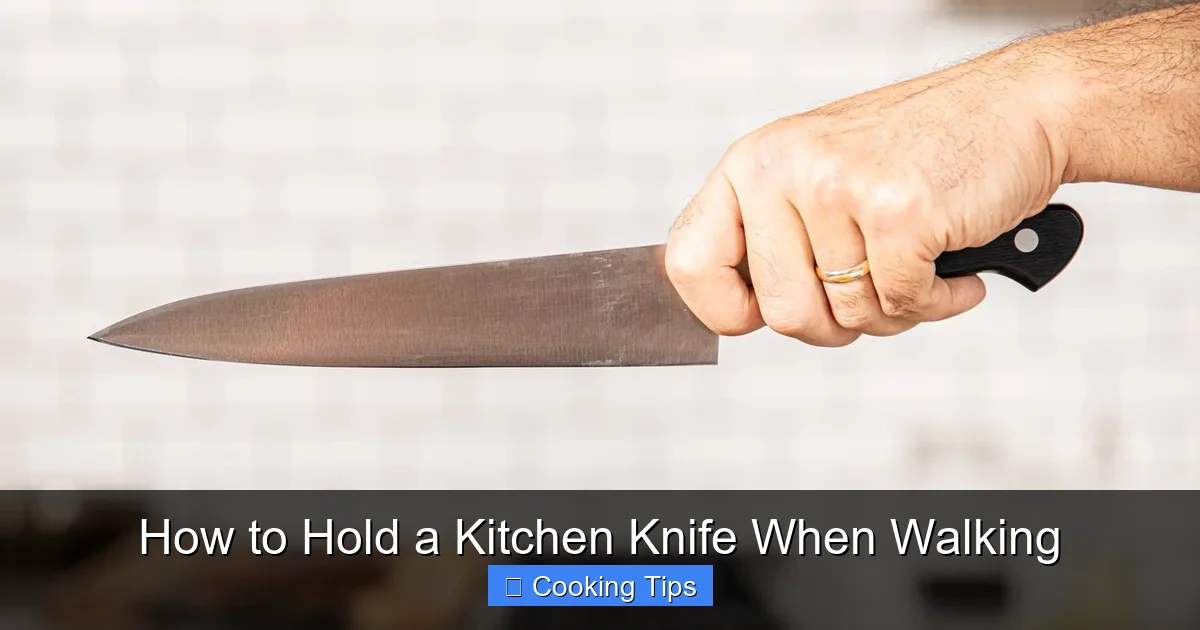
The sharp edge of the knife is its primary function but also its biggest hazard. Therefore, controlling the blade’s direction is the most critical aspect of safe carrying. This means preventing it from swinging or pointing towards anyone, including yourself.
Visual guide about How to Hold a Kitchen Knife When Walking
Image source: seriouseats.com
2. Maintain a Firm Grip
A secure grip on the knife’s handle prevents it from slipping out of your hand. This doesn’t mean gripping it so tightly that your knuckles turn white, but rather a firm, confident hold that allows for control.
3. Be Aware of Your Surroundings
Your environment plays a huge role in safety. Knowing where you’re going, who might be around, and any potential obstacles is just as important as how you hold the knife itself.
Step-by-Step: How to Hold a Kitchen Knife When Walking
Now, let’s break down the actual technique. These steps are designed to be simple, effective, and easy to implement.
Step 1: Assess Your Knife and Situation
Before you even pick up the knife, take a moment to consider what you’re carrying and where you’re going. Is it a small paring knife or a large chef’s knife? Will you be walking across a clear kitchen floor or navigating a crowded workspace? This initial assessment helps you prepare and choose the best carrying method.
Visual guide about How to Hold a Kitchen Knife When Walking
Image source: foodrepublic.com
Visual guide about How to Hold a Kitchen Knife When Walking
Image source: kendellkreations.com
H3: The Importance of Sheaths
If your knife has a sheath or a blade guard, use it! A sheath provides an excellent barrier between the sharp edge and the world. If you’re moving a knife even a short distance, sheathing it adds an invaluable layer of safety. Always ensure the sheath is secure and the knife is fully inserted before moving.
Step 2: Choose Your Grip
There are two primary ways to hold a kitchen knife when walking, depending on the size of the knife and your preference. Both prioritize safety.
H3: The Pinch Grip (for most knives)
This is the most common and recommended grip for carrying most kitchen knives, especially chef’s knives and utility knives.
How to do it:
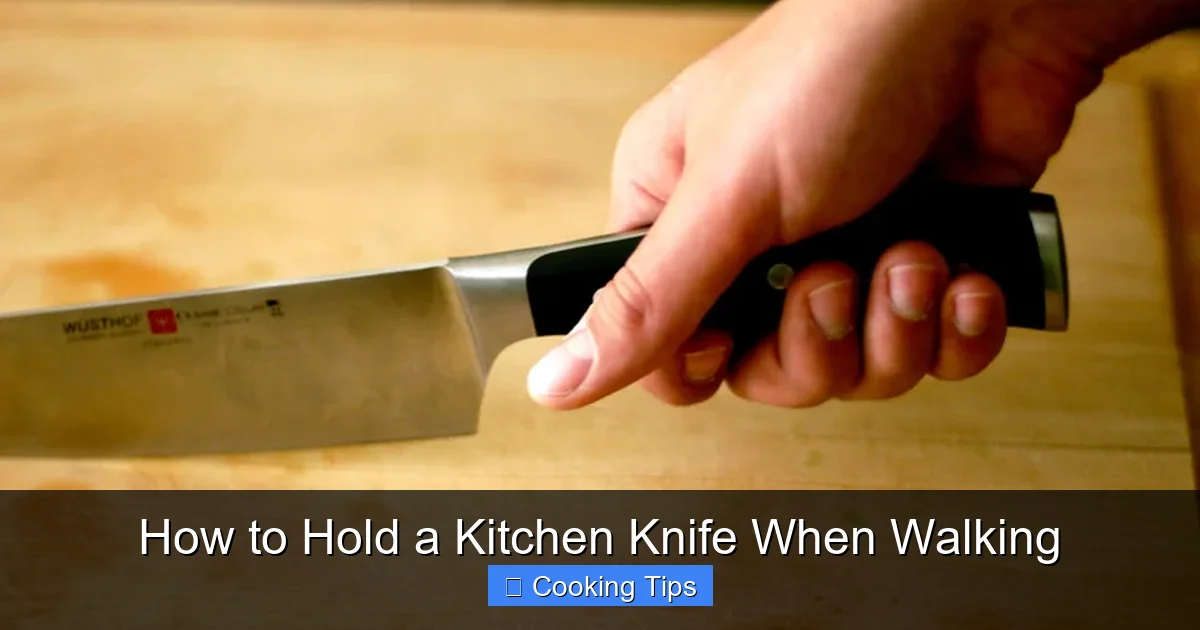
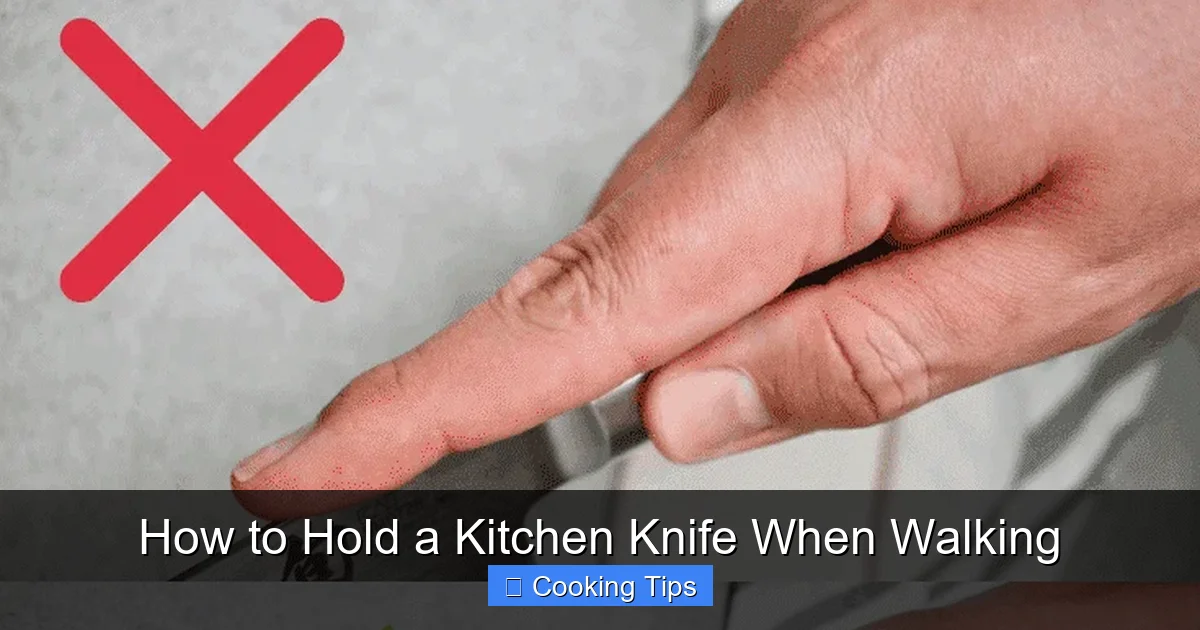
- Pinch the Blade: Place your thumb and index finger on either side of the blade, just in front of the bolster (the thick part where the blade meets the handle). This gives you excellent control over the blade itself.
- Wrap Your Other Fingers: Curl your remaining three fingers firmly around the handle.
- Keep Fingers Away from the Edge: Ensure your fingers are well clear of the sharp cutting edge.
This grip allows you to feel the blade and maintain precise control. It’s like having a direct connection to the tool.
H3: The Handle Grip (for smaller knives or when a sheath is unavailable)
For very small knives, like paring knives, or if a sheath isn’t an option, a firm handle grip can be used, but with extra caution.
How to do it:
- Grip the Handle Firmly: Hold the handle as you normally would for stable control.
- Index Finger Position: Some people opt to rest their index finger along the spine of the blade for added stability, but ensure it’s nowhere near the cutting edge.
This grip relies more on the strength of your hold on the handle. It’s less ideal for very large knives where the weight can be harder to manage.
Step 3: Position the Knife for Carrying
This is where the actual “walking” part comes in. The orientation of the knife is crucial for safety.
H3: Blade Down, Edge Away
This is the golden rule. No matter which grip you choose, the knife must be carried with the sharp edge pointing downwards and away from your body.
How to do it:
- Point the Tip Downwards: The tip of the knife should be pointing towards the floor.
- Turn the Edge Inwards: Ensure the sharp cutting edge is facing towards your body, or more accurately, towards the direction you are moving. This might sound counterintuitive, but it ensures that if you accidentally brush against something or someone, it’s the dull spine that makes contact, not the sharp blade. However, the primary safety measure here is the downward angle.
- Keep it Close to Your Side: Hold the knife relatively close to your body, not extended out in front of you. This minimizes the chance of accidentally striking someone or something.
Imagine you are carrying a delicate flower; you wouldn’t swing it around wildly. Treat your knife with that same respect for its potential to cause harm.
Step 4: Move with Awareness
How you walk is as important as how you hold the knife. Speed and attention are key.
H3: Slow and Steady Wins the Race
Walk at a deliberate, unhurried pace. Rushing with a sharp knife is a recipe for disaster. Give yourself enough time to navigate your surroundings smoothly.
H3: Scan Your Path
Before you take a step, look where you are going. Are there wet spots on the floor? Are there people or obstacles in your path? Be actively aware of your environment.
H3: Keep the Knife Visible
Don’t hide the knife. Let people see that you are carrying a sharp object. This prevents startling or accidental encounters. Holding it slightly in front of you, at a safe downward angle, makes it visible without being a direct hazard.
Step 5: Communicate if Necessary
In a busy kitchen or shared space, a simple verbal cue can prevent a lot of trouble.
H3: Announce Your Movement
If you see someone approaching or if the area is crowded, a simple “Knife coming through!” or “Sharp knife!” can alert others to give you space and be mindful.
Practical Tips for Enhanced Safety
Beyond the core steps, consider these additional tips to make your knife-carrying even safer:
- Never Walk with a Knife in Your Mouth: This is incredibly dangerous and should never be done, no matter how short the distance.
- Don’t Carry Multiple Knives at Once: Unless you have a specific, safe carrying system, avoid carrying more than one knife at a time.
- Keep Your Path Clear: Before you start walking, quickly scan your intended path and clear any clutter.
- Turn Off Distractions: Avoid looking at your phone or engaging in lengthy conversations while carrying a knife. Focus on the task.
- Practice Makes Perfect: The more you practice these techniques, the more natural and instinctive they will become.
Troubleshooting Common Scenarios
Even with the best intentions, things can happen. Here are a few common scenarios and how to handle them:
Scenario: Someone bumps into you.
Solution: If you are holding the knife correctly (blade down, edge away), the impact should be minimized. If you feel a jolt, immediately stop walking and assess the situation. Keep the knife stable and don’t let it swing. Secure your grip and wait for the person to move away.
Scenario: You need to put the knife down quickly.
Solution: If you must set the knife down, do so carefully. Place it on a stable, clear surface like a cutting board or counter, with the blade facing away from the edge and your body. Never leave a knife balanced precariously.
Scenario: You are carrying a very long knife (e.g., a slicer).
Solution: For very long knives, the pinch grip with the blade pointing downwards is even more critical. You might need to adjust your gait slightly to avoid hitting door frames or other obstacles. Keeping it very close to your body is paramount. If possible, use a long blade sheath.
Conclusion
Mastering the art of holding a kitchen knife when walking is a fundamental skill for anyone who spends time in the kitchen. By consistently applying the principles of keeping the blade controlled, maintaining a secure grip, and moving with awareness, you can significantly minimize the risk of accidents. Remember to always prioritize safety, use sheaths whenever possible, and communicate your movements when necessary. These practices not only protect you but also contribute to a safer, more harmonious kitchen environment for everyone. Happy cooking, and stay safe!
