

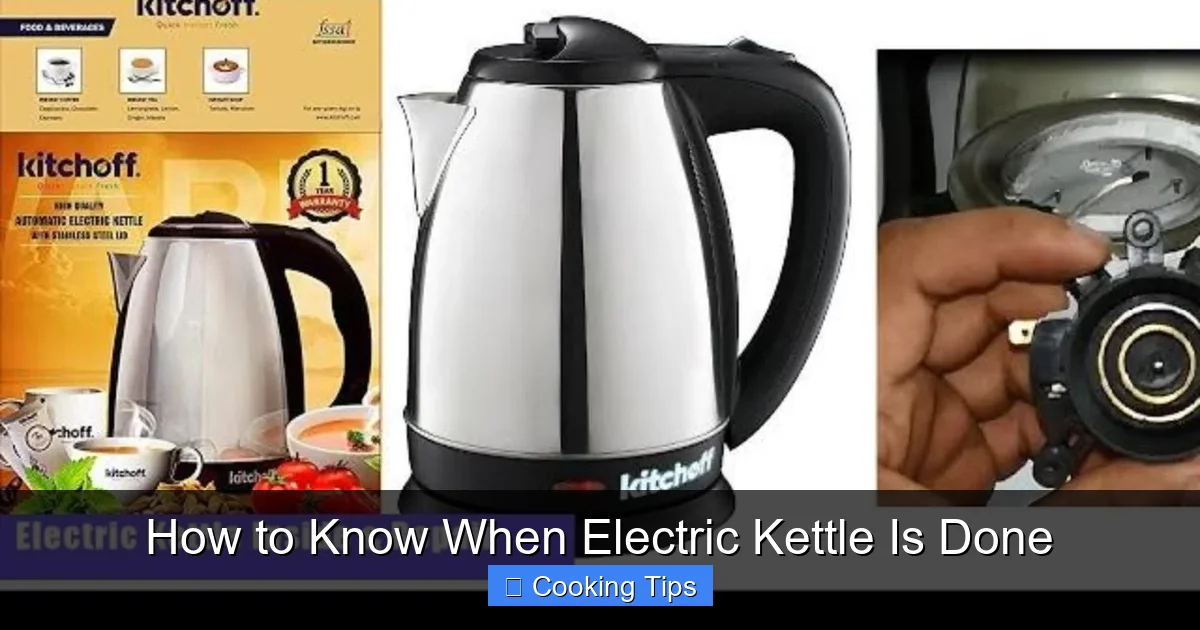
Are you tired of guessing when your electric kettle has finished boiling? This guide will teach you the simple, reliable ways to know exactly when your water is ready. From visual cues to audible signals, you’ll become an expert at using your electric kettle for perfect hot drinks and cooking. No more over-boiled or under-boiled water!
How to Know When Electric Kettle Is Done
Welcome to our comprehensive guide on mastering your electric kettle! In today’s fast-paced world, an electric kettle is a kitchen essential. From your morning cup of coffee or tea to preparing instant noodles or even sanitizing baby bottles, a properly boiled kettle is the first step. But how do you know for sure when that little appliance has done its job? It might seem obvious, but there are subtle cues and common mistakes that can lead to less-than-perfect results. By the end of this guide, you’ll be an expert, confidently knowing when your electric kettle is done boiling, every single time. We’ll cover everything from the classic signs to troubleshooting common issues, ensuring you get the most out of your trusty kitchen companion in 2026.
- Audible Cues: Listen for the distinct click or beep that signifies completion.
- Visual Indicators: Observe the automatic shut-off light or steam vents.
- Consistency is Key: Understand that different kettles have unique indicators.
- Safety First: Always be aware of steam and hot surfaces.
- Troubleshooting Common Issues: Learn what to do if your kettle isn’t shutting off.
- Beyond Boiling: Recognize that “done” might vary for different uses.
Understanding Your Electric Kettle’s Function
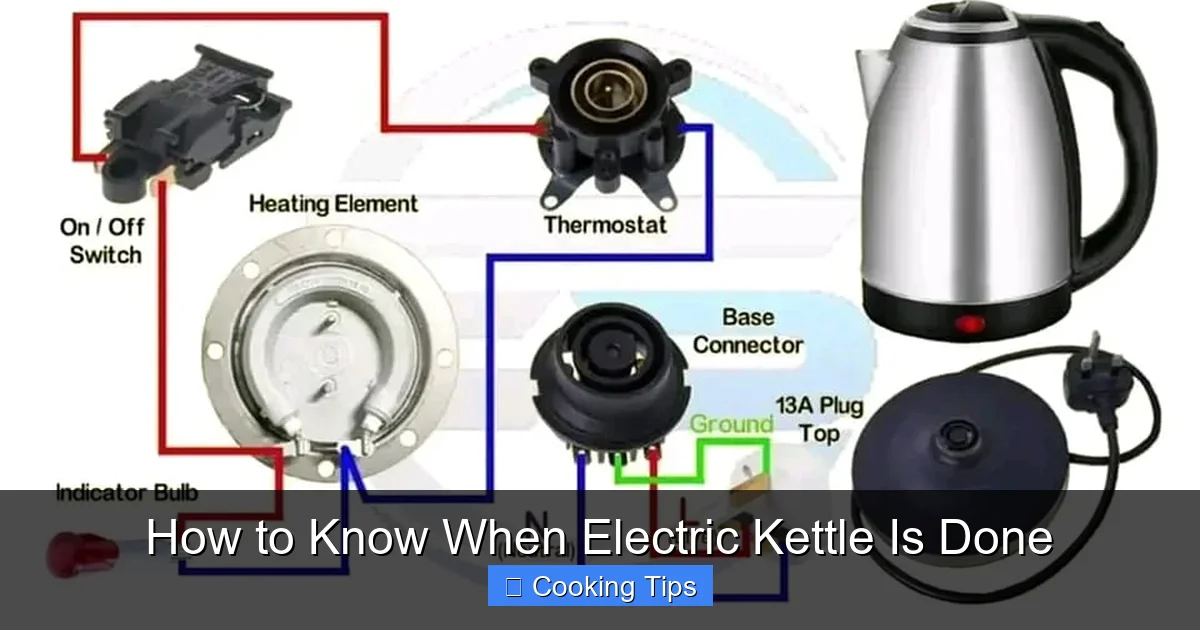
Electric kettles work on a simple principle. They heat water using an internal heating element. Once the water reaches its boiling point (100°C or 212°F at sea level), a thermostat or sensor triggers a mechanism that automatically shuts off the heating element. This safety feature is designed to prevent the kettle from boiling dry, which could damage the appliance and pose a fire hazard. Understanding this basic function is the first step to knowing when it’s done.
Primary Indicators: What to Look and Listen For
Most modern electric kettles are designed with clear indicators to signal when they’ve reached boiling point and have shut off. These indicators are your primary clues.
The Audible Click: A Classic Sign
One of the most common and reliable indicators that your electric kettle is done is an audible click.
As the boiling process concludes and the thermostat engages the shut-off mechanism, you’ll often hear a distinct click. This sound is usually produced by the switch that disconnects the power from the heating element. It’s a satisfying sound, a confirmation that your water is ready.
Visual guide about How to Know When Electric Kettle Is Done
Image source: iti.directory
Tip: Pay attention to the sound your specific kettle makes. Some clicks are louder than others. Over time, you’ll become attuned to your kettle’s unique “done” signal.
The Light Goes Out: Visual Confirmation
Many electric kettles feature an indicator light that illuminates when the kettle is heating.
This light typically turns on when you flip the switch or press the start button, and it will extinguish itself when the kettle automatically shuts off. This visual cue is a clear sign that the heating element has been deactivated.
Example: Imagine filling your kettle, pressing the switch, and seeing a blue light glow. As the water begins to bubble and steam, you’ll notice the light eventually go dark. That’s your signal!
The Steam Vents: A Subtle Clue
While not a primary indicator, the behavior of steam can also offer clues.
As water heats up, it releases steam. When the kettle is actively boiling, you’ll see a consistent stream of steam escaping from the lid or spout. Once the kettle shuts off, the vigorous steaming will typically subside relatively quickly. You might see a few wisps of steam, but the intense production will stop.
Caution: Never rely solely on steam. Steam can still be very hot and can cause burns. Always handle your kettle with care, especially around the spout.
Advanced Features and Variations
As technology advances, electric kettles are incorporating more sophisticated features that can also indicate completion.
Beeping Alerts
Some higher-end electric kettles are equipped with audible beeping alerts.
Instead of a simple click, these kettles will emit a series of beeps to signal that the water has finished boiling. This can be particularly useful if you’re in another room and can’t clearly hear the click, or if you have hearing impairments.
Visual guide about How to Know When Electric Kettle Is Done
Image source: kitchenadvising.com
Tip: Familiarize yourself with the specific beep pattern of your kettle. Some may beep once, while others might have a short series of beeps.
Keep Warm Functions
Many modern kettles come with a “keep warm” feature.
When the kettle reaches boiling point, it might beep or indicate that the water is ready. If you don’t immediately remove the water, the “keep warm” function will activate, maintaining the water temperature at a set level (often around 80-90°C). This is usually indicated by a different light or a persistent glow, distinct from the boiling indicator.
Understanding “Done”: If your kettle has a keep warm function, “done” in the sense of boiling has occurred when the initial boiling indicator (light or click) signifies completion, even if the keep warm light then illuminates.
What “Done” Really Means: Beyond Boiling
While “done” usually refers to reaching the boiling point, the ideal water temperature can vary depending on what you’re using it for.
For Tea Lovers
Different types of tea require different water temperatures for optimal brewing.
Black tea and most herbal teas: Benefit from fully boiled water (100°C or 212°F).
Visual guide about How to Know When Electric Kettle Is Done
Image source: irrorwxhiqijjr5q.ldycdn.com
Green tea and white tea: Are delicate and can become bitter if brewed with boiling water. Aim for water that has cooled slightly, around 70-85°C (158-185°F). For these, you’ll want to let the kettle sit for a minute or two after it clicks off, or use a kettle with temperature control settings.
Oolong tea: Generally falls between green and black tea temperatures, around 85-95°C (185-203°F).
For Coffee Enthusiasts
Pour-over coffee and French press brewing also benefit from specific temperatures.
Generally, coffee is best brewed with water around 90-96°C (195-205°F). This is just below boiling. So, after your electric kettle clicks off, letting it stand for about 30-60 seconds usually gets you to the perfect coffee-brewing temperature.
For Other Uses
Instant noodles or soups: Fully boiling water is usually preferred for best results.
Sanitizing: Fully boiled water is essential for effective sanitization.
Troubleshooting: What If Your Kettle Doesn’t Shut Off?
Occasionally, an electric kettle might malfunction and fail to shut off automatically. This is a safety concern and should be addressed immediately.
Potential Causes
- Mineral Buildup (Limescale): Hard water deposits can interfere with the thermostat or sensor, preventing it from detecting the boiling point.
- Faulty Thermostat/Sensor: The internal mechanism responsible for detecting temperature may have failed.
- Damaged Power Cord or Base: Issues with the electrical connections can disrupt the shut-off signal.
- Immediate Action: Unplug! The absolute first thing to do if your kettle is boiling uncontrollably is to safely unplug it from the power source. Do NOT try to remove the lid or handle the kettle directly while it’s still heating and potentially malfunctioning.
- Clean Your Kettle: If mineral buildup is suspected, descale your kettle regularly. Follow the manufacturer’s instructions, which usually involve filling the kettle with a mixture of water and white vinegar or a commercial descaling solution, boiling it, letting it sit, and then thoroughly rinsing.
- Check the Power Base: Ensure the kettle is seated correctly on its power base and that the base is clean and free from debris.
- Consult the Manual: Refer to your kettle’s user manual for specific troubleshooting steps recommended by the manufacturer.
- Contact Manufacturer or Replace: If cleaning and basic checks don’t resolve the issue, the thermostat or other internal components may be faulty. It is generally safer and more cost-effective to replace the kettle rather than attempt repairs on the heating element or internal electronics.
What to Do
Safety Reminder: Never use an electric kettle that consistently fails to shut off automatically. This is a significant fire and burn hazard.
Conclusion
Knowing when your electric kettle is done is a simple skill that enhances your daily routines. By paying attention to the subtle click, the extinguishing light, or even the cessation of vigorous steam, you can confidently determine when your water has reached its boiling point. Remember that for specific beverages like delicate teas or pour-over coffee, “done” might mean letting the water cool slightly after boiling. Regularly cleaning your kettle will also ensure its proper functioning and longevity. With these tips, you’ll be brewing the perfect cup, every time, making your electric kettle an even more indispensable part of your kitchen in 2026 and beyond. Enjoy your perfectly heated beverages!
