

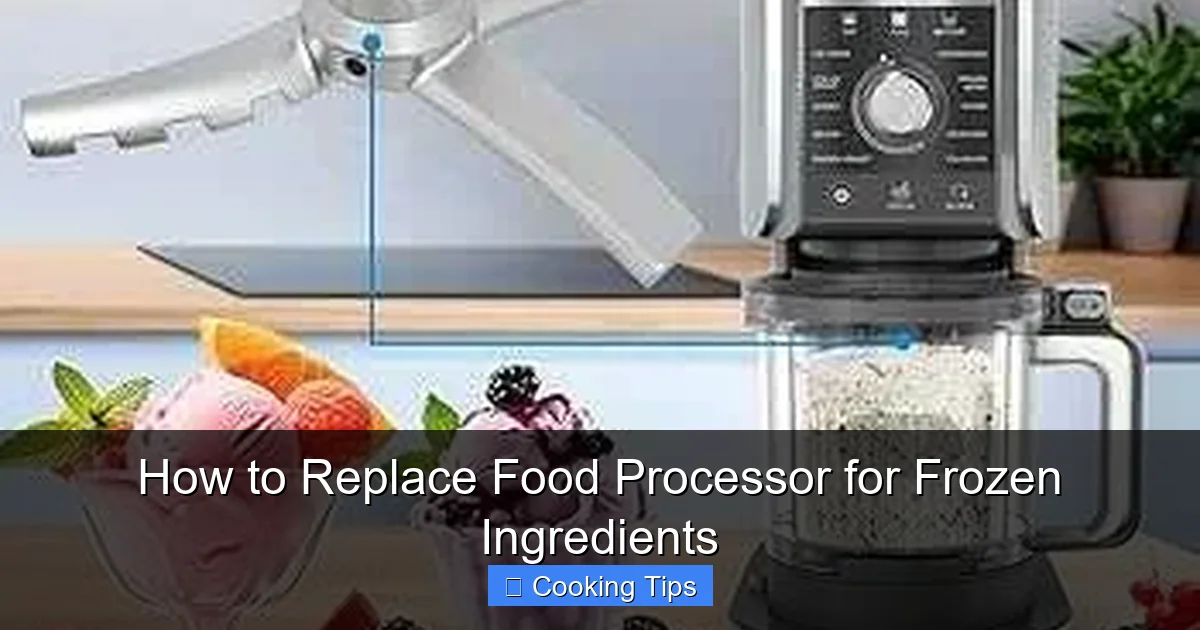
Stuck with frozen ingredients but no food processor? This 2026 guide provides innovative solutions to achieve smooth purees and perfectly processed textures. Learn to leverage common kitchen appliances like blenders, immersion blenders, and even manual methods to conquer your culinary challenges with frozen fruits, vegetables, and more. Get ready to unlock the full potential of your freezer!
Key Takeaways
- Understand the challenge: Frozen ingredients are harder and require more power than fresh ones, making them difficult for some appliances.
- Blenders are your best friend: High-powered blenders, especially those designed for smoothies, are excellent replacements for food processors with frozen items.
- Immersion blenders offer flexibility: While less powerful, immersion blenders can work for softer frozen items or in smaller batches when used correctly.
- Manual methods as a last resort: For small quantities or if other appliances fail, grating or finely chopping frozen ingredients manually is possible.
- Patience is key: Whether using a blender or manual methods, working in batches and allowing slight thawing can prevent appliance strain and achieve better results.
- Safety first: Always ensure ingredients are properly contained and use appropriate tools to avoid injury when processing hard frozen items.
How to Replace Food Processor for Frozen Ingredients
Frozen ingredients are a fantastic way to preserve freshness, save money, and have healthy options on hand year-round. From vibrant berries for smoothies to hearty vegetables for soups, the freezer is a culinary powerhouse. However, when a recipe calls for pureeing, chopping, or blending frozen items and your trusty food processor is out of commission or simply not the right tool for the job, it can feel like a roadblock. Fear not, home cooks of 2026! This guide will equip you with practical and effective alternatives to a food processor for handling all your frozen ingredient needs.
In this comprehensive guide, you’ll learn the nuances of working with frozen ingredients, discover the best kitchen appliances that can step in for your food processor, and master techniques to achieve perfect results every time. We’ll cover everything from selecting the right appliance to employing smart strategies that minimize strain on your equipment and maximize the quality of your processed ingredients.
Understanding the Challenge of Frozen Ingredients
Before we dive into the alternatives, it’s important to understand why frozen ingredients pose a unique challenge. When water freezes, it expands and forms ice crystals. This makes the ingredients significantly harder and more dense than their fresh counterparts. A food processor’s blades and motor are designed to handle this toughness, but not all appliances are created equal. Using the wrong tool can lead to:
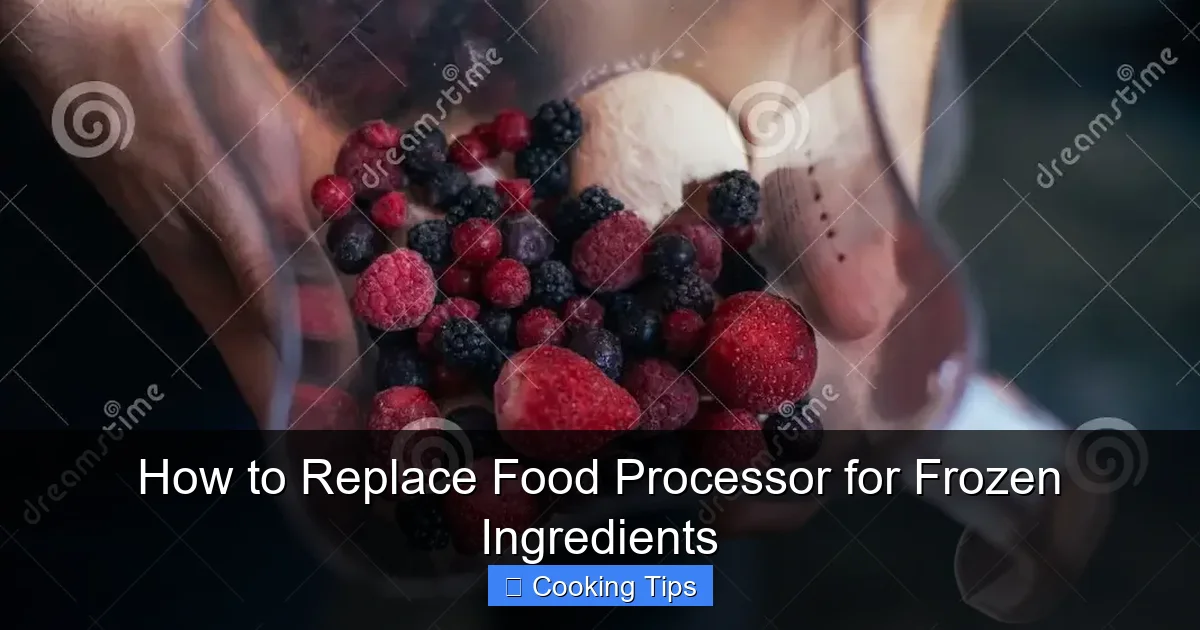
Visual guide about How to Replace Food Processor for Frozen Ingredients
Image source: thumbs.dreamstime.com
- Motor strain and burnout: Overworking an underpowered appliance can damage its motor.
- Inconsistent results: Chunks of ice or uneven processing can ruin a recipe’s texture.
- Appliance damage: Blades can chip or break if forced against very hard frozen items.
- Safety hazards: Slipping or uncontrolled processing can lead to injuries.
Our goal is to find replacements that can achieve similar results to a food processor without these negative outcomes.
The Best Food Processor Replacements for Frozen Ingredients
In the landscape of modern kitchens in 2026, several appliances can effectively step in for a food processor when dealing with frozen ingredients. The best choice often depends on the specific ingredient, the desired texture, and the power of your existing appliances.
Visual guide about How to Replace Food Processor for Frozen Ingredients
Image source: kitchenadvising.com
1. High-Powered Blenders
For many frozen ingredients, especially fruits and vegetables intended for smoothies, sauces, or purees, a high-powered blender is the closest and most effective alternative to a food processor. Think of brands that are known for their robust blending capabilities, often featuring powerful motors and specially designed blades.
How to Use a High-Powered Blender
- Start with smaller pieces: If your frozen ingredients are in large blocks, break them down into smaller, manageable chunks (about 1-2 inches). This reduces the strain on the blender’s motor.
- Add liquid: For most recipes, adding a small amount of liquid (water, juice, milk, yogurt) is crucial. This helps the ingredients move freely around the blades and prevents the blender from getting stuck. Start with a little and add more as needed.
- Use the tamper: Many high-powered blenders come with a tamper. This tool is invaluable for pushing ingredients down towards the blades without having to open the lid, ensuring consistent processing.
- Pulse and blend: Begin by pulsing the ingredients to break them down, then transition to a steady blending speed.
- Work in batches: If you have a large quantity, process in smaller batches to avoid overheating the blender’s motor.
Examples:
- Frozen berries for smoothies: A high-powered blender will easily crush them into a smooth, creamy texture.
- Frozen spinach or kale: Blend into green smoothies or sauces.
- Frozen mango or pineapple for sorbet: Blend until smooth for a refreshing dessert.
2. Immersion Blenders (Stick Blenders)
While not as powerful as countertop blenders, immersion blenders can be surprisingly effective for certain frozen ingredients, especially in smaller quantities or for softer frozen items. They offer the advantage of being able to process ingredients directly in the pot or container, reducing cleanup.
How to Use an Immersion Blender
- Thaw slightly: For harder frozen items, allow them to thaw for 10-15 minutes before processing. This makes them more manageable for the immersion blender’s blades.
- Use in a deep container: Process ingredients in a tall, narrow container or pot. This prevents splashing and ensures the blades are fully submerged.
- Cut into small pieces: Ensure your frozen ingredients are cut into very small, bite-sized pieces.
- Move the blender: Don’t just hold the immersion blender in one spot. Move it up and down and in circular motions to ensure all ingredients are processed evenly.
- Work in short bursts: To prevent the motor from overheating, use the immersion blender in short bursts of 30-60 seconds, allowing it to cool down between uses.
Examples:
- Pureeing cooked and frozen vegetables for soup: This is where immersion blenders truly shine.
- Soft frozen fruits like raspberries or thawed strawberries for coulis.
- Making small batches of pesto with frozen basil.
3. Standard Blenders (with caveats)
If you don’t have a high-powered blender, a standard blender can still be used, but with more caution and preparation. These are less ideal for very hard frozen items.
How to Use a Standard Blender
- Thawing is essential: For standard blenders, allowing frozen ingredients to thaw significantly is often necessary, especially for hard items like frozen carrots or dense fruits. Aim for a semi-thawed state.
- Cut into very small pieces: The smaller the pieces, the easier it will be for the blender to process them.
- Add plenty of liquid: A generous amount of liquid is key to helping the ingredients move and preventing the blades from getting stuck.
- Use the pulse function repeatedly: This helps to break down the frozen chunks gradually.
- Be patient and scrape down the sides: You’ll likely need to stop frequently to scrape down the sides of the blender jar and redistribute the ingredients.
- Avoid overfilling: Never fill the blender more than halfway with frozen ingredients to allow for proper circulation.
Examples:
- Frozen bananas for “nice cream”: Blend with a splash of milk until smooth.
- Thawed frozen fruits for milkshakes.
4. Food Processors with Manual Thawing
If you only have a standard food processor and the recipe absolutely requires it, you can still make it work by slightly thawing the frozen ingredients first. This makes them less hard and less likely to strain your machine.
How to Use a Food Processor with Manual Thawing
- Partial Thawing: Remove frozen ingredients from the freezer and let them sit at room temperature for 15-30 minutes, or until they are slightly softened but still firm. For very large blocks, this might take longer.
- Cut into smaller pieces: Even after partial thawing, it’s a good idea to cut them into smaller, manageable sizes.
- Process in batches: Avoid overloading the bowl. Process smaller amounts at a time.
- Check consistency frequently: Monitor the processing and stop when you reach your desired texture.
5. Manual Methods (for small quantities)
When all else fails, or for very small quantities of frozen ingredients, manual methods can be employed. These require more effort but can save the day.
How to Use Manual Methods
- Grating: For frozen fruits like lemons, limes, or even firm vegetables, a microplane or a box grater can be used to create fine zest or shreds. This works well for adding flavor or small textural elements.
- Finely Chopping: After partial thawing, frozen ingredients can be very carefully and painstakingly chopped into very fine pieces with a sharp chef’s knife on a sturdy cutting board. This is best for ingredients that don’t need to be perfectly smooth.
Examples:
- Zesting frozen ginger or citrus for baked goods.
- Finely chopping frozen herbs for a garnish.
Practical Tips for Success
Regardless of the appliance you choose as a food processor replacement, these tips will enhance your results and protect your equipment:
Visual guide about How to Replace Food Processor for Frozen Ingredients
Image source: sweetsobsessed.files.wordpress.com
- Read your appliance manual: Familiarize yourself with the manufacturer’s recommendations for processing frozen items.
- Patience is a virtue: Don’t rush the process. Allow ingredients to thaw slightly if needed, and work in short bursts.
- Listen to your appliance: If you hear straining sounds, stop immediately and adjust your approach (thaw more, add liquid, reduce batch size).
- Clean as you go: If you are using manual methods or processing in batches, clean up excess ingredients as you work to maintain efficiency.
- Invest in quality: If you frequently work with frozen ingredients, consider investing in a high-powered blender or a more robust kitchen appliance designed for tougher tasks. In 2026, these machines are more efficient and durable than ever.
Troubleshooting Common Issues
Problem: My blender is struggling with frozen fruit.
Solution: Add more liquid, ensure the pieces aren’t too large, use the tamper if available, or allow the fruit to thaw slightly for a few more minutes. Processing in smaller batches is also key.
Problem: My immersion blender is leaving large chunks.
Solution: Ensure the frozen items are cut into very small pieces and have thawed a bit. Move the immersion blender more actively through the ingredients and try processing in shorter, more frequent bursts.
Problem: My food processor is making a loud, grinding noise with frozen vegetables.
Solution: Stop immediately! Your food processor is likely not designed for such hard frozen items without significant thawing. Try partial thawing and cut the vegetables into smaller pieces. If the noise persists, it’s best to use a different appliance or technique.
Conclusion
While a food processor is a fantastic tool for processing frozen ingredients, its absence doesn’t have to halt your culinary adventures. By understanding the properties of frozen foods and leveraging the power of high-powered blenders, immersion blenders, and even smart manual techniques, you can achieve excellent results. Remember to prioritize your appliance’s health by not overworking it and by employing patience and the right strategies. With these methods, you can confidently tackle any recipe calling for processed frozen ingredients and continue to create delicious meals year-round.
