

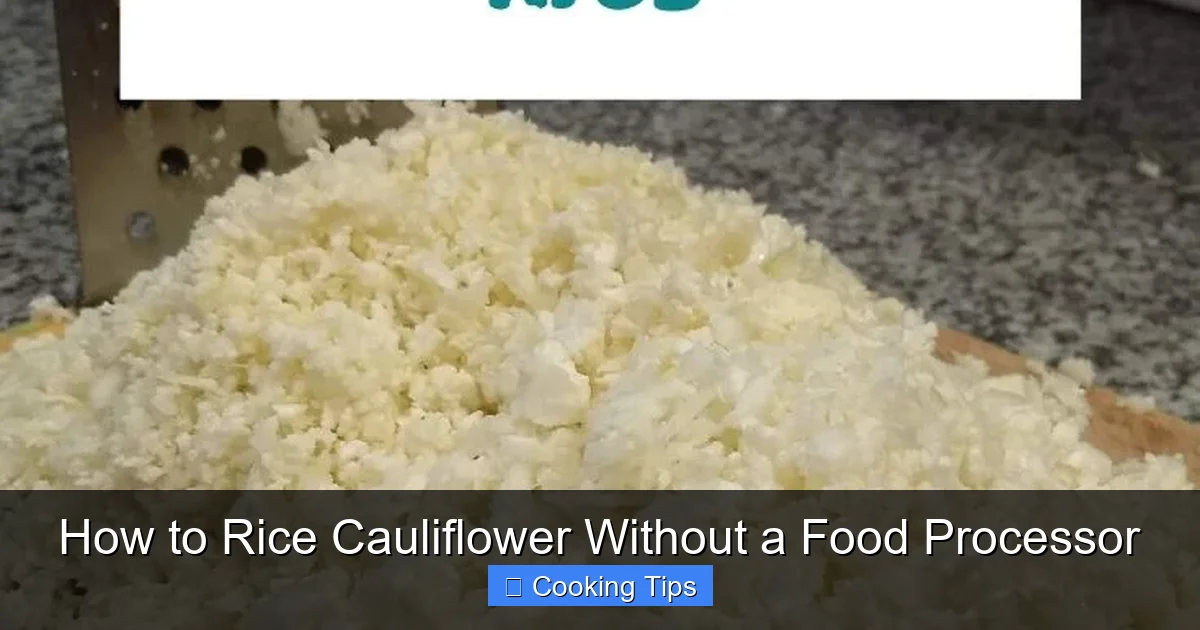
Discover the secrets to making perfectly riced cauliflower at home, even without a food processor! This guide provides clear, step-by-step instructions using common kitchen tools. You’ll learn multiple techniques for achieving the ideal texture for a variety of dishes, proving that healthy alternatives are easily accessible to everyone.
How to Rice Cauliflower Without a Food Processor
Welcome to our ultimate guide on how to rice cauliflower without a food processor! Are you looking for a healthier, low-carb alternative to rice? Or perhaps you’re inspired by the versatility of riced cauliflower in recipes for stir-fries, “rice” bowls, or even cauliflower crust pizza. Many people think a food processor is the only way to achieve this fluffy, grain-like texture. But guess what? It’s not! In 2026, we’re all about resourcefulness in the kitchen, and this guide will show you how to transform a humble head of cauliflower into perfect “rice” using everyday tools you probably already have.
We’ll walk you through simple, effective methods that require no special equipment, just a little bit of elbow grease and a few common kitchen staples. Get ready to impress yourself and your family with delicious, healthy meals made with homemade riced cauliflower. Let’s dive in!
Key Takeaways
- Master multiple methods: Explore at least two distinct techniques for ricing cauliflower without relying on a food processor.
- Utilize everyday tools: Learn to effectively use common kitchen implements like graters and knives to achieve the desired texture.
- Achieve consistent results: Understand how to prepare the cauliflower and execute each step to ensure uniformly sized “grains.”
- Customize your texture: Discover how to adjust your technique to create fine, medium, or coarser riced cauliflower depending on your recipe’s needs.
- Minimize mess and effort: Implement smart tips to keep your kitchen clean and the ricing process as efficient as possible.
- Unlock culinary versatility: See how perfectly riced cauliflower can be used in a wide array of dishes, from stir-fries to “rice” bowls.
Why Rice Cauliflower?
Before we get to the “how,” let’s quickly touch on the “why.” Riced cauliflower is a fantastic ingredient because it’s:
- Low in carbohydrates: A great option for those following keto or low-carb diets.
- Nutrient-rich: Cauliflower is packed with vitamins like C and K, and fiber.
- Versatile: It can absorb flavors beautifully and take on many textures, making it a substitute for grains in countless dishes.
- Budget-friendly: Ricing your own cauliflower is often more economical than buying pre-riced versions.
Now, let’s get to the good stuff – how to make it happen without that fancy appliance!
Method 1: The Grater Method
This is perhaps the most straightforward and accessible method for ricing cauliflower. It works well for achieving a fine to medium texture.
Step 1: Prepare Your Cauliflower
First, you’ll need a fresh head of cauliflower.
Wash and Trim
Start by washing the cauliflower thoroughly under cool running water. Pat it dry with a clean kitchen towel or paper towels. Remove any bruised or discolored parts. Then, trim off the thick, leafy green outer leaves and the tough core at the bottom. You want to expose the florets.
Visual guide about How to Rice Cauliflower Without a Food Processor
Image source: thescramble.com
Break Down the Cauliflower
Using your hands or a knife, break or cut the cauliflower head into smaller florets. Try to make them roughly the same size. This will make the ricing process more even. You don’t need to get them perfectly separated at this stage; the grater will do the heavy lifting.
Step 2: Get Grating!
Now for the fun part.
Choose Your Grater
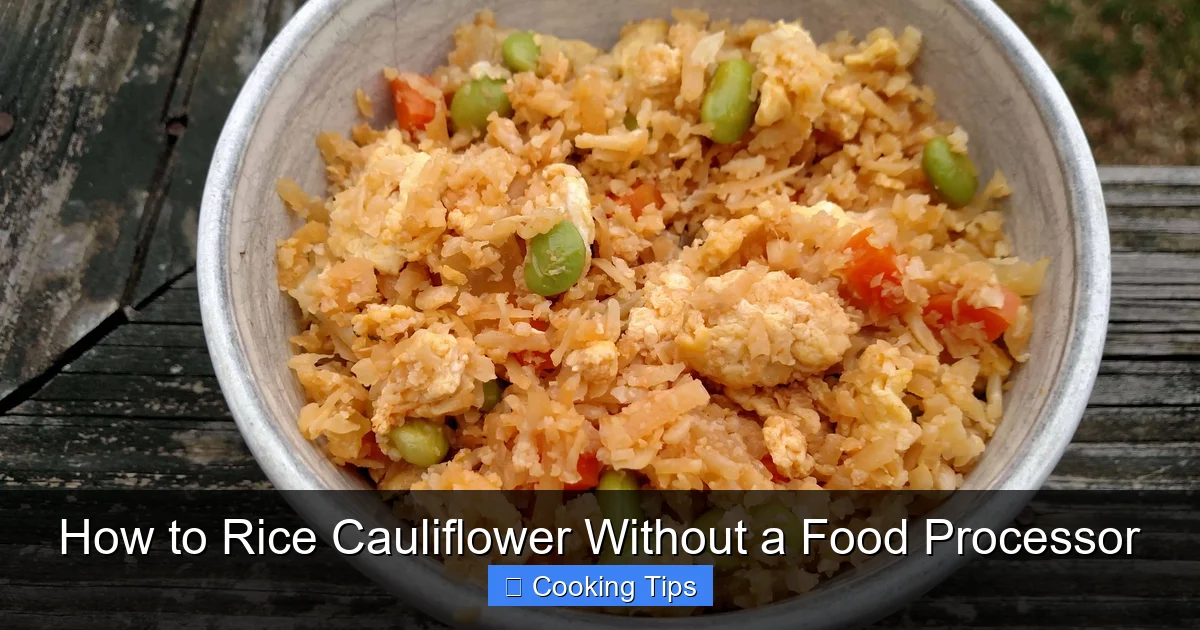
Grab your box grater. You’ll want to use the larger holes for ricing. If you only have a flat grater, that will work too; just ensure it has sufficiently sized holes.
Grate the Florets
Hold a floret firmly in your hand. Rub the cut side of the floret against the large holes of the grater, moving it up and down. The cauliflower will start to break down into small, rice-like pieces. Continue this process with all of your florets. Be careful not to grate your knuckles!
Step 3: Refine the Texture (Optional)
Depending on how fine you want your riced cauliflower, you might want to do an extra step.
Second Pass or Chopping
If you find some pieces are still a bit too large, you can either give them a second pass on the grater or, for a finer texture, gather the grated cauliflower onto a cutting board and give it a quick chop with a sharp knife. This is especially helpful if you’re aiming for a very fine texture, similar to couscous.
Tips for the Grater Method:
- Work in batches: Don’t overload the grater. It’s easier to grate a few florets at a time.
- Hold florets securely: For safety and efficiency, grip the florets firmly.
- Use the stem: If you have any larger, denser stem pieces, you can grate those too. They might require a bit more pressure.
Method 2: The Knife Method
This method offers the most control over the texture of your riced cauliflower and is excellent if you want a slightly coarser “grain.” It requires a bit more patience but yields great results.
Step 1: Prepare Your Cauliflower
This starts the same way as the grater method.
Wash and Trim
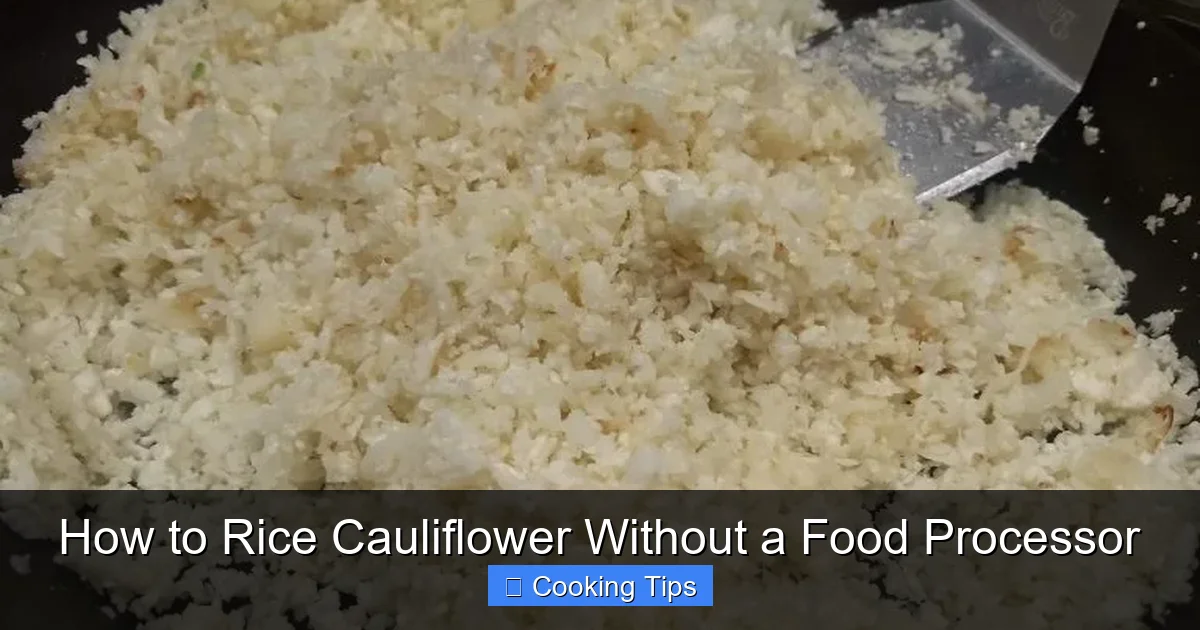
As before, wash your cauliflower, trim off the leaves and core.
Visual guide about How to Rice Cauliflower Without a Food Processor
Image source: fromthiskitchentable.com
Cut into Steaks or Large Chunks
Instead of breaking into florets, you’ll want to cut the cauliflower into thick “steaks” or large chunks. Stand the cauliflower upright on your cutting board. Slice down through the core to create steaks about 1-inch thick. Then, cut these steaks into smaller, manageable pieces, ensuring you keep the florets attached to a bit of stem for easier handling.
Step 2: The Precision Chop
This is where the knife work comes in.
Fine Dicing Technique
Take one piece of cauliflower. Lay it flat on the cutting board. Using a sharp chef’s knife, begin to finely dice the cauliflower. Think of it like dicing an onion, but with cauliflower! Cut small, even pieces. The goal is to break down the florets into tiny, granular pieces that resemble rice. Work your way through each piece.
Step 3: Further Refinement (Optional)
If you’re aiming for a super fine texture, you might need to do a bit more.
The “Sawing” Motion
Once you have a pile of finely diced cauliflower, you can use your knife with a back-and-forth “sawing” motion over the pile. This will break down any larger pieces and help create a more uniform consistency. Be patient; this is the most time-consuming part of this method, but the control you have is excellent.
Tips for the Knife Method:
- Sharp Knife is Crucial: A dull knife will make this process significantly harder and less safe. Invest in a good chef’s knife.
- Stable Cutting Board: Ensure your cutting board is stable to prevent slips.
- Work in small batches: Don’t try to dice a huge chunk at once. Smaller, manageable pieces are key.
- Embrace the process: This method is more meditative than the grater. Enjoy the mindful chopping!
Troubleshooting Your Riced Cauliflower
Even with the best intentions, you might run into a few hiccups. Here’s how to tackle them:
Problem: My riced cauliflower is too wet.
Solution: This often happens after washing. Ensure you dry the cauliflower thoroughly before ricing. If it’s still too wet after ricing, spread it out on a clean kitchen towel or paper towels and gently pat it dry. You can also lay it out on a baking sheet for a few minutes to air dry further.
Visual guide about How to Rice Cauliflower Without a Food Processor
Image source: i.pinimg.com
Problem: My riced cauliflower has too many large chunks.
Solution: For the grater method, try using the smaller holes if available (but be mindful of your fingers!). For the knife method, you may need to go back and do a more thorough dicing or chopping. For both methods, a quick pulse in a blender (if you have one, even if you don’t have a food processor) or a secondary chop with a knife can help even out the texture. Just be careful not to over-process into a paste!
Problem: My riced cauliflower is turning mushy.
Solution: This usually means you’re overworking it. With the grater, use gentle, consistent strokes. With the knife, focus on clean cuts rather than mashing. If using a blender for a quick pulse, use very short bursts (1-2 seconds) and check the consistency frequently.
Storage and Usage
Once you’ve got your perfectly riced cauliflower, how do you store and use it?
Storage
Store fresh, uncooked riced cauliflower in an airtight container in the refrigerator for 3-5 days. You can also freeze it for up to 3 months. Spread it in a single layer on a baking sheet to freeze before transferring to a freezer bag to prevent clumping.
Usage
Riced cauliflower is incredibly versatile! Use it as a base for:
- Stir-fries: A fantastic low-carb alternative to white rice.
- “Rice” bowls: Top with your favorite protein, vegetables, and sauce.
- Soups and stews: Add it towards the end of cooking for extra texture and nutrients.
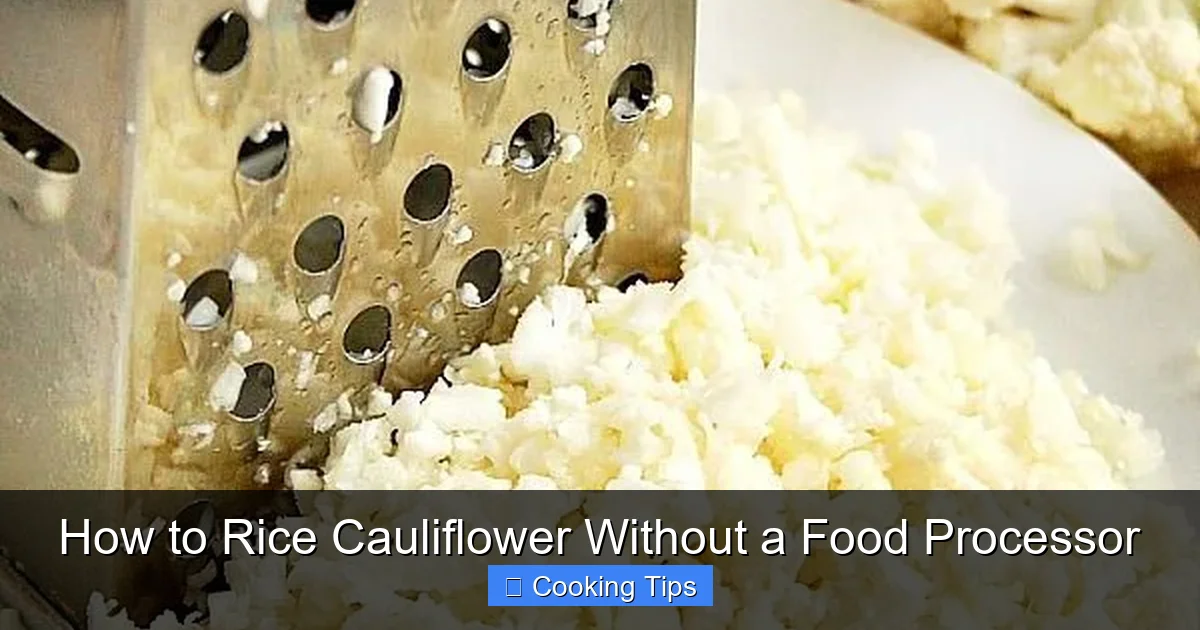
- “Fried” rice: Sauté with eggs, vegetables, and soy sauce.
- Cauliflower crust pizza: Mix with cheese and egg to form a pizza base.
- Breakfast bowls: Cook with a little liquid and top with savory or sweet ingredients.
Conclusion
See? Ricing cauliflower without a food processor is not only possible but also quite achievable with simple kitchen tools. Whether you opt for the quick and easy grater method or the more controlled knife technique, you’re well on your way to enjoying the many benefits of this fantastic ingredient. So next time a recipe calls for riced cauliflower, don’t let the lack of a food processor stop you! Grab your grater or your knife, and get ready to create delicious, healthy meals. Happy cooking in 2026!
