

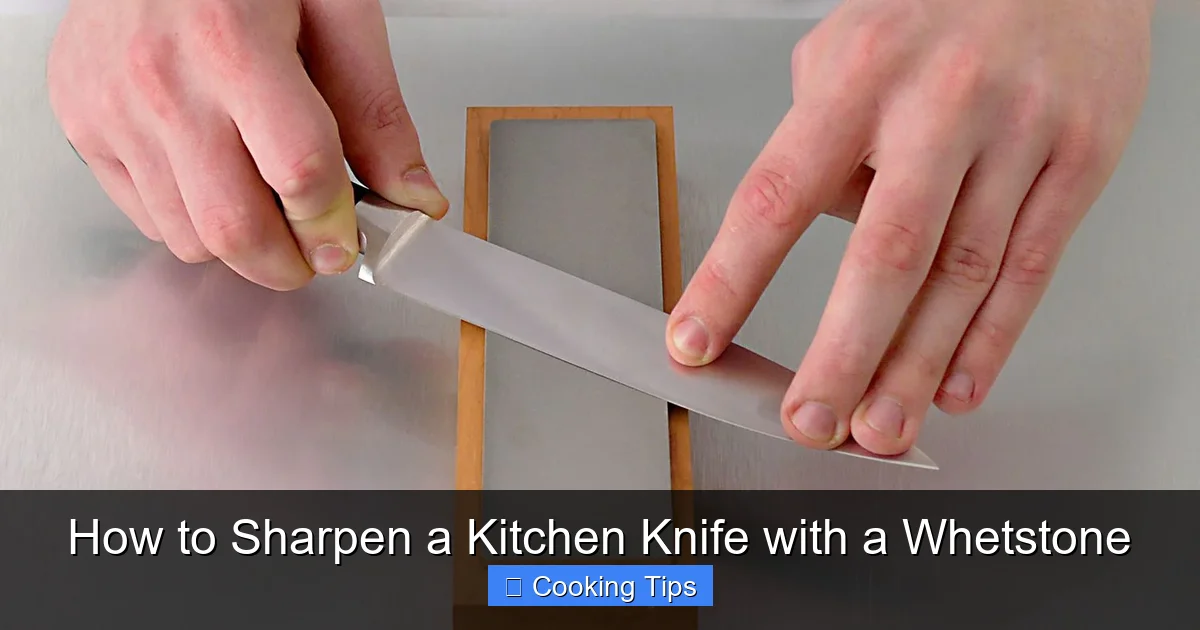
Unlock the secret to a truly sharp kitchen knife with this comprehensive guide to whetstone sharpening. You’ll learn the importance of a sharp knife, how to choose the right whetstone, and master the essential techniques for creating a perfectly beveled edge. With these skills, you’ll chop, slice, and dice with confidence and ease, making your time in the kitchen safer and more enjoyable.
Are your kitchen knives feeling dull and uninspired? Do you find yourself wrestling with vegetables instead of effortlessly slicing through them? If so, you’re not alone. A dull knife is not only frustrating, but it can also be downright dangerous. When a knife isn’t sharp, it’s more likely to slip, potentially causing injury. The good news? Revitalizing your blades is easier than you might think. This guide will walk you through the entire process of sharpening a kitchen knife using a whetstone, transforming your dull blades into precision instruments. You’ll learn why a sharp knife is essential, how to select the right whetstone, and master the step-by-step techniques for achieving a razor-sharp edge that will make cooking a joy again.
## Why a Sharp Knife Matters
Before we dive into the “how,” let’s quickly touch on the “why.” A sharp knife is a cook’s best friend. It cuts cleanly, requiring less force, which means less fatigue for your hands and wrists. Clean cuts also preserve the cell structure of your food, leading to better flavor and texture. Imagine slicing through a ripe tomato with such ease that it almost falls apart, or dicing onions without tears. That’s the power of a sharp knife. On the flip side, a dull knife requires more pressure, which can crush delicate foods, bruise herbs, and increase the risk of the knife skidding off your food and onto your fingers. Investing a little time in learning to sharpen your knives with a whetstone is an investment in your safety and your culinary enjoyment.
## Choosing Your Whetstone
Whetstones, also known as sharpening stones, come in various types and grits. The grit refers to the coarseness of the abrasive particles. For kitchen knives, you’ll generally want a combination stone or a set of stones with different grits.
### Understanding Grit Levels
*
Coarse Grit (200-1000): These are for repairing significant damage like chips or nicks in the blade, or for completely reshaping a very dull edge. You’ll remove a lot of metal quickly with these stones.
*
Medium Grit (1000-3000): This is your workhorse grit. It’s excellent for general sharpening and establishing a good, sharp edge after using a coarser stone or for regular maintenance of moderately dull knives.
*
Fine Grit (4000+): These stones are for refining and polishing the edge. They remove minimal metal but create a highly refined, razor-sharp edge that will hold its sharpness longer.
### Types of Whetstones
*
Water Stones: These are the most common for kitchen knives. They are typically made of aluminum oxide or ceramic and require soaking in water before use. They create a slurry that aids in the sharpening process.
*
Oil Stones: These use a light honing oil instead of water. They are less messy than water stones in some ways, but require a bit of cleanup.
*
Diamond Stones: These have a surface coated with diamond particles. They don’t require soaking and can sharpen very hard steels. However, they can be more aggressive and may not give as fine a polish as water stones.
For most home cooks, a combination water stone with a medium and fine grit (e.g., 1000/6000) is a fantastic starting point.
## Preparing Your Whetstone
Proper preparation ensures your whetstone works effectively and safely.
### Soaking Water Stones
Most water stones need to be fully submerged in water for 5-10 minutes, or until they stop releasing air bubbles. This process saturates the stone, allowing it to lubricate the blade as you sharpen and preventing the stone from clogging up with metal filings. Some newer water stones might be splash-and-go, meaning they only need a quick wetting, so check the manufacturer’s instructions.
### Setting Up Your Stone
Once soaked, place your whetstone on a stable, non-slip surface. Many whetstones come with a base, or you can use a damp cloth or a dedicated stone holder underneath it. The stone needs to be secure so it doesn’t move during sharpening. You want the stone to be positioned so you can comfortably reach it without straining.
## The Sharpening Process: Step-by-Step
This is where the magic happens. Patience and consistency are key here.
### Step 1: Establish Your Angle
This is perhaps the most critical step. Most Western-style kitchen knives are sharpened at an angle between 15 and 20 degrees per side. Japanese knives are often sharpened at a more acute angle, around 10-15 degrees. If you’re unsure, a good rule of thumb for a general-purpose kitchen knife is about 20 degrees.
How to find the angle:
- The Coin Method: Place two or three US dimes (or similar thickness coins) under the spine of your knife. This roughly approximates a 15-20 degree angle.
- The Marker Method: Color the very edge of the blade with a permanent marker. As you sharpen, you’ll see where the marker is being removed. You want to see the marker removed evenly across the entire bevel.
- Angle Guides: You can purchase small clip-on angle guides that attach to the spine of your knife to help you maintain a consistent angle.
### Step 2: Sharpening the First Side (Coarse or Medium Grit)
Begin with your coarser grit stone (or your medium grit if your knife isn’t very dull). Dip the stone in water briefly to keep it lubricated.
Honing the Edge:
- Place the heel of your knife (the part closest to the handle) on the stone at your chosen angle.
- Apply gentle, consistent pressure. Imagine you’re trying to slice off a thin layer of the stone.
- Push the knife forward across the stone, moving from heel to tip in a smooth, sweeping motion, as if you were trying to shave off the entire surface of the stone with that one stroke.
- Lift the knife and return it to the starting position (heel on the stone).
- Repeat this motion, gradually moving your hand so that by the last stroke, you are sharpening the tip of the blade.
- Perform 10-20 strokes, depending on how dull the knife is. The goal is to create a small burr.
### Step 3: Checking for the Burr
A burr is a tiny, wire-like edge of metal that forms on the opposite side of where you’re sharpening. It’s a sign that you’ve ground away enough metal on one side to reach the apex of the edge.
How to feel for the burr:
- Carefully run your fingertip *away* from the edge (never towards it!) along the side of the blade opposite to where you were just sharpening. You should feel a slight “catch” or roughness. If you don’t feel it, do a few more strokes on that side.
### Step 4: Sharpening the Second Side (Coarse or Medium Grit)
Now, flip the knife over and repeat the process on the other side, using the same angle and motion. Aim to create a burr on the first side you sharpened.
Repeating the Strokes:
- Place the heel of the knife on the stone at the correct angle.
- Apply gentle, consistent pressure.
- Sweep the knife forward, heel to tip, as you did on the first side.
- Perform 10-20 strokes.
- Check for a burr on the first side again.
### Step 5: Refining the Edge (Medium or Fine Grit)
Once you’ve established a burr on both sides using your medium grit stone, it’s time to refine the edge. Switch to your finer grit stone (or your medium grit if it’s fine enough to provide a good polish).
Polishing Strokes:
- Repeat the sharpening motion with fewer strokes (e.g., 5-10 strokes per side). Use lighter pressure.
- The goal here is to smooth out the scratches left by the coarser stone and refine the apex of the edge.
- Continue alternating sides, but reduce the number of strokes on each side in subsequent passes (e.g., 5 strokes each side, then 3, then 2, then 1).
### Step 6: Removing the Burr (Fine Grit or Stropping)
After using your finer grit stone, you’ll likely still have a very fine burr. You need to remove this for a truly sharp edge.
Final Touches:
- Switch to your finest grit stone. Perform very light, alternating strokes, focusing on removing the burr. You can even try “stutter strokes” where you make a very small movement across the stone, just enough to kiss the edge.
- Stropping (Optional but Recommended): If you have a leather strop, this is the ideal tool for removing the burr and polishing the edge. Hold the knife at the same angle as you did on the stone and make a few light passes, *backwards* (spine leading). This gently realigns and polishes the very edge.
### Step 7: Cleaning and Testing
Rinse your knife thoroughly under running water to remove any metal particles or stone residue. Dry it immediately with a clean towel.
Testing the Sharpness:
- The Paper Test: Hold a sheet of standard printer paper vertically. If your knife is sharp, it should slice through the paper smoothly and cleanly with very little resistance. If it tears or catches, it needs more work.
- The Tomato Test: A sharp knife will bite into the skin of a ripe tomato with minimal pressure.
## Practical Tips for Success
*
Patience is a Virtue: Don’t rush the process. Take your time, focus on your technique, and enjoy the reward of a sharp knife.
*
Consistency is Key: The most important factor is maintaining a consistent angle throughout the sharpening process.
*
Lubrication: Keep your water stone wet by splashing it with water periodically. This prevents it from drying out and ensures smooth sharpening.
*
Don’t Over-Sharpen: You don’t need to remove a lot of metal. Focus on refining the edge, not grinding it away.
*
Clean Up: After sharpening, thoroughly clean both your knife and your whetstone. Allow water stones to air dry completely before storing them to prevent mold.
*
Regular Maintenance: Sharpen your knives regularly, even if they don’t feel extremely dull. Frequent touch-ups are much easier than major sharpening sessions.
## Troubleshooting Common Issues
*
Still Dull? You might not be holding a consistent enough angle, or you haven’t spent enough time on the coarser grit to establish a proper edge. Double-check your angle and ensure you’re feeling for a burr on both sides.
*
Uneven Edge? This is usually due to an inconsistent angle or uneven pressure. Try using a marker on the edge to see where you’re removing metal.
*
Edge Rolls Over? This can happen if you’re using too much pressure or if your stone is too soft. Lighter pressure and a finer grit stone are usually the solution.
## Conclusion
Sharpening your kitchen knives with a whetstone might seem intimidating at first, but with practice, it becomes a straightforward and rewarding skill. The result? A knife that glides through food, making prep work easier, safer, and more enjoyable. So, gather your stones, set aside some time, and give your blades the attention they deserve. You’ll be amazed at the difference a truly sharp knife makes in your kitchen. Happy sharpening!
Key Takeaways
- Choose the Right Whetstone Grit: Start with a coarse grit (around 400-1000) for repairing chips and establishing a new edge, then move to a medium grit (around 1000-3000) for general sharpening, and finish with a fine grit (4000+) for polishing and achieving a razor-sharp edge.
- Proper Whetstone Preparation: Most whetstones require soaking in water until they stop releasing air bubbles, ensuring they stay lubricated during sharpening. Oil stones use a light mineral oil.
- Maintain a Consistent Angle: The most crucial step is holding a consistent angle (typically 15-20 degrees for most kitchen knives) between the blade and the stone throughout the sharpening process.
- Sharpen Both Sides of the Blade: Alternate between sharpening one side and then the other, applying even pressure, to create a symmetrical and effective edge.
- Develop a Burr: A small, wire-like protrusion (burr) forms on the opposite side of the edge you’re sharpening. Feeling for this burr indicates you’ve removed enough metal on that side.
- Stropping for the Final Polish: After sharpening, a final pass or two on a very fine grit stone or a leather strop helps remove the burr and polish the edge to a keen sharpness.
- Safety First: Always be mindful of your fingers, keep the knife moving away from your body, and ensure the whetstone is stable to prevent slips.
