

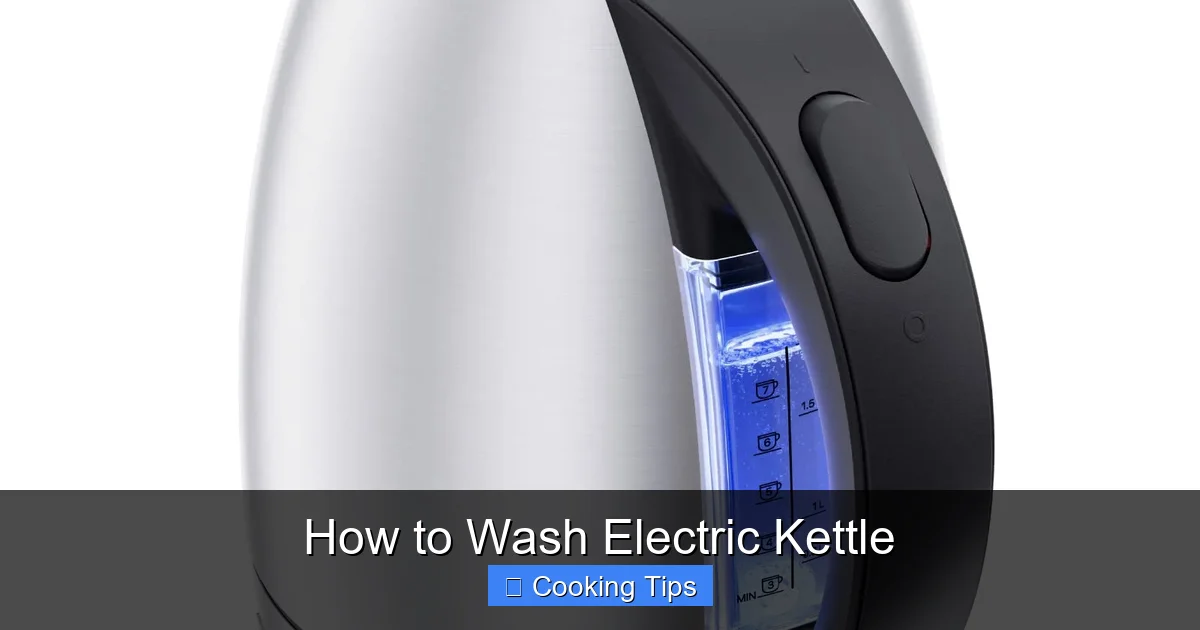
Maintaining a clean electric kettle ensures pure-tasting water and prolongs its lifespan. This guide provides a step-by-step approach to washing your electric kettle, covering both the interior and exterior. Learn how to tackle limescale buildup and keep your appliance sparkling with simple, safe methods.
Are you tired of seeing unsightly white deposits in your electric kettle? Do you worry that your morning cup of tea or coffee might not taste its best? You’re not alone! Over time, mineral deposits, often called limescale, can build up inside your electric kettle. This not only makes it look less appealing but can also affect its performance and the taste of your hot beverages.
Washing your electric kettle regularly is essential for both hygiene and efficiency. A clean kettle heats water faster and delivers pure, delicious results every time. But how exactly do you go about washing an electric kettle safely and effectively? This comprehensive guide will walk you through everything you need to know. You’ll learn how to tackle limescale, clean the exterior, and maintain your appliance so it lasts for years to come. Let’s get started on making your electric kettle shine!
Key Takeaways
- Regular cleaning prevents limescale buildup: Frequent washing, especially of the interior, is crucial to stop mineral deposits from forming, which can affect taste and heating efficiency.
- Always unplug and cool down: Safety is paramount. Ensure the kettle is unplugged from the power source and has completely cooled before attempting any cleaning.
- Vinegar is a natural descaler: White vinegar is an effective and readily available solution for dissolving limescale inside your electric kettle.
- Gentle exterior cleaning is key: Use a soft, damp cloth and mild detergent for the exterior to avoid scratching or damaging the finish.
- Avoid submerging the base: The electrical components in the base unit should never be immersed in water.
- Rinse thoroughly: After descaling or washing, ensure all cleaning solutions are completely rinsed away to prevent any residual taste in your water.
- Dry completely before storing: Moisture left behind can lead to mold or mildew. Always dry all parts thoroughly.
Why You Should Wash Your Electric Kettle
Before we dive into the ‘how-to’, it’s good to understand *why* this task is important.
Electric kettles are used daily in many households. Water, especially hard water, contains minerals like calcium and magnesium. When you heat water, these minerals are left behind, forming a hard, chalky residue known as limescale. This limescale can cling to the heating element and the interior walls of your kettle.
Here are the main reasons to keep your electric kettle clean:
- Improved Taste: Limescale can impart a metallic or unpleasant taste to your water, affecting the flavor of your tea, coffee, or other hot drinks.
- Better Heating Efficiency: A thick layer of limescale on the heating element acts as an insulator. This means your kettle has to work harder and longer to heat the water, consuming more energy and taking more time.
- Extended Lifespan: Over time, excessive limescale buildup can damage the heating element, leading to premature failure of your electric kettle. Regular cleaning prevents this damage.
- Hygiene: Any build-up can become a breeding ground for bacteria if left unchecked, which is obviously not ideal for something you drink from.
- Appearance: A clean kettle simply looks better in your kitchen!
Safety First: Before You Begin
Washing an electric kettle involves water and electricity, so safety is your top priority. Always follow these crucial steps before you start cleaning.
Unplug the Kettle: This is the most important step. Always disconnect your electric kettle from the power outlet before you do anything else. Never attempt to clean a plugged-in appliance.
Visual guide about How to Wash Electric Kettle
Image source: i02.appmifile.com
Allow it to Cool Down: Electric kettles get hot. Make sure the kettle has completely cooled down after its last use. You don’t want to burn yourself while cleaning.
Remove from the Base: Most electric kettles have a separate base unit that connects to the power. Lift the kettle off its base and ensure the base is also unplugged.
How to Wash the Interior of Your Electric Kettle
The interior is where most of the work needs to be done, especially when dealing with limescale. There are several effective methods you can use, ranging from natural solutions to specific cleaning products.
Method 1: Using White Vinegar (The Natural Descaler)
White vinegar is a household staple and a fantastic natural descaler. It’s acidic, which means it can break down the mineral deposits effectively.
What you’ll need:
Visual guide about How to Wash Electric Kettle
Image source: m.media-amazon.com
- White vinegar
- Water
Step-by-step instructions:
-
Prepare the Solution: Fill your kettle with a mixture of equal parts white vinegar and water. For example, if your kettle has a 1.7-liter capacity, you could use about 850ml of vinegar and 850ml of water. Make sure the solution covers the limescale deposits. If the deposits are only at the bottom, you might not need to fill it completely.
-
Let it Soak: Let the vinegar and water solution sit in the kettle for at least 30 minutes to an hour. For stubborn limescale, you can leave it overnight.
-
Boil the Solution (Optional but Recommended): For a more powerful descaling action, after the soaking period, you can boil the vinegar and water mixture. Once it boils, turn off the kettle and let it sit for another 10-15 minutes. Be careful of the steam and fumes.
-
Discard the Solution: Carefully pour the vinegar and water mixture down the drain. You should see some of the limescale has dissolved and washed away.
-
Rinse Thoroughly: This is a critical step to remove any lingering vinegar smell or taste. Fill the kettle with fresh water and boil it. Discard this water. Repeat this rinsing process at least two or three times, or until you can no longer smell or taste vinegar. You might even want to do an extra rinse cycle or two.
-
Wipe Down: Use a soft, damp cloth to wipe the interior of the kettle. This will help remove any remaining loosened limescale particles.
Tip: If the smell of vinegar is too strong for you, you can add a few slices of lemon to the vinegar and water mixture before boiling. The lemon will help to mask the vinegar odor.
Method 2: Using Lemon Juice
Lemon juice is another natural option that uses citric acid to help break down limescale. It also leaves a pleasant, fresh scent.
What you’ll need:
- Fresh lemon juice (from 1-2 lemons) or bottled lemon juice
- Water
Step-by-step instructions:
-
Prepare the Solution: Fill your kettle with water to cover the limescale. Add the juice of one or two fresh lemons, or about 1/4 cup of bottled lemon juice, to the water.
-
Boil the Mixture: Bring the lemon water to a boil. Let it boil for a few minutes.
-
Let it Sit: Turn off the kettle and let the lemon water sit in the kettle for about 30 minutes.
-
Discard and Rinse: Pour out the lemon water and rinse the kettle thoroughly with fresh water. Boil and discard fresh water at least twice to ensure no lemon taste remains.
-
Wipe Down: Use a soft cloth to wipe the interior, removing any loosened deposits.
Method 3: Using Baking Soda
Baking soda is a mild abrasive and deodorizer. While it’s not as powerful as vinegar for heavy limescale, it can help with lighter build-up and give your kettle a good refresh.
What you’ll need:
- Baking soda
- Water
Step-by-step instructions:
-
Make a Paste or Solution: You can either add 1-2 tablespoons of baking soda to a kettle full of water, or make a paste with baking soda and a little water to apply directly to stubborn spots (avoiding the heating element if possible).
-
Boil (if using solution): If you used the solution method, bring the water to a boil.
-
Let it Sit: Turn off the kettle and let the baking soda solution or paste sit for about 30 minutes.
-
Scrub and Rinse: Use a soft brush or cloth to gently scrub any remaining residue. Pour out the baking soda solution and rinse the kettle thoroughly with fresh water. Boil and discard fresh water once or twice.
Method 4: Using Commercial Kettle Cleaners
There are many commercial descaling products specifically designed for electric kettles. These can be very effective but always follow the manufacturer’s instructions carefully.
What you’ll need:
- Commercial kettle cleaner
- Water
Step-by-step instructions:
-
Read Instructions: Carefully read and follow the instructions on the commercial cleaner packaging. Different products have different concentrations and application methods.
-
Prepare Solution: Typically, you’ll mix the cleaner with water in the kettle according to the product’s directions.
-
Boil and Soak: You might be instructed to boil the solution or just let it soak.
-
Discard and Rinse: Discard the cleaning solution and rinse the kettle extremely thoroughly. Most manufacturers will specify how many times to boil and discard fresh water. This is crucial to remove all traces of the chemical cleaner.
Important Note: If you have a kettle with a special filter (like a mesh filter to prevent sediment from entering your cup), remove this filter before descaling and clean it separately.
How to Wash the Exterior of Your Electric Kettle
The outside of your electric kettle also needs attention to keep it looking good and free from grime.
What you’ll need:
Visual guide about How to Wash Electric Kettle
Image source: m.media-amazon.com
- Soft, damp cloth
- Mild dish soap (optional)
- Microfiber cloth for drying
Step-by-step instructions:
-
Wipe with a Damp Cloth: Use a soft, damp cloth to wipe down the exterior surfaces of the kettle. This is usually enough to remove dust and light smudges.
-
For Stubborn Grime: If there are greasy marks or stubborn grime, add a tiny drop of mild dish soap to your damp cloth. Wipe the affected areas.
-
Rinse the Cloth: Rinse your cloth thoroughly to remove any soap residue. Wipe the exterior again with plain water to ensure all soap is gone.
-
Dry Thoroughly: Use a clean, dry microfiber cloth to buff the exterior dry. This will prevent water spots and leave a nice shine.
What to Avoid:
- Abrasive Cleaners: Never use harsh scrubbing pads, steel wool, or abrasive cleaning powders. These can scratch the finish of your kettle.
- Harsh Chemicals: Avoid using window cleaner, ammonia, or bleach on the exterior, as these can damage the material and leave unwanted fumes.
- Spraying Directly: Do not spray cleaning solutions directly onto the kettle, especially near vents or openings.
Cleaning Removable Parts
Some electric kettles have removable parts, such as a lid filter or a descaling filter.
How to clean:
-
Remove the Part: Carefully detach the filter or any other removable components.
-
Wash Gently: Wash them under warm running water. You can use a soft brush to dislodge any debris.
-
Drying: Ensure these parts are completely dry before reassembling or storing them.
Troubleshooting Common Electric Kettle Issues
Q: The limescale is still there after cleaning. What should I do?
A: For very stubborn limescale, you may need to repeat the descaling process, perhaps leaving the vinegar solution to soak for longer or boiling it for an extended period. You could also try a commercial descaler, as they are often more potent. Always ensure you rinse thoroughly afterward.
Q: My kettle smells of vinegar even after rinsing. How can I get rid of it?
A: Keep rinsing! Boil fresh water several times and discard it. You can also try boiling a kettle full of water with a slice of lemon or a teaspoon of vanilla extract for a few minutes, then discarding it. This can help neutralize lingering odors.
Q: Can I use my dishwasher to clean my electric kettle?
A: Generally, no. Most electric kettles are not dishwasher-safe. The high heat and harsh detergents in a dishwasher can damage the plastic components, seals, and the exterior finish. Always refer to your kettle’s manual for specific cleaning instructions.
How Often Should You Wash Your Electric Kettle?
The frequency of cleaning depends on your water hardness and how often you use the kettle.
- For Hard Water Areas: If you live in an area with hard water, you’ll notice limescale build-up more quickly. Aim to descale your kettle at least once a month.
- For Soft Water Areas: You might get away with descaling every 2-3 months.
- Exterior Cleaning: Wipe down the exterior as needed, perhaps weekly, to keep it looking tidy.
The best approach is to keep an eye on your kettle. If you see even a small amount of limescale forming, it’s a good time for a clean. Regular, smaller cleanings are much easier than tackling a heavy build-up.
Conclusion
Keeping your electric kettle clean is a simple yet vital part of maintaining your kitchen appliances and ensuring you enjoy pure-tasting water every time. By following these step-by-step methods, you can effectively combat limescale, keep the exterior looking its best, and prolong the life of your electric kettle. Remember to always prioritize safety by unplugging and cooling down your appliance before cleaning. Whether you opt for the natural power of vinegar or a dedicated cleaning product, a little regular effort will go a long way in ensuring your kettle remains a reliable and hygienic part of your daily routine. So, grab your cleaning supplies and give your electric kettle the TLC it deserves – your taste buds will thank you!
