

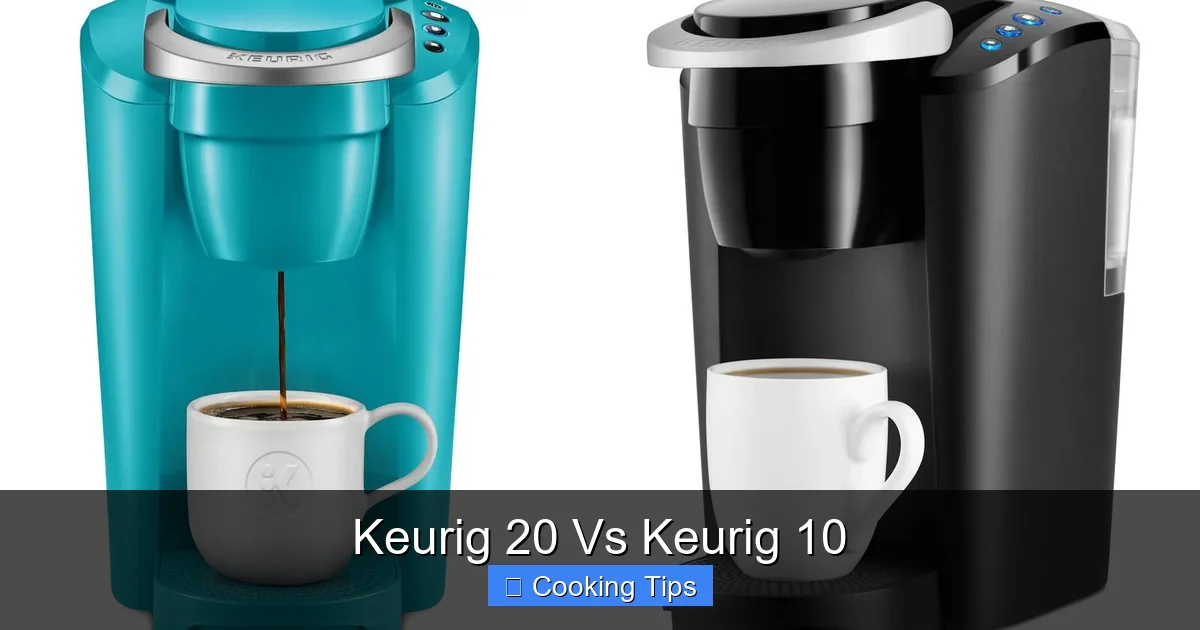
Choosing between the Keurig 20 and Keurig 10 can be tricky, but this guide clarifies their differences. We’ll explore features, ease of use, and brewing capabilities to help you make the right choice for your perfect cup of coffee. Discover which brewer best fits your lifestyle and budget.
Keurig 20 Vs Keurig 10: Your Ultimate Brewing Guide
Welcome to your definitive guide on the Keurig 20 versus the Keurig 10! If you’re looking to upgrade your morning routine or simply want to understand the nuances between these two popular Keurig coffee makers, you’ve come to the right place. We’ll break down everything you need to know, from core functionalities to those little extras that can make a big difference. By the end of this guide, you’ll have a clear picture of which Keurig brewer is the perfect fit for your kitchen and your coffee cravings.
Keurig has revolutionized home coffee brewing, offering convenience and variety at the touch of a button. But with different models available, making the right selection can feel a bit overwhelming. The Keurig 20 and Keurig 10 are often compared because they represent different tiers of Keurig’s offerings. Understanding their strengths and weaknesses will empower you to make a smart purchase decision.
This guide is designed to be your go-to resource. We’ll cover:
- Key differences in features and design
- Brewing capabilities and customization
- Ease of use and maintenance
- Who each Keurig model is best for
- Tips for getting the most out of your brewer
Let’s dive in and discover which Keurig will be brewing your next delicious cup!
Key Takeaways
- Feature Comparison: The Keurig 20 generally offers more advanced features and brewing options compared to the more basic Keurig 10.
- Brewing Capacity: Understand the different reservoir sizes and how they impact brewing frequency and convenience.
- Customization Options: Learn about the control and customization each model provides for your coffee strength and size.
- Ease of Use: Both Keurig brewers are designed for simplicity, but subtle differences in their interfaces might matter to some users.
- Target Audience: Identify which Keurig model is best suited for individuals, families, or those with specific coffee preferences.
- Value for Money: Evaluate the price point of each Keurig brewer in relation to the features and benefits they offer.
Understanding the Core Keurig Experience
Before we get into the specifics of the Keurig 20 and Keurig 10, it’s important to grasp what makes a Keurig brewer so popular. At its heart, a Keurig machine uses pre-portioned coffee pods, known as K-Cups, to brew a single cup of coffee, tea, or hot chocolate. This system eliminates the need for grinding beans or measuring coffee grounds, making the brewing process incredibly fast and mess-free.
The basic operation is simple:
- Fill the water reservoir.
- Insert a K-Cup pod.
- Select your brew size.
- Press the brew button.
And voilà! A fresh, hot beverage is ready in minutes. This convenience is a major selling point for busy individuals and households.
Keurig 20 vs. Keurig 10: Feature Deep Dive
Visual guide about Keurig 20 Vs Keurig 10
Image source: minikeurig.com
Now, let’s put the Keurig 20 and Keurig 10 head-to-head. While both serve the fundamental purpose of single-serve brewing, they differ in their sophistication and features. Think of the Keurig 10 as the reliable, straightforward entry-level model, and the Keurig 20 as a step up with more bells and whistles.
Keurig 10: Simplicity and Efficiency
The Keurig 10, often found in models like the K-Classic series, is designed for users who prioritize simplicity and ease of use. It’s a workhorse that gets the job done without unnecessary complexity.
Key Features of the Keurig 10:
- Basic Brew Sizes: Typically offers a few standard brew sizes (e.g., 6 oz, 8 oz, 10 oz).
- Removable Water Reservoir: Most models have a decent-sized, removable water reservoir, making refilling easy.
- Simple Interface: A straightforward button interface that’s intuitive for almost anyone to use.
- Durable Construction: Built to last for everyday use.
- Affordable Price Point: Generally more budget-friendly than higher-end models.
The Keurig 10 is perfect for coffee drinkers who want a quick and consistent cup without needing advanced controls. It’s ideal for dorm rooms, small offices, or as a secondary brewer. Its strength lies in its no-fuss operation, making it an excellent starting point for those new to the Keurig ecosystem.
Keurig 20: Enhanced Brewing and Customization
The Keurig 20, often represented by models such as the K-Elite or K-Cafe, takes the single-serve brewing experience to a new level. These models are designed for those who appreciate a bit more control over their beverage and might want to brew more than just a standard cup of coffee.
Key Features of the Keurig 20:
- Multiple Brew Sizes, Including Larger Options: Often includes a wider range of brew sizes, sometimes up to 12 oz or even larger for certain models. Some may even offer carafe brewing capabilities (like the K-Duo series, which bridges single-serve and carafe).
- Strong Brew Button: For those who prefer a bolder taste, a dedicated strong brew button enhances the coffee’s flavor intensity.
- Temperature Control: Some Keurig 20 models allow you to select your preferred brewing temperature, offering more control over the extraction process.
- Iced Setting: A specific setting designed to brew over ice, resulting in a perfectly chilled beverage without dilution.
- Larger Water Reservoir: Typically features a larger capacity water reservoir, meaning fewer refills for multiple cups.
- Advanced Display/Controls: Often includes a digital display with more options and customization settings.
- Quiet Brew Technology: Some advanced models are designed for quieter operation.
- Hot Water on Demand: The ability to dispense hot water without a K-Cup, useful for tea or oatmeal.
- Specialty Beverage Features (on some models): Models like the K-Cafe might include specific features for brewing lattes and cappuccinos.
The Keurig 20 is for the coffee enthusiast who enjoys experimenting with different brew strengths, temperatures, and sizes. It’s also excellent for households with diverse beverage preferences or those who frequently entertain.
Brewing Capacity and Convenience
Visual guide about Keurig 20 Vs Keurig 10
Image source: craftcoffeespot.com
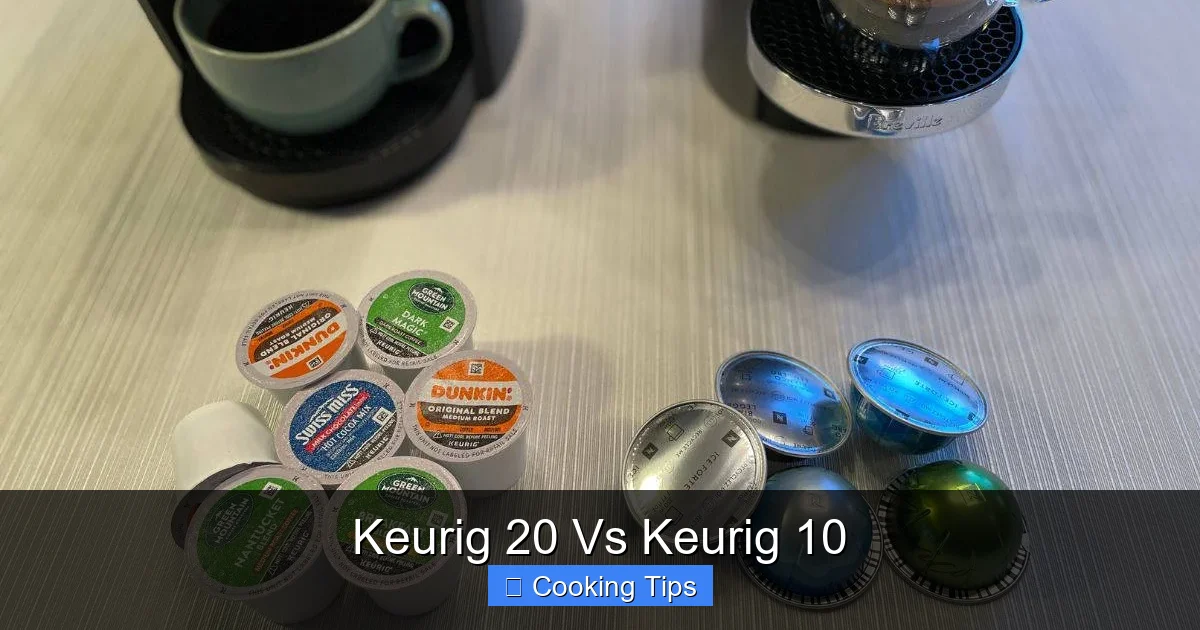
One of the most significant practical differences between the Keurig 20 and Keurig 10 lies in their water reservoir size and the resulting brewing convenience.
Water Reservoir Size Matters
Keurig 10 Reservoir:
Most Keurig 10 models come with a reservoir that can brew approximately 6-8 cups of coffee before needing a refill. This is generally adequate for individuals or couples. The reservoir is usually removable, making it easy to detach, fill at the sink, and reattach.
Keurig 20 Reservoir:
Keurig 20 models, on the other hand, often boast larger water reservoirs, typically ranging from 60 to 75 ounces or more. This means you can brew significantly more cups (often 8-12+) before needing to refill. This is a huge convenience for larger families, offices, or if you simply enjoy multiple cups of coffee throughout the day. The larger reservoir reduces the frequency of refills, saving you time and effort.
Brewing Options
Keurig 10 Brew Sizes:
The Keurig 10 typically offers 3-4 basic brew sizes, such as 6, 8, and 10 ounces. This is sufficient for most standard coffee needs.
Keurig 20 Brew Sizes and Beyond:
The Keurig 20 often provides a wider spectrum of brew sizes, including larger options like 12 ounces. For models that also include carafe brewing (like the K-Duo series), you can brew an entire pot of coffee for gatherings, further enhancing its versatility. The ability to brew directly over ice is another significant advantage for those who love iced coffee.
Ease of Use and Maintenance
Visual guide about Keurig 20 Vs Keurig 10
Image source: minikeurig.com
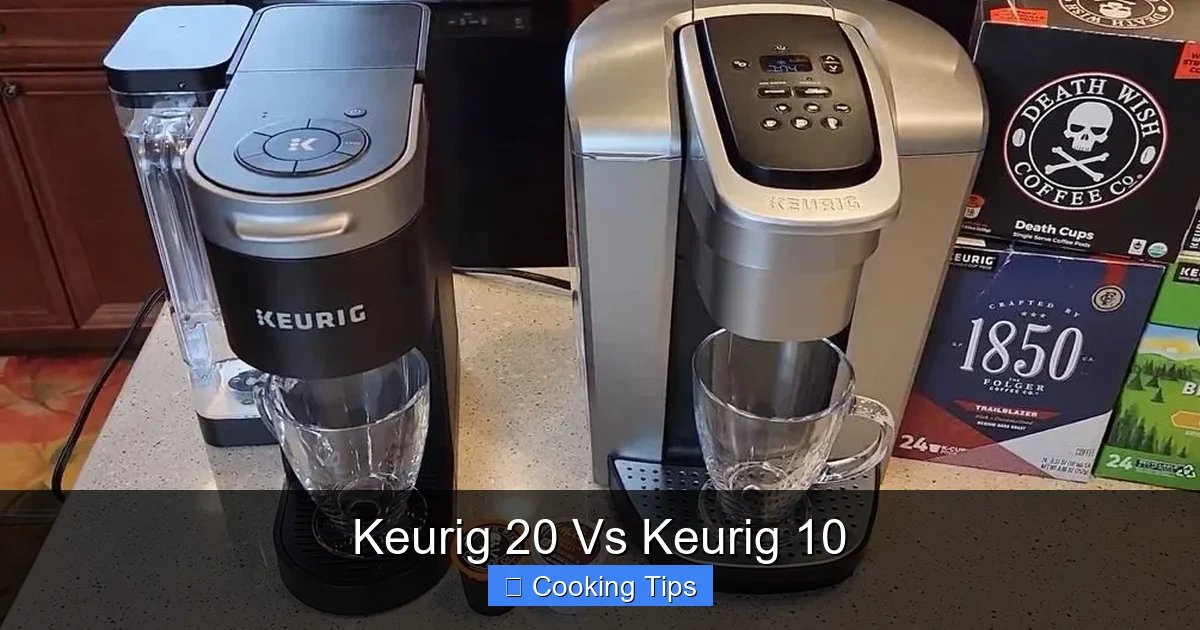
Both Keurig brewers are renowned for their user-friendliness, but there are subtle distinctions.
User Interface
Keurig 10 Interface:
The interface on a Keurig 10 is usually very simple, often consisting of a few buttons for brew size selection and a power button. It’s intuitive and requires no learning curve.
Keurig 20 Interface:
The Keurig 20 often features a more advanced digital display. While still easy to navigate, it might offer more options to cycle through, such as temperature settings, strength preferences, or specialty drink menus. For example, a model with a latte function will have a more complex interface to guide you through that process.
Cleaning and Descaling
Both models require regular cleaning and descaling to maintain optimal performance and taste. The process is largely similar for most Keurig machines.
Routine Cleaning:
- Wipe down the exterior with a damp cloth.
- Empty and rinse the drip tray regularly.
- Occasionally run a cleansing brew cycle with just water.
Descaling:
Both Keurig 10 and Keurig 20 models benefit from periodic descaling, typically every 3-6 months, depending on water hardness and usage. This involves using a descaling solution (either store-bought or a vinegar-water mixture) to remove mineral buildup from the internal components. The descaling process itself is usually guided by the machine’s indicator lights or a simple step-by-step process. The more advanced interfaces on some Keurig 20 models might offer specific descaling reminders or guided programs.
Who is Each Keurig Model Best For?
Understanding your own needs and lifestyle is crucial in choosing the right Keurig brewer.
Keurig 10 is Ideal For:
- Individuals or couples: Who primarily brew one or two cups at a time.
- Budget-conscious buyers: Looking for a reliable Keurig experience without breaking the bank.
- First-time Keurig users: Who want a simple, no-frills introduction to single-serve brewing.
- Students or those in small living spaces: Where counter space is limited and complex features are not a priority.
- Offices with low to moderate coffee consumption: Where simplicity and speed are key.
Keurig 20 is Ideal For:
- Families with diverse coffee preferences: Who need more brew size options or want to cater to different tastes.
- Coffee enthusiasts: Who enjoy customizing their brew strength, temperature, or are looking for specialty drink options.
- Those who entertain often: Especially if the model offers carafe brewing, providing a solution for serving multiple people at once.
- Iced coffee lovers: Who will appreciate the dedicated iced brew setting.
- Anyone looking for added convenience: Such as a larger water reservoir to reduce refilling frequency.
- Home baristas: Who might be interested in models that offer latte and cappuccino capabilities.
Making Your Final Decision: Tips and Considerations
When you’re weighing the Keurig 20 against the Keurig 10, consider these practical points:
Budget
The Keurig 10 will generally be the more affordable option. The Keurig 20, with its advanced features, will typically come with a higher price tag. Determine how much you’re willing to invest in your daily coffee ritual.
Usage Frequency and Number of Users
If it’s just you, the Keurig 10’s smaller reservoir might be fine. If multiple people in your household drink coffee throughout the day, the larger reservoir of a Keurig 20 model will be a game-changer.
Coffee Preferences
Do you like your coffee strong? Do you enjoy iced coffee? Are you interested in making specialty drinks like lattes? If the answer to any of these is yes, a Keurig 20 model with specific features will better suit your needs. If you’re happy with a standard hot cup of coffee, the Keurig 10 is perfectly capable.
Counter Space
While most Keurig brewers are relatively compact, some of the more feature-rich Keurig 20 models might be slightly larger due to bigger reservoirs or additional components. Measure your available counter space to ensure a good fit.
Future-Proofing
Consider if your needs might change in the future. If you anticipate your household growing or your coffee habits evolving, investing in a more versatile Keurig 20 model might be a better long-term decision.
Troubleshooting Common Keurig Issues
Regardless of which model you choose, you might encounter minor issues. Here are a few common ones and their solutions:
My Keurig is not brewing:
- Check Power: Ensure the machine is plugged in and the power button is on.
- Water Level: Verify that the water reservoir is filled sufficiently.
- Needle Clog: The brew needle (where water dispenses) might be clogged. Try poking a straightened paperclip into the needle opening to clear any obstruction.
- Pod Issues: Make sure the K-Cup is inserted correctly and the lid is fully closed.
Coffee tastes weak or watered down:
- Brew Size: You might be selecting too large a brew size for the amount of coffee in the K-Cup. Try a smaller size.
- Strength Settings: If your model has a “Strong” brew option, use it.
- K-Cup Quality: Some K-Cups have less coffee than others. Try a different brand or type of K-Cup.
- Machine Maintenance: The machine may need descaling to ensure proper water flow and extraction.
My Keurig is making strange noises:
- Air in the System: Air pockets can sometimes cause gurgling or unusual noises. Try running a few brew cycles with just water.
- Pump Operation: The pump will make some noise as it works, which is normal. However, excessively loud or grinding noises could indicate an issue.
- Need for Descaling: Mineral buildup can put a strain on the pump, leading to increased noise. Descale your machine.
The “Add Water” light is on, but the reservoir is full:
- Reservoir Seating: Ensure the water reservoir is properly seated on the base. Sometimes it needs to be pushed down firmly.
- Float Sensor: There might be a small float sensor at the bottom of the reservoir that’s stuck. Gently push it up and down to dislodge it.
Conclusion
The choice between the Keurig 20 and Keurig 10 ultimately boils down to your personal preferences, household needs, and budget. The Keurig 10 is a fantastic choice for its simplicity, affordability, and efficiency, making it a reliable companion for individuals or small households. It’s the no-nonsense brewer that delivers a great cup every time.
On the other hand, the Keurig 20 offers a more advanced and customizable brewing experience. With larger reservoirs, more brew size options, and features like temperature control and strong brew settings, it caters to a broader range of tastes and demands. If you’re looking for more versatility and enjoy fine-tuning your coffee, the Keurig 20 is likely the better investment.
By carefully considering the features, benefits, and target audience for each model, you can confidently select the Keurig brewer that will best enhance your daily coffee ritual. Happy brewing!
