

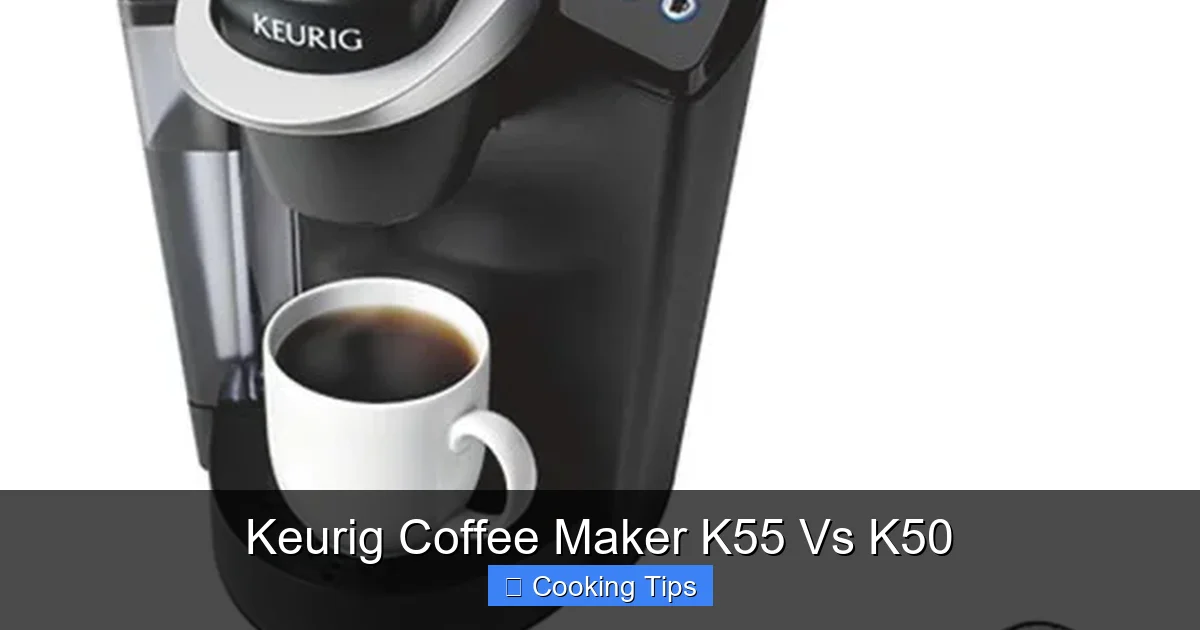
Choosing between the Keurig K55 and K50 can be confusing, as they are very similar models. This guide breaks down their features, highlighting the subtle differences that might influence your decision. Discover which Keurig is the better fit for your brewing needs and enjoy delicious, single-serve coffee with ease.
Welcome to the ultimate guide for choosing between two popular Keurig coffee makers: the K55 and the K50. If you’re in the market for a reliable and convenient single-serve coffee brewer, you’ve likely encountered these models. They are incredibly similar, often leading to confusion about which one is the “better” choice. This guide is here to demystify the differences, highlight their shared strengths, and help you make an informed decision for your perfect cup of coffee.
In this comprehensive guide, we’ll dive deep into what makes the Keurig K55 and K50 tick. You’ll learn about their core functionalities, explore the subtle design variations, and understand how these might impact your daily brewing routine. Whether you’re a seasoned Keurig user or a complete newcomer, this article will equip you with the knowledge to confidently select the single-serve coffee maker that best suits your needs and preferences.
Key Takeaways
- Identical Core Functionality: Both the Keurig K55 and K50 offer the same fundamental single-serve brewing experience, using K-Cup pods to make coffee quickly and conveniently.
- Minor Design Differences: The most noticeable distinctions lie in their aesthetic details, such as button colors and subtle variations in the control panel layout.
- Brew Sizes: Both models typically offer the same common brew sizes (e.g., 6, 8, and 10 ounces), catering to different coffee preferences.
- Water Reservoir Capacity: Expect a similar water reservoir capacity for both units, meaning they can brew multiple cups before needing a refill.
- Ease of Use: Both machines are designed for simplicity, making them user-friendly for beginners and experienced coffee drinkers alike.
- Reliability and Durability: Keurig is known for producing reliable appliances, and both the K55 and K50 generally uphold this reputation for long-term use.
- Price Point: Often, the price difference between these two models is minimal, making the decision less about cost and more about minor feature preferences.
Understanding the Keurig K55 and K50: A General Overview
Before we dissect the specifics, it’s important to understand the foundation of both the Keurig K55 and K50. Both are part of Keurig’s highly regarded lineup of single-serve coffee makers. Their primary purpose is to brew a single cup of coffee, tea, or hot chocolate using pre-portioned K-Cup pods. This makes them exceptionally convenient for individuals or households with varying beverage preferences.
The appeal of Keurig machines lies in their:
- Speed: Most cups are brewed in under a minute.
- Simplicity: Operation is typically straightforward, involving just a few steps.
- Variety: A vast array of K-Cup flavors and brands are available.
- Cleanliness: There’s minimal mess compared to traditional coffee brewing methods.
Both the K55 and K50 embody these qualities. They are designed to be user-friendly, requiring minimal setup and maintenance. If you’re looking for a no-fuss way to get your caffeine fix, you’re on the right track with either of these machines.
The “Vs.” Breakdown: Keurig K55 Versus K50
Now, let’s get to the heart of the matter. The truth is, the Keurig K55 and K50 are almost identical. They are often considered to be the same machine marketed under slightly different names or bundled with different accessories. However, there are some very minor, often cosmetic, differences that might catch your eye.
Let’s break down the key areas where you might see variations:
1. Aesthetic Design and Color Scheme
This is where the most discernible differences lie, although they are quite subtle. Think of them as different paint jobs on the same car.
Keurig K55 Aesthetics
The Keurig K55 often features a slightly more modern or refined look. You might notice:
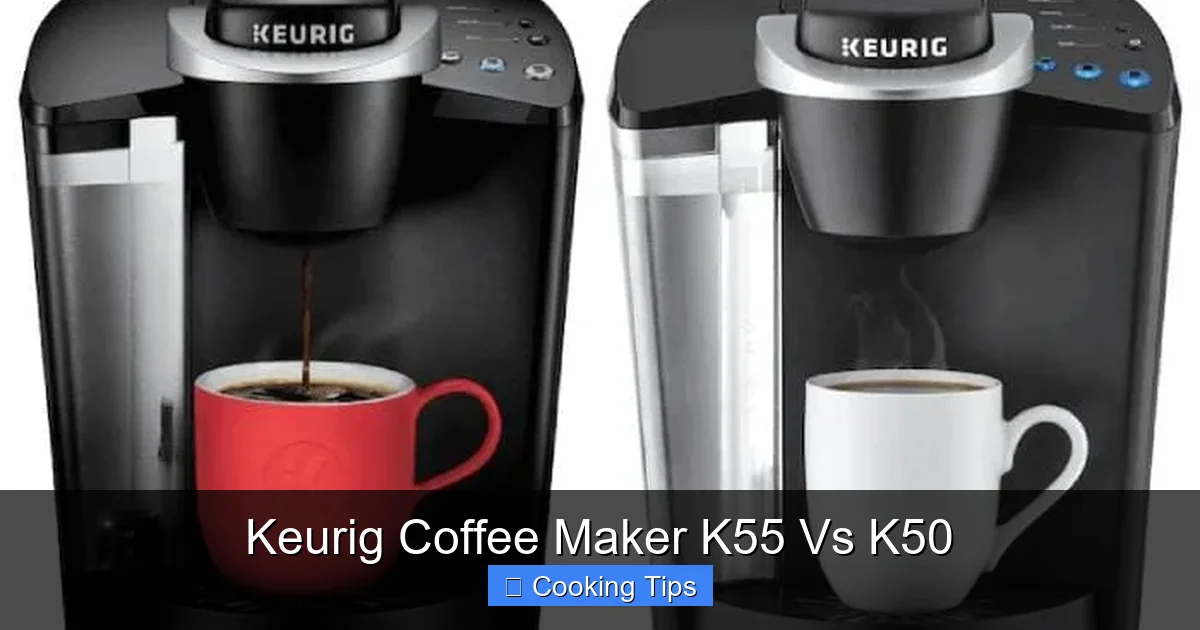
- Button Colors: The K55 typically has blue indicator lights and buttons. This gives it a clean, contemporary feel.
- Control Panel: The layout of the buttons and indicators is generally intuitive.
When you look at a K55, you’re seeing a machine designed to blend seamlessly into most kitchen décors, with a consistent color palette across its controls.
Keurig K50 Aesthetics
The Keurig K50, while very similar, might have subtle variations. It’s important to note that the K50 is sometimes seen as a slightly older or more basic iteration, though functionality remains paramount.
- Button Colors: While some K50 models might also have blue accents, others could feature different color combinations, or perhaps less distinct accent colors.
- Control Panel: The overall layout will be the same, but the specific visual design of the buttons or indicator lights might differ slightly.
The K50 aims for the same user-friendly experience but might have a design that feels a little less “premium” or has slightly different styling on its control panel. However, these are often subjective preferences.
2. Model Naming and Retailer Variations
A significant reason for the confusion between the K55 and K50 is how Keurig markets its products. Sometimes, a “K55” might be a bundle that includes a water filter starter kit or a selection of K-Cup pods. Conversely, a “K50” might be the standalone machine.
Retailers also play a role. Different stores might carry the same basic Keurig model under different names or with different accessory packages. For example, one retailer might sell the K55 as their “standard” model, while another might offer a very similar unit as the K50.
Tip: Always check the product description and specifications list carefully. Look for details about brew sizes, water reservoir capacity, and included accessories to ensure you’re getting what you expect, regardless of the model name.
3. Core Brewing Functionality and Features
Here’s where the similarity really shines. In terms of brewing coffee, the K55 and K50 are virtually identical. Both are designed to brew delicious coffee in minutes using K-Cup pods.
Brew Sizes
Both models typically offer the same standard brew sizes, allowing you to customize your cup:
- 6 oz: For a stronger brew.
- 8 oz: A standard coffee cup size.
- 10 oz: For a larger serving.
Some models might also offer a 12 oz brew size, but this is less common for these specific designations. The selection process for brew size is usually as simple as pressing a button after you’ve placed your K-Cup pod and mug.
Water Reservoir Capacity
The water reservoir capacity on both the K55 and K50 is generally around 48 ounces. This is a practical size that allows you to brew several cups of coffee before needing to refill. For an average household, this means you won’t be constantly topping up the water.
Brewing Process
The brewing process is identical:
- Ensure the machine is plugged in and turned on.
- Lift the handle to open the K-Cup pod holder.
- Place your chosen K-Cup pod into the holder.
- Close the handle firmly.
- Select your desired brew size by pressing the corresponding button.
- The machine will heat the water and brew your coffee.
Removable Drip Tray
Both the K55 and K50 feature a removable drip tray. This is a crucial feature that allows you to easily clean the machine and also accommodates taller travel mugs. Simply remove the tray to gain extra height for your beverage container.
4. Ease of Use and Maintenance
Keurig machines are renowned for their user-friendliness, and the K55 and K50 are no exceptions. They are designed for simplicity from setup to daily operation.
Setup
Setting up either machine is usually a breeze:
- Unpack the machine and remove all packaging materials.
- Wash the water reservoir, drip tray, and any removable parts with warm, soapy water. Rinse thoroughly.
- Fill the water reservoir with fresh, filtered water.
- Run a few brew cycles with just water (no K-Cup pod) to prime the machine and rinse the internal system.
- Your Keurig is now ready to brew!
Daily Operation
As mentioned, the daily operation is straightforward. Add water, insert a K-Cup, select your brew size, and press brew. It’s that simple.
Maintenance
Regular maintenance ensures your Keurig coffee maker continues to perform optimally and brews delicious coffee:
- Cleaning the Exterior: Wipe down the exterior with a damp cloth periodically.
- Cleaning the Drip Tray: Remove and wash the drip tray regularly to prevent coffee stains and residue buildup.
- Descaling: Keurig recommends descaling your machine every 3-6 months, depending on water hardness. This process removes mineral deposits from the heating element and internal components. Both the K55 and K50 will benefit from regular descaling using a Keurig descaling solution or a vinegar-water mixture. Follow the specific descaling instructions provided in your owner’s manual.
The descaling process typically involves running multiple cycles of a descaling solution through the machine, followed by rinsing cycles with fresh water.
5. Durability and Reliability
Keurig machines are generally built to last. Both the K55 and K50 are constructed with durable materials and are designed for consistent performance over time. While any appliance can have issues, the overall reputation for reliability is strong for this line of Keurig brewers.
Choosing between them won’t significantly impact the longevity of your coffee maker. Both should provide you with years of enjoyable single-serve coffee if properly maintained.
6. Price Point
The price difference between the Keurig K55 and K50 is usually negligible, if it exists at all. Often, the price will fluctuate based on sales, promotions, and whether the unit is part of a bundle. Do not let a minor price difference be the deciding factor, as their core value and performance are so similar.
Instead, focus on which model might have slightly more appealing aesthetics or come with accessories that are valuable to you. If you find a great deal on a K55 with extra pods, or a K50 that fits your budget perfectly, both are excellent choices.
So, Which One Should You Choose: K55 or K50?
Given their overwhelming similarity, the decision between the Keurig K55 and K50 often comes down to personal preference and the specific package you find.
Visual guide about Keurig Coffee Maker K55 Vs K50
Image source: cornercoffeestore.com
- Choose the K55 if: You prefer its slightly more modern aesthetic, particularly the blue accents, and if it’s available at a comparable price or comes with desirable accessories.
- Choose the K50 if: You find a great deal on it, or if its slightly different styling (whatever that may be at the time of purchase) appeals to you more.
The practical advice here is: don’t overthink it. Both machines will deliver the same core Keurig experience. You are essentially choosing between two very closely related versions of the same excellent single-serve coffee maker. Focus on buying from a reputable retailer and ensuring the product description matches your expectations.
Troubleshooting Common Keurig Issues
While both models are reliable, occasional issues can arise. Here are a few common troubleshooting tips:

Visual guide about Keurig Coffee Maker K55 Vs K50
Image source: cozycoffeecup.com
Coffee Not Brewing
Possible Causes: Water reservoir is empty, K-Cup pod is not pierced properly, machine is not powered on, or there’s a clog.
Solutions: Ensure the water reservoir is filled. Make sure the K-Cup pod is inserted correctly and the handle is closed firmly. Check that the machine is plugged in and the power button is on. If you suspect a clog, try running a brew cycle with just water, or consult the descaling guide.
Weak or Watery Coffee
Possible Causes: Incorrect brew size selected, K-Cup pod is old or faulty, or needs descaling.
Solutions: Ensure you’re selecting a smaller brew size for a stronger coffee. Try a different K-Cup pod, as some might be less flavorful. Descaling your machine can also improve brew strength by ensuring proper water flow.
Machine Leaking
Possible Causes: Water reservoir not seated properly, drip tray is overflowing, or a crack in the reservoir or internal tubing.
Solutions: Make sure the water reservoir is securely in place. Empty the drip tray regularly. If you suspect a leak from a crack, contact Keurig customer support.
“Add Water” Light Stays On
Possible Causes: Water reservoir is indeed low, or the sensor is obstructed or malfunctioning.
Solutions: Fill the water reservoir. Ensure no debris is blocking the water level sensor at the bottom of the reservoir. If the issue persists, there might be a sensor problem.
For more specific issues, always refer to your Keurig owner’s manual or contact Keurig customer support.
Conclusion: Your Perfect Cup Awaits
Navigating the differences between the Keurig K55 and K50 can seem like a puzzle, but as we’ve seen, the solution is often simpler than expected. These two models are fundamentally the same at their core, offering the convenience, speed, and variety that have made Keurig a household name. The primary differences lie in minor aesthetic details and how they might be packaged for sale.
Ultimately, your choice between the K55 and K50 should be guided by what looks best in your kitchen and which offer provides the best value to you. Whichever you choose, you’re investing in a reliable, easy-to-use coffee maker that will deliver a satisfying cup of coffee, tea, or hot chocolate with just the touch of a button. Enjoy your brewing!
