


Deciding between the Keurig K50 and K55? This comprehensive guide breaks down the differences, helping you make an informed choice for your ideal single-serve coffee experience. We’ll explore their features, functionalities, and what sets them apart. Discover which Keurig brewer best suits your needs and budget.
Keurig K50 Vs Keurig K55: Finding Your Perfect Brew
Welcome to the ultimate showdown between two popular Keurig coffee makers: the Keurig K50 and the Keurig K55. If you’re looking to upgrade your morning routine with the convenience of single-serve coffee, you’ve likely stumbled upon these models. They often get confused, and for good reason – they share a lot of DNA. But is there a difference that matters to you? This guide will break down everything you need to know, from their core features to their subtle nuances, helping you decide which Keurig brewer is the perfect fit for your kitchen and your coffee cravings.
Keurig machines have revolutionized how we make coffee. Gone are the days of brewing a whole pot when you only want a single cup. With a Keurig, you get a fresh, hot cup of coffee, tea, or hot chocolate in minutes, with minimal mess and maximum convenience. The K50 and K55 are both fantastic entry points into the Keurig ecosystem, offering reliability and ease of use. But when faced with two seemingly similar options, how do you choose? Let’s dive deep and uncover the similarities and differences.
Key Takeaways
- Functionality is Nearly Identical: Both the Keurig K50 and K55 offer the same core brewing functionality, including brew sizes and ease of use.
- The Main Distinction is Aesthetics and Build: The primary difference lies in the materials and subtle design variations, with the K55 often featuring a more premium feel.
- No Significant Brewing Performance Difference: Expect the same quality and speed of brew from both models.
- Price Point as a Factor: While often close, slight price variations might exist, making one a more budget-friendly option at certain times.
- Consider Your Kitchen Style: The subtle design differences might influence your choice based on your kitchen’s overall aesthetic.
- Both are Excellent Entry-Level Options: If you’re new to Keurig or single-serve brewing, either the K50 or K55 is a solid, reliable choice.
Understanding the Core Keurig Experience
Before we get into the nitty-gritty of the K50 and K55, it’s important to understand what makes a Keurig a Keurig. At its heart, a Keurig brewer uses K-Cup pods. These are pre-portioned, single-serving packets filled with coffee, tea, or other beverages. You pop one into the brewer, select your brew size, and within a minute or two, you have a delicious, hot beverage.
Key elements common to most Keurig brewers, including the K50 and K55, include:
- Water Reservoir: This holds the water for brewing. Larger reservoirs mean fewer refills.
- K-Cup Holder: Where you insert the K-Cup pod.
- Brew Button: Selects your desired brew size (usually 6 oz, 8 oz, and 10 oz).
- Removable Drip Tray: Catches spills and allows for taller travel mugs.
- Simple Operation: Generally, it’s a straightforward “add water, insert pod, press button” process.
Both the K50 and K55 deliver this essential Keurig experience. So, if you’re primarily concerned with making a quick cup of coffee, either will serve you well.
Keurig K50: The Reliable Workhorse
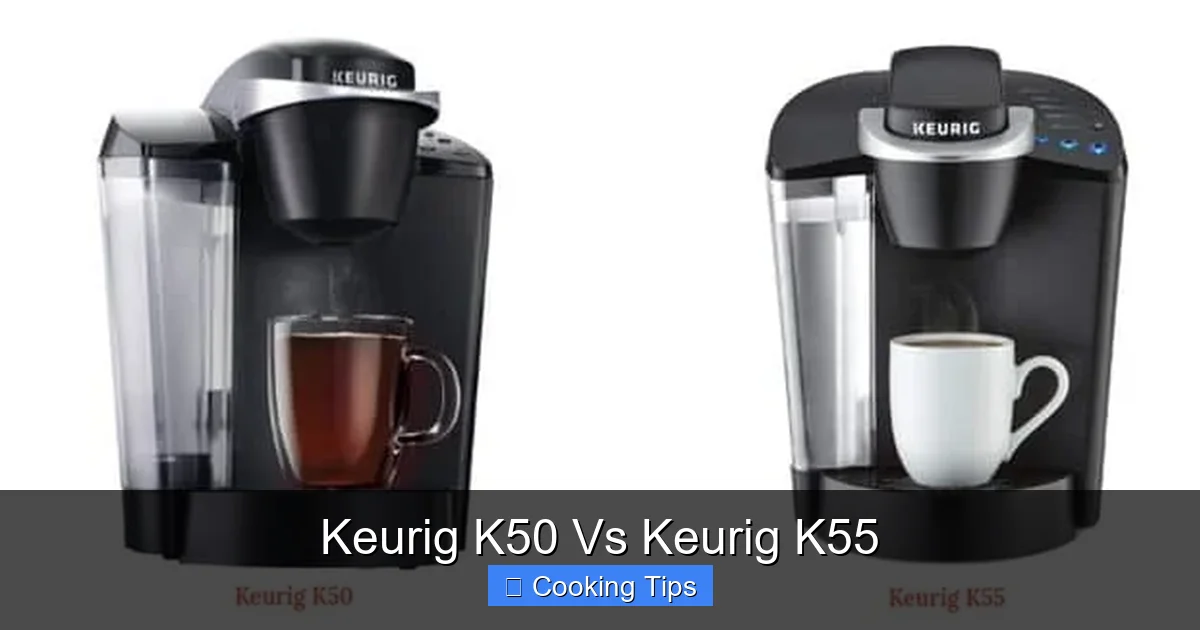
The Keurig K50, often referred to as the K50 Classic, is a popular model known for its straightforward functionality and robust build. It’s designed for those who want a no-fuss coffee experience.
Visual guide about Keurig K50 Vs Keurig K55
Image source: artofbarista.com
Key Features of the Keurig K50:
- Brew Sizes: Typically offers three brew sizes: 6 oz, 8 oz, and 10 oz. This allows you to customize the strength of your coffee.
- Water Reservoir Capacity: Usually boasts a substantial 48 oz water reservoir. This means you can brew multiple cups before needing to refill, which is great for households with multiple coffee drinkers or for those who enjoy several cups throughout the day.
- Simple Controls: Features easy-to-understand buttons for power, brew size selection, and brew initiation.
- Removable Drip Tray: This is a standard feature that makes cleaning easy and allows you to accommodate larger travel mugs, preventing messy overflows.
- Indicator Lights: Lights indicate when the brewer is heating, ready to brew, and when descaling is needed.
What to Expect from the K50:
When you use the K50, you’re getting a machine that prioritizes functionality. It’s built to last and to deliver a consistent brew every time. The operation is intuitive. You fill the reservoir, turn it on, wait for the green light, insert your K-Cup, select your size, and press brew. It’s the epitome of convenience.
The K50 often has a slightly more utilitarian look. Think durable plastic construction with simple button layouts. It’s not designed to be a showpiece, but rather a dependable appliance that gets the job done efficiently.
Keurig K55: The Slightly More Refined Option
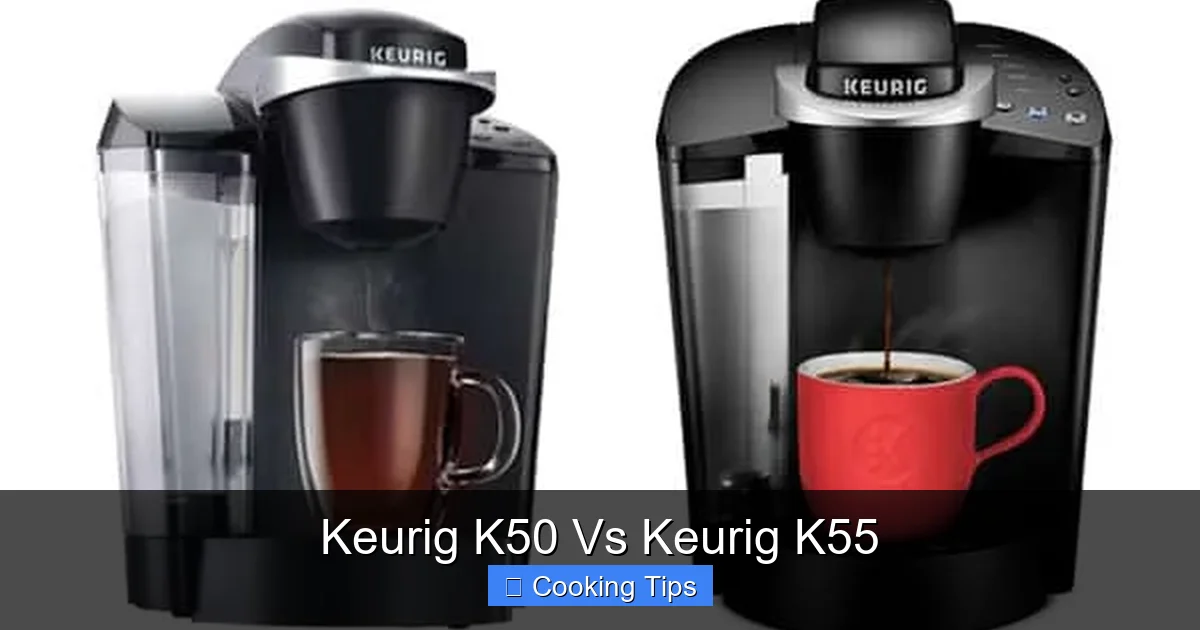
The Keurig K55, often marketed as the K55 Classic, is incredibly similar to the K50. In fact, for many consumers, the distinction is so minor that it often comes down to the specific retailer or minor cosmetic upgrades.
Visual guide about Keurig K50 Vs Keurig K55
Image source: thingsaroundthehouse.com
Key Features of the Keurig K55:
- Brew Sizes: Like the K50, the K55 typically offers the same three brew sizes: 6 oz, 8 oz, and 10 oz.
- Water Reservoir Capacity: Also commonly features a 48 oz water reservoir, providing ample capacity for multiple brews.
- Simple Controls: The control panel is usually very similar, if not identical, to the K50, ensuring ease of use.
- Removable Drip Tray: This essential feature is present on the K55 for easy cleaning and mug accommodation.
- Indicator Lights: Similar indicator lights help you monitor the brewing process and maintenance needs.
What Sets the K55 Apart (Subtly):
The primary difference often boils down to aesthetics and the materials used in its construction. The K55 might feature slightly different finishes or a more polished look compared to the K50. For instance, some K55 models might have a slightly more textured finish or subtle chrome accents. These are minor visual cues that contribute to a slightly more premium feel.
It’s also worth noting that Keurig sometimes updates its models, and what is designated as a “K55” at one point might have subtle variations in another production run. However, the core functionality remains the same.
Direct Comparison: K50 vs. K55
Let’s put these two machines head-to-head to highlight their similarities and differences.

Visual guide about Keurig K50 Vs Keurig K55
Image source: sipcoffeehouse.com
Brewing Performance and Speed
Similarity: Both the K50 and K55 offer virtually identical brewing performance. They heat water to the optimal brewing temperature and extract coffee from the K-Cup pod at the same rate. You can expect your cup of coffee to be ready in roughly the same amount of time, typically between 1-2 minutes after the brewer has finished heating.
Ease of Use
Similarity: The user interface on both machines is designed for simplicity. Load a pod, select your brew size, and press brew. There are no complex settings or programming options. This makes them ideal for anyone, from tech-savvy individuals to those who prefer straightforward appliances.
Water Reservoir Size
Similarity: Both the K50 and K55 commonly come with a 48 oz water reservoir. This is a generous size that supports brewing multiple cups without constant refilling, making them suitable for families or shared office spaces.
Brew Size Options
Similarity: You’ll find the same three brew size options (6 oz, 8 oz, 10 oz) on both the K50 and K55. This allows for customization based on your preference for a stronger or milder cup.
Durability and Build Quality
Subtle Difference: This is where the most notable, albeit minor, distinction lies. While both are built to be durable, the K55 might use slightly higher-grade plastics or have a more refined finish. The K50 is a solid workhorse, while the K55 might feel a touch more premium in hand. However, this difference is often subjective and depends on specific production runs.
Aesthetics and Design
Subtle Difference: The K55 often boasts a slightly more modern or elegant design compared to the K50. This could be in the texture of the plastic, the button design, or subtle accents like chrome trim. If you care about the look of your appliances on your countertop, this might be a factor.
Price
Potential Difference: The pricing can fluctuate depending on sales, retailers, and the specific model variations available at any given time. Generally, they are priced very closely, with the K55 sometimes being slightly more expensive due to its perceived premium finish. However, you might find deals that make them identical in price.
What’s Included
Similarity: Typically, both machines come with a starter set of K-Cup pods and a small instruction booklet. Ensure you check the product listing for any specific bundles or extras.
Choosing the Right Keurig for You
So, after examining the K50 and K55, which one should you buy? The answer, for most people, is: it depends on very subtle factors.
When to Choose the Keurig K50:
- Budget is a Primary Concern: If you find the K50 at a slightly lower price point than the K55, and the cosmetic differences aren’t a priority, the K50 is an excellent value.
- You Prioritize Pure Functionality: You want a machine that makes great coffee without any fuss, and you’re not concerned with minor aesthetic upgrades.
- You’re Buying for Durability and Reliability: The K50 is known for its robust and dependable performance.
When to Choose the Keurig K55:
- You Appreciate a Slightly More Premium Look: If the subtle design enhancements and finish of the K55 appeal to your sense of style, and you’re willing to pay a tiny bit more, go for it.
- It’s Priced Similarly to the K50: If you find the K55 for the same price or very close to the K50, the slight aesthetic upgrade might be worth it.
- You Want the “Latest” (Slightly Refined) Version: While not a major upgrade, the K55 might be seen as the subtly evolved version of the K50.
Practical Tips for Using Your Keurig
Once you’ve chosen your Keurig, here are some tips to get the most out of it:
Daily Use Tips:
- Always Use Filtered Water: This not only improves the taste of your coffee but also helps to prevent mineral buildup inside the brewer, extending its lifespan.
- Rinse the Water Reservoir Regularly: Even with filtered water, it’s a good idea to empty and rinse the water reservoir every few days to keep it fresh.
- Use the Correct K-Cup Size: While all K-Cups fit, selecting the brew size that corresponds to the recommended size on the K-Cup packaging will give you the best flavor.
- Don’t Leave the K-Cup in After Brewing: Remove the used K-Cup immediately after brewing to prevent grounds from drying and potentially clogging the exit needle.
Maintenance Tips:
Your Keurig will eventually need descaling. This is a process of removing mineral deposits that can build up over time from water. Keurig machines usually have a “descale” indicator light.
How to Descale Your Keurig:
- Empty and Clean the Reservoir: Remove any water and clean it thoroughly.
- Fill with Descaling Solution: Use a Keurig-specific descaling solution or a mixture of one-third white vinegar and two-thirds water. Fill the reservoir to the top.
- Run Brew Cycles: Place a mug on the drip tray and run several brew cycles (using the largest brew size) until the reservoir is nearly empty. Discard the hot liquid.
- Rinse the Reservoir and Brew Cycles: Fill the reservoir with fresh water only and run at least 12 more brew cycles to rinse out any remaining vinegar or descaling solution.
- Clean External Parts: Wipe down the exterior of the brewer and the K-Cup holder with a damp cloth.
Regular descaling (typically every 3-6 months, depending on water hardness and usage) is crucial for maintaining brewing performance and preventing potential damage.
Troubleshooting Common Keurig Issues
Even the most reliable machines can have occasional hiccups. Here are a few common issues and their solutions:
Issue: Coffee is weak or watery.
Solution: Ensure you are using the correct brew size (smaller sizes yield stronger coffee). Check that the K-Cup is fully seated in the holder and that the exit needle isn’t clogged. You might also need to descale the machine.
Issue: Brewer is not brewing.
Solution: Check that the power cord is securely plugged in. Ensure the water reservoir is full and properly seated. Make sure the K-Cup holder is closed correctly. If the brew light is flashing but nothing happens, the machine might need descaling.
Issue: Brewer is making strange noises.
Solution: Some noises are normal as the pump works. However, loud grinding or rattling could indicate air in the water line. Try running a few water-only brew cycles. If the noise persists, descaling might be necessary.
Issue: Leaking from the brewer.
Solution: Check that the water reservoir is not overfilled and is seated correctly. Ensure the drip tray is in place. If leaks continue, there might be an internal issue requiring professional service.
Conclusion: The Verdict on K50 vs. K55
In the grand scheme of single-serve coffee makers, the Keurig K50 and K55 are remarkably similar. Their core functionality, brewing performance, and ease of use are virtually identical. Both machines provide a convenient and reliable way to enjoy a fresh cup of your favorite beverage in minutes. The K50 stands out as a straightforward, dependable workhorse, perfect for those who prioritize pure functionality and value.
The K55, on the other hand, offers a touch of refinement. If you find it at a comparable price, its slightly more polished aesthetics might be the deciding factor. Ultimately, the choice between the Keurig K50 and K55 is less about a significant difference in performance and more about personal preference regarding aesthetics and subtle build quality. Whichever you choose, you’re investing in the convenience and deliciousness that Keurig is known for. Happy brewing!
