

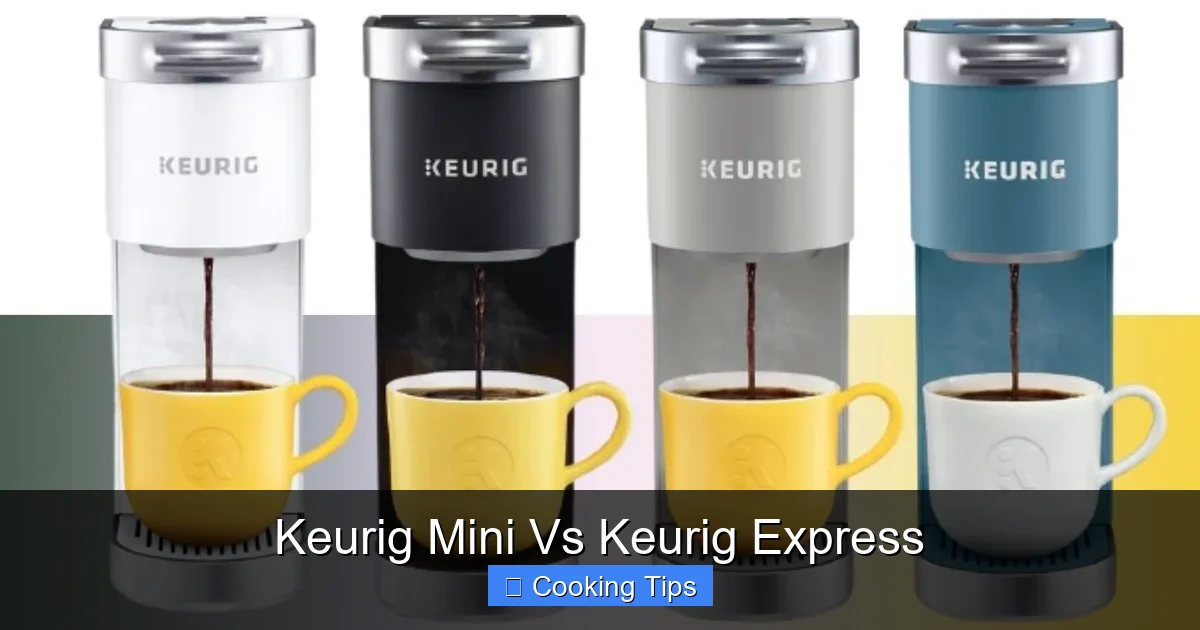
Choosing between the Keurig Mini and Keurig Express? This guide breaks down the key differences to help you make the perfect choice for your coffee needs. We’ll explore their features, brewing capabilities, and overall value, so you can enjoy your favorite single-serve coffee with confidence. Find the ideal brewer for your kitchen!
Choosing the right single-serve coffee maker can feel overwhelming, especially when you’re looking at compact options. Two popular choices that often come up are the Keurig Mini and the Keurig Express. Both promise convenience and a fresh cup of coffee at the touch of a button, but they aren’t identical. So, what’s the real difference between the Keurig Mini vs Keurig Express? This guide is here to help you figure that out.
We’ll dive deep into their features, brewing performance, ease of use, and what makes each unique. Whether you’re outfitting a small kitchen, a dorm room, an office cubicle, or simply want a no-fuss coffee solution, understanding these distinctions will ensure you make the best decision for your daily caffeine fix. Let’s get brewing!
Key Takeaways
- Compact Design: Both the Keurig Mini and Keurig Express are designed for small spaces, but they have subtle differences in their footprint and aesthetics.
- Brewing Simplicity: Both offer straightforward one-touch brewing, ideal for beginners or those seeking quick coffee.
- Water Reservoir Capacity: The Mini typically has a smaller, non-removable reservoir, while the Express might offer slightly more capacity or a removable option.
- Brew Size Options: While both are single-serve, their available brew sizes and how they are selected can vary.
- Performance and Taste: Differences in heating elements and water flow can subtly impact brew time and coffee flavor.
- Durability and Build Quality: Understanding the materials and construction of each can help you anticipate their longevity.
- Price Point and Value: When comparing the Keurig Mini vs Keurig Express, cost is a significant factor, and understanding what you get for your money is crucial.
Understanding the Keurig Landscape
Before we compare the Mini and the Express directly, it’s helpful to understand Keurig’s philosophy. Keurig is known for its K-Cup pod system, which allows users to brew a single cup of coffee, tea, or hot chocolate quickly and easily. Their machines range from basic, entry-level models to more advanced units with extensive customization options. The Mini and Express models typically fall into the entry-level category, focusing on affordability and simplicity.
Keurig Mini: The Ultimate Space-Saver
Visual guide about Keurig Mini Vs Keurig Express
Image source: minikeurig.com
The Keurig Mini, often referred to as the Keurig K-Mini or K-Mini Plus, is explicitly designed for those with limited counter space. Its slim profile is its defining characteristic.
Key Features of the Keurig Mini
* Ultra-Compact Design: This is its superpower. The Keurig Mini is incredibly narrow, making it ideal for tight spots. It’s one of the slimmest Keurig brewers available.
* Simple Operation: Brewing is as simple as it gets. You add water, pop in a K-Cup pod, and press the brew button. There are no complex settings.
* Single-Serve Focus: It’s built for one cup at a time. You can’t brew a full pot with this machine.
* Removable Drip Tray: While compact, it often features a removable drip tray. This is crucial for fitting taller travel mugs underneath, a thoughtful addition for those on the go.
* Water Reservoir: This is where the “Mini” aspect is most evident. The water reservoir is typically integrated and non-removable, requiring you to add fresh water for each brew. The capacity is usually around 6-12 ounces, depending on the exact model and how much water you add.
* Brew Size: Most Mini models offer one or two brew size options, usually around 6oz and 8oz. The K-Mini Plus might offer a few more.
* Aesthetics: It comes in various colors and has a minimalist look that blends well into many decors.
Pros of the Keurig Mini
* Excellent for small spaces: Its primary advantage.
* Affordable: Generally one of the most budget-friendly Keurig options.
* Easy to use: Perfect for those new to single-serve brewing.
* Quick brew times: Heats up relatively fast for a single cup.
* Good for occasional coffee drinkers: If you only need one cup now and then, it’s efficient.
Cons of the Keurig Mini
* Small water reservoir: Requires refilling for every cup, which can be tedious if you drink multiple cups.
* Limited brew options: Fewer size choices and no strength or temperature controls on most basic models.
* Not ideal for heavy coffee drinkers: The constant refilling can be a hassle.
* Basic construction: It’s built to a price point, so don’t expect premium materials.
Keurig Express: Simplicity with a Touch More Capability
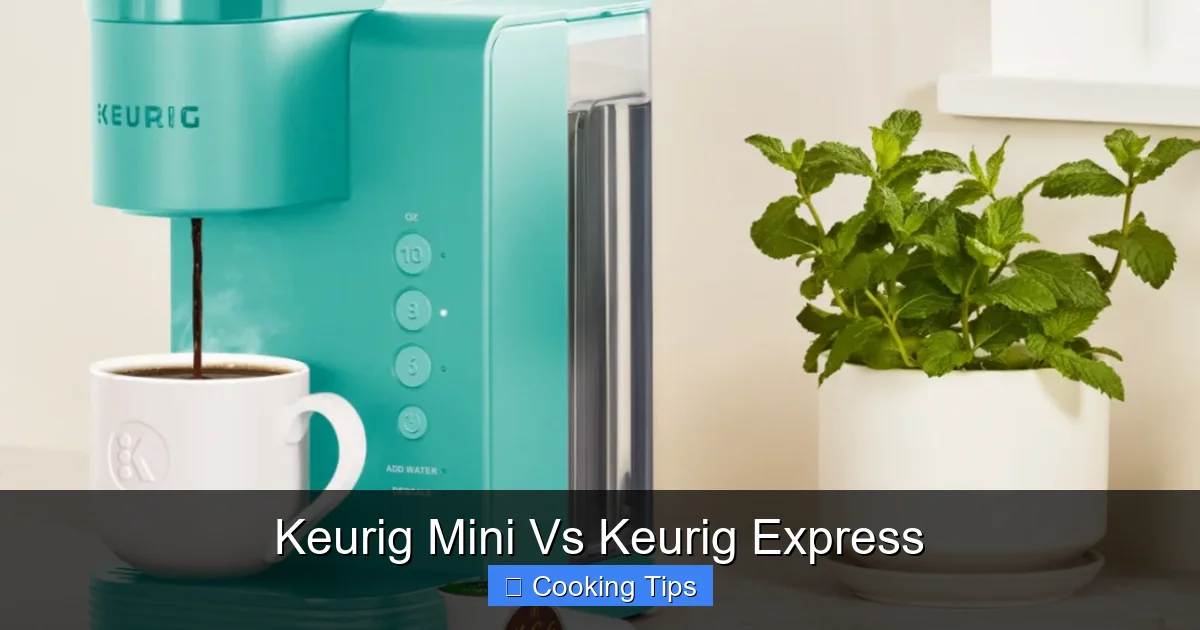
The Keurig Express, often found as the K-Express or K-Express Essentials, aims to offer a slightly more robust experience while still maintaining a compact footprint. It bridges the gap between the absolute smallest and more feature-rich models.
Key Features of the Keurig Express
* Compact Footprint: While not as “mini” as the Mini, the Express is still designed to be space-efficient. It’s generally a bit wider but not significantly taller.
* Slightly Larger Water Reservoir: A key differentiator. The Express often features a removable water reservoir, which can hold a bit more water than the Mini’s integrated system, typically around 12 ounces. This means you might brew two cups before needing a refill, depending on your brew size.
* Multiple Brew Size Options: The Express usually offers more brew size selections, often including 6oz, 8oz, and 10oz. This provides a little more flexibility in how strong you want your coffee.
* Removable Drip Tray: Similar to the Mini, the Express typically has a removable drip tray, accommodating taller mugs.
* Sleek Design: It often has a slightly more modern or streamlined appearance than some of the older Mini models.
* Simple Interface: Like the Mini, it’s designed for straightforward operation, usually with illuminated buttons for brew size selection and brewing.
Pros of the Keurig Express
* More convenient water reservoir: The removable and slightly larger capacity can be a significant advantage.
* More brew size options: Greater flexibility for your coffee preference.
* Still compact: Fits well in most kitchens, even with limited space.
* User-friendly: Easy to operate for anyone.
* Good value for its features: Offers a good balance of convenience and price.
Cons of the Keurig Express
* Not as slim as the Mini: If absolute minimal width is your top priority, the Mini wins.
* Still a single-serve machine: No option for brewing larger pots.
* Basic brewing controls: Lacks advanced features like temperature or strength control found in higher-end models.
* Durability can be comparable to the Mini: Built for affordability, so material quality might not be premium.
Keurig Mini vs. Keurig Express: A Head-to-Head Comparison
Now, let’s break down the direct comparisons to help you decide which one suits you best.
1. Size and Footprint
* Keurig Mini: The undisputed champion of slimness. If your counter space is exceptionally limited, especially in width, the Mini is likely your best bet. It’s designed to be almost unobtrusive.
* Keurig Express: Still compact, but typically a bit wider than the Mini. It’s designed to fit into most kitchen layouts without being a dominant feature. The difference might be an inch or two, but for some, that’s crucial.
2. Water Reservoir
* Keurig Mini: Integrated, non-removable reservoir. You must add water for each brew. Capacity is usually around 6-12oz. This is its biggest drawback for frequent drinkers.
* Keurig Express: Removable reservoir, often holding around 12oz. This means you can potentially brew two cups (depending on size) before refilling, offering more convenience.
3. Brew Size Options
* Keurig Mini: Typically offers 1-2 brew sizes (e.g., 6oz, 8oz). The K-Mini Plus might have a couple more.
* Keurig Express: Usually offers 3 brew sizes (e.g., 6oz, 8oz, 10oz), giving you more control over your coffee’s strength and volume.
4. Ease of Use
* **Both: Both machines are incredibly easy to use, making them perfect for beginners or those who want their coffee with minimal fuss. The process involves adding water, inserting a pod, and pressing a button.
5. Brewing Performance
* **Heating Time:** Both are designed for quick, single-serve brewing. Expect a heat-up time of around 1-3 minutes from a cold start.
* **Coffee Taste:** The taste will largely depend on the K-Cup pod you use. However, minor variations in water temperature and flow rate between models can lead to subtle differences. Generally, both will produce a decent cup of coffee comparable to other entry-level Keurigs. The Express, with its potentially slightly more robust water system, might offer marginally better consistency.
6. Durability and Build Quality
* **Both:** These are entry-level machines built with cost-effectiveness in mind. You’ll likely find more plastic construction. While they are generally reliable for their intended purpose, they may not feel as robust as higher-end models. The difference in durability between the Mini and Express is often minimal; it comes down to individual unit manufacturing.
7. Price and Value
* **Keurig Mini:** Often the most affordable Keurig option available. Its value lies in its extreme compactness and simplicity.
* **Keurig Express:** Typically priced slightly higher than the Mini but often offers more features for the money, particularly the removable reservoir and more brew size options. The value here is in the added convenience and flexibility.
Who is the Keurig Mini For?
The Keurig Mini is ideal for:
* **Students in dorm rooms:** Where space is at an absolute premium.
* **Individuals living in small apartments:** Who need a functional coffee maker that doesn’t hog counter space.
* **Occasional coffee drinkers:** Who only need one cup now and then and don’t mind refilling the water.
* **Office cubicles:** For a personal coffee station without taking up much room.
* **Anyone prioritizing the absolute smallest footprint.**
Who is the Keurig Express For?
The Keurig Express is a better fit for:
* **Those with limited but not extremely restrictive space:** It offers a good compromise.
* **People who drink 1-2 cups of coffee per day:** The removable reservoir makes this more manageable.
* **Individuals who appreciate a little more control over their brew size.**
* **Anyone looking for a slight upgrade in convenience and features over the most basic Mini models, without a significant price jump.**
Troubleshooting Common Issues
Both the Keurig Mini and Keurig Express are generally reliable, but like any appliance, you might encounter a hiccup.
No Power / Machine Won’t Turn On
* **Check the power cord:** Ensure it’s securely plugged into both the machine and a working outlet.
* **Try a different outlet:** The outlet itself might be faulty.
* **Reset the machine:** Unplug it for a minute, then plug it back in.
Coffee Not Brewing / Slow Brew
* **Water level:** Ensure there’s enough water in the reservoir. For the Mini, make sure you’ve added enough for the selected brew size.
* **K-Cup blockage:** The pod might be inserted too far, or there might be grounds clogging the needle. Remove the pod, clean the area around the exit needle, and re-insert the pod.
* **Descaling needed:** If the machine is slow or the brew is weak, it’s likely time to descale.
Coffee is Weak or Watery
* **Brew size:** You might be selecting a larger brew size than intended for the amount of coffee in the K-Cup. Try a smaller brew size.
* **K-Cup quality:** Some K-Cups are known to produce weaker coffee. Try a different brand or blend.
* **Need to descale:** Mineral buildup can affect water flow and temperature, impacting taste.
Machine Making Unusual Noises
* **Normal operation:** Some gurgling and humming are normal as the machine heats water and pumps it.
* **Air pocket:** If it’s particularly loud, there might be an air pocket. Try running a water-only brew cycle to clear it.
Descaling Your Keurig
Descaling is crucial for maintaining your Keurig’s performance and taste.
1. **Empty the water reservoir.**
2. **Add a descaling solution** (either Keurig’s official solution or a mixture of equal parts white vinegar and water) to the reservoir.
3. **Place a mug on the drip tray.**
4. **Run a brew cycle without a K-Cup.**
5. **Discard the hot water.**
6. **Repeat** steps 3-5 several times until the reservoir is empty.
7. **Rinse the reservoir thoroughly.**
8. **Fill the reservoir with fresh water** and run several brew cycles with just water to flush out any remaining solution.
Conclusion
When comparing the Keurig Mini vs Keurig Express, the choice really boils down to your priorities. If **absolute minimal counter space is your primary concern**, and you don’t mind refilling the water for every single cup, the **Keurig Mini is your winner**. It’s the king of compact convenience.
However, if you have slightly more space and value the **added convenience of a removable water reservoir and more brew size options**, the **Keurig Express offers a more well-rounded experience for its price point**. It strikes an excellent balance between being compact and functional for daily use, even for those who enjoy a second cup.
Both are excellent entry-level machines that deliver on the promise of quick, easy, single-serve coffee. Consider how many cups you typically drink, how much space you have, and what level of convenience matters most to you. Whichever you choose, you’ll be well on your way to enjoying your favorite K-Cup beverages with minimal fuss.
