

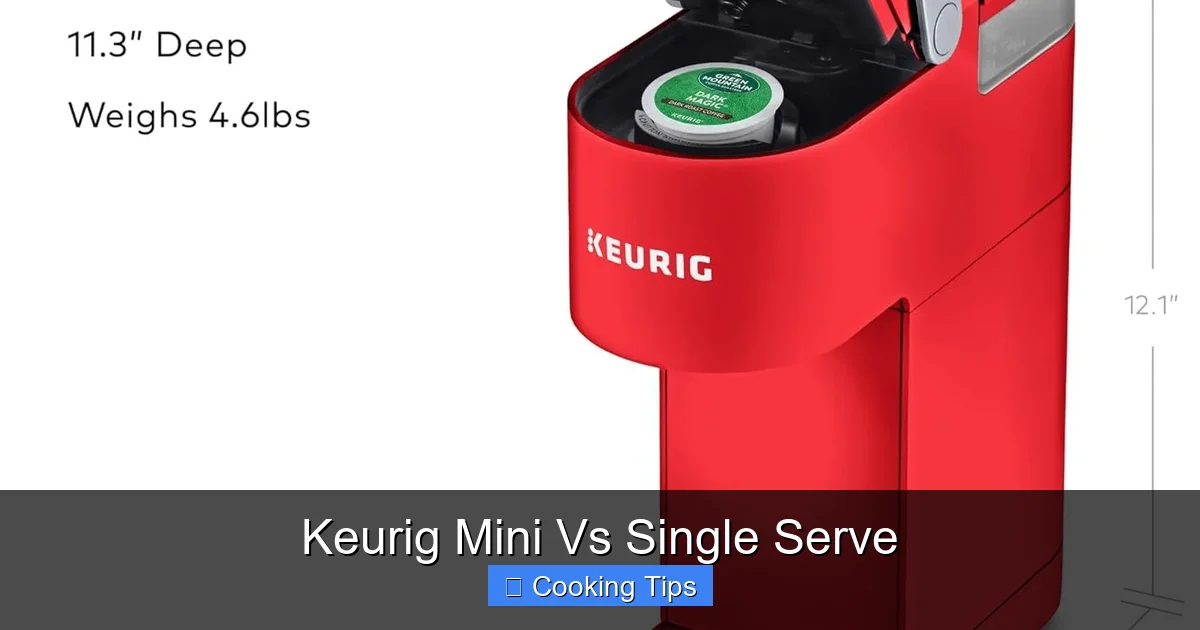
This guide dives deep into the world of single-serve coffee makers, specifically comparing the Keurig Mini with other single-serve options. We’ll break down their features, explore the advantages and disadvantages of each, and help you make an informed decision for your perfect cup. Whether you prioritize speed, variety, or budget, understanding these nuances will revolutionize your morning routine.
Key Takeaways
- Keurig Mini’s Strengths: It excels in compactness and simplicity, making it ideal for small spaces and users who want a no-fuss brewing experience.
- Broader Single-Serve Landscape: The term “single-serve” encompasses a wider variety of machines beyond Keurig, including Nespresso, Breville, and even some specialized pour-over or French press systems designed for single servings.
- Brewing Technology Differences: Keurig uses K-Cup pods, while other single-serve brewers might use proprietary capsules, ground coffee with a filter, or even a combination. This impacts cost, flavor, and environmental considerations.
- Cost Considerations: While the Keurig Mini’s initial cost is low, the ongoing expense of K-Cups can add up. Other single-serve options may have higher upfront costs but offer more economical long-term brewing with ground coffee.
- Variety and Customization: Keurig offers a vast array of K-Cup flavors. However, other single-serve systems might provide superior control over brew strength and temperature, appealing to coffee aficionados.
- Environmental Impact: The disposability of K-Cups is a significant concern for many. Reusable K-Cup filters or systems that use ground coffee generally have a lower environmental footprint.
- Maintenance and Cleaning: The Keurig Mini is generally easy to clean. However, other single-serve brewers, especially those with more complex brewing mechanisms, might require more involved maintenance.
Keurig Mini Vs Single Serve: Navigating Your Perfect Coffee Companion
Are you tired of the morning coffee shuffle? Do you dream of a perfectly brewed cup, ready in moments, without the fuss of a full coffee pot? You’re not alone. The world of single-serve coffee makers has exploded, offering convenience and customization like never before. But when you hear “single-serve,” what exactly does that mean? And how does the ever-popular Keurig Mini stack up against the broader landscape of single-serve brewing?
This guide is your ultimate roadmap. We’re going to demystify the concept of single-serve coffee, focusing on what makes the Keurig Mini a standout, and then explore the diverse range of other single-serve options available. By the end, you’ll have a clear understanding of the differences, the pros and cons of each, and the knowledge to choose the brewing system that perfectly fits your lifestyle, your taste buds, and your budget. Let’s dive into the delightful world of single-cup coffee!
Understanding “Single Serve” Coffee
Before we pit the Keurig Mini against its brethren, let’s clarify what “single serve” really means in the coffee world. At its core, a single-serve coffee maker is designed to brew one cup of coffee at a time. This is a stark contrast to traditional drip coffee makers that brew a whole pot, often leading to wasted coffee if you’re not a heavy coffee drinker or live alone.
Single-serve machines achieve this by using pre-portioned coffee, typically in pods or capsules, or by allowing you to add your own ground coffee to a special filter. The machine then forces hot water through the coffee under pressure, extracting flavor quickly and efficiently for a single mug. This process is celebrated for its speed, convenience, and consistency.
The Keurig Mini: A Compact Champion
The Keurig Mini (often referred to as the K-Mini or K-Mini Plus) is a popular entry into the single-serve market. Its name says it all: “Mini” signifies its incredibly small footprint. This is its primary selling point. It’s designed for those with limited counter space, dorm rooms, small offices, or even for RV travel.
What sets the Keurig Mini apart is its sheer simplicity. It’s incredibly easy to use, requiring minimal setup and even less cleaning. You pop in a K-Cup pod, add water to the reservoir, press a button, and within minutes, you have a fresh cup of coffee.
Key Features of the Keurig Mini:
- Ultra-Compact Design: It’s one of the smallest single-serve brewers available, making it perfect for tight spaces.
- Simple Operation: Brew one cup at a time with minimal buttons and straightforward instructions.
- K-Cup Compatibility: It uses the vast ecosystem of Keurig’s K-Cup pods, offering a wide variety of coffee, tea, and hot chocolate flavors from numerous brands.
- Removable Drip Tray: Allows you to fit taller travel mugs or remove entirely for easier cleaning.
- Energy Efficiency: Designed to be energy-efficient, automatically shutting off after a period of inactivity.
Pros of the Keurig Mini:
- Space-Saving: Its biggest advantage. It can fit almost anywhere.
- User-Friendly: No complicated settings, perfect for beginners.
- Speed: Brews a cup of coffee in under two minutes.
- Variety of Drinks: Access to hundreds of K-Cup flavors.
- Affordable Upfront Cost: Generally less expensive to purchase than many other single-serve machines.
Cons of the Keurig Mini:
- Limited Water Reservoir: You have to add fresh water for each brew, which can be tedious if making multiple cups.
- No Brew Strength Control: You can’t adjust how strong your coffee is.
- Environmental Concerns: K-Cups are typically single-use plastic and contribute to landfill waste.
- Ongoing Cost of K-Cups: While the machine is cheap, K-Cups can be more expensive per cup than ground coffee.
- Water Temperature Consistency: Some users report inconsistent water temperatures, affecting the brew.
Exploring the Broader “Single Serve” Spectrum
The Keurig Mini is just one piece of the single-serve puzzle. The term “single-serve” encompasses a much wider array of brewing technologies and brands, each with its own unique advantages and target audience. Let’s explore some of these:
1. Other Keurig Models (Beyond the Mini)
While the Mini is all about extreme compactness, other Keurig models offer more features. These include larger water reservoirs, brew strength customization, and sometimes even temperature control. Models like the Keurig K-Elite or K-Supreme offer a more robust brewing experience but come in larger sizes and at a higher price point. They still use K-Cups, so the core pros and cons regarding variety and cost of pods remain.
2. Nespresso Machines
Nespresso is another major player in the single-serve market, known for its premium coffee experience.
Nespresso’s Approach:
Nespresso uses its own proprietary aluminum capsules. These capsules are designed to create a rich crema, a hallmark of espresso-style coffee. Nespresso machines often offer a sleeker design and a more refined brewing process compared to many Keurig models.
Pros of Nespresso:
- Espresso-Style Coffee: Produces a more authentic espresso crema.
- High-Quality Coffee: Known for premium coffee blends.
- Elegant Design: Often aesthetically pleasing on kitchen counters.
- Variety of Capsules: While proprietary, Nespresso offers a wide range of coffee intensity and flavors.
- Recycling Program: Nespresso has a robust capsule recycling program.
Cons of Nespresso:
- Proprietary Capsules: You are limited to Nespresso-branded or Nespresso-compatible capsules, which can be more expensive.
- Less Variety in Non-Coffee Drinks: Primarily focused on coffee, with fewer options for tea or hot chocolate.
- Higher Upfront Cost: Nespresso machines tend to be more expensive than most Keurig models.
3. Pod/Capsule Systems from Other Brands
Many other companies have entered the single-serve market with their own proprietary pod or capsule systems. Brands like illy, Lavazza, and even some supermarket brands offer their own machines and unique capsule formats. The experience is similar to Nespresso or Keurig: convenience is king, but you’re tied to a specific brand’s ecosystem.
4. Ground Coffee Single-Serve Brewers
This category is for those who love the single-serve convenience but prefer to use their own favorite ground coffee or want a more eco-friendly option.
How They Work:
These machines typically come with a reusable filter basket. You scoop your preferred ground coffee into the filter, place it in the machine, add water, and brew. Some machines are designed to accept standard coffee grounds, while others might have specific filter types.
Pros of Ground Coffee Single-Serve Brewers:
- Cost-Effective: Buying ground coffee in bulk is significantly cheaper per cup than using pods.
- Environmental Friendliness: Eliminates the waste associated with single-use pods.
- Unlimited Coffee Choice: You can use any coffee bean or blend you like.
- Control Over Coffee Amount: You can adjust the amount of coffee for your desired strength.
Cons of Ground Coffee Single-Serve Brewers:
- Slightly More Involved: Requires measuring and filling the filter with coffee grounds, which takes a few extra seconds.
- Cleaning: Cleaning the reusable filter can be more involved than simply discarding a pod.
- Potentially Slower Brew Time: May take slightly longer than pod-based systems.
- Less Common: Fewer models and brands might be available compared to pod systems.
5. Specialty Single-Serve Brewers
This includes devices like AeroPress, manual pour-over devices (like Chemex or V60 when used for single cups), and even some French press designs intended for one serving. These are for the coffee connoisseur who prioritizes control and flavor nuances.
Pros of Specialty Brewers:
- Ultimate Control: Allows precise control over water temperature, brew time, and grind size.
- Exceptional Flavor: Can produce the highest quality coffee with the right technique.
- Minimalist and Portable: Many are small and portable, great for travel or camping.
- Eco-Friendly: Typically use paper filters or no filters at all.
Cons of Specialty Brewers:
- Requires Skill and Practice: Not as simple as pressing a button; requires learning a brewing method.
- Manual Effort: Entirely manual process, no automation.
- Slower: Takes more time and attention to brew a single cup.
- Less Convenient for Multiple Cups: Not designed for quickly making several cups.
Choosing the Right Single-Serve Brewer for You
Now that we’ve explored the landscape, how do you decide? Consider these crucial factors:
1. Your Space Constraints
* If counter space is extremely limited: The Keurig Mini is almost unbeatable. Its tiny footprint is its superpower.
* If you have moderate space: Other Keurig models, Nespresso machines, or ground coffee brewers will fit comfortably.
* If space is not an issue: You have the freedom to choose based on other factors.
2. Your Budget (Upfront and Ongoing)
* Low Upfront Cost is Priority: The Keurig Mini and some basic ground coffee brewers are the most budget-friendly initially.
* Long-Term Savings are Key: Ground coffee single-serve brewers are the most economical in the long run due to cheaper coffee.
* Willing to Invest for Quality: Nespresso machines and higher-end Keurigs might have a higher initial cost but can offer a better overall experience.
3. Your Coffee Preferences and Habits
* Need Variety (Coffee, Tea, Hot Chocolate)? Keurig’s K-Cup system offers the broadest range.
* Love Espresso and Crema? Nespresso is your go-to.
* Prefer Using Your Own Coffee? A ground coffee single-serve brewer or specialty manual brewer is best.
* How many cups do you drink daily? If you’re a heavy coffee drinker, a machine with a larger reservoir or a different brewing method might be more efficient than constantly refilling a mini brewer.
4. Environmental Considerations
* Minimizing Waste: Ground coffee brewers or specialty manual brewers are the most eco-friendly.
* Recycling Options: Nespresso’s recycling program is a strong point if you prefer capsules. For Keurig, reusable K-Cup filters can mitigate some waste.
5. Ease of Use and Cleaning
* Absolute Simplicity: The Keurig Mini is the king of easy.
* Slightly More Effort for Better Results: Nespresso or ground coffee brewers offer a balance.
* Enjoy the Process: Specialty manual brewers are for those who find joy in the craft of coffee making.
Troubleshooting Common Single-Serve Issues
Even the best single-serve machines can encounter minor hiccups. Here are a few common problems and their solutions:
Problem: Coffee is weak or watery.
Possible Causes & Solutions:
- For K-Cups/Pods: Ensure you are using the correct pod and it’s seated properly. Try a different brand or strength of coffee. For Keurig Mini, you can’t adjust strength, so it’s dependent on the pod.
- For Ground Coffee: You might be using too little coffee grounds. Try adding a bit more. Ensure your grind size is appropriate for the machine (not too coarse).
- Machine Needs Cleaning: Mineral buildup can affect water flow and extraction. Descals you brewer regularly.
Problem: Machine is making unusual noises or brewing slowly.
Possible Causes & Solutions:
- Needs Descaling: Mineral deposits can clog the water lines. Follow your manufacturer’s instructions for descaling the machine.
- Clogged Pod/Filter: Ensure the pod or filter basket is free of debris.
- Water Reservoir Issue: Make sure the reservoir is filled correctly and seated properly.
Problem: Coffee is not hot enough.
Possible Causes & Solutions:
- Pre-heat your mug: Rinsing your mug with hot water before brewing can make a difference.
- Water Temperature: Some machines have limited temperature control. For Keurig Mini, this is fixed. For other systems, check if temperature settings are available.
- Machine Needs Descaling: As mentioned, buildup can affect heating elements.
Problem: Leaking
Possible Causes & Solutions:
- Loose Reservoir: Ensure the water reservoir is securely in place.
- Clogged Exit Needle (for K-Cups): Sometimes coffee grounds can clog the needle that pierces the K-Cup. Refer to your manual for cleaning instructions.
- Cracked Parts: Inspect the machine for any visible cracks or damage.
Conclusion: Your Perfect Cup Awaits
The Keurig Mini offers an unparalleled solution for those seeking maximum convenience and minimal footprint. It’s the ultimate “set it and forget it” coffee maker for busy individuals or those with limited space. However, the world of “single serve” is vast and varied.
Whether you’re drawn to the rich crema of Nespresso, the eco-friendly appeal of ground coffee brewers, or the precise control of specialty manual methods, there’s a single-serve solution out there for you. By understanding the distinct advantages and disadvantages of the Keurig Mini compared to the broader single-serve market, you’re now equipped to make an informed decision.
So, take a moment to assess your personal priorities – space, budget, taste, and environmental impact. Your perfect cup of coffee is just a brewing decision away. Enjoy the journey to discovering your ideal single-serve companion!
