

Navigating the world of coffee makers can be overwhelming. This guide dives deep into the Keurig vs. Drip Coffee Maker debate. We’ll break down their features, benefits, and drawbacks to help you make an informed decision. Whether you prioritize speed and convenience or the richness of traditional brewing, you’ll find the answers you need.
Choosing the right coffee maker can significantly impact your morning routine and overall coffee enjoyment. Two of the most popular options on the market are Keurig single-serve brewers and traditional drip coffee makers. Each offers a distinct experience, catering to different preferences and lifestyles. This comprehensive guide will help you understand the nuances of Keurig versus drip coffee makers, empowering you to make the best choice for your kitchen and your palate. We’ll explore their functionalities, advantages, disadvantages, and what each brewing method entails.
Key Takeaways
- Speed and Convenience: Keurig machines offer single-serve brewing in under a minute, ideal for busy mornings or when only one cup is needed.
- Variety of Beverages: Keurig’s K-Cup system provides a wide array of coffee, tea, hot chocolate, and other beverage options from numerous brands.
- Brew Quality and Customization: Drip coffee makers generally offer more control over brewing variables like water temperature and coffee-to-water ratio, potentially leading to superior flavor extraction.
- Cost Considerations: While drip coffee makers have a lower upfront cost, K-Cups can be significantly more expensive per cup than ground coffee for drip machines in the long run.
- Environmental Impact: Keurig’s single-use K-Cups generate more plastic waste than traditional drip coffee filters, although reusable K-Cup options exist.
- Maintenance and Cleaning: Both types require regular cleaning, but Keurig machines might need descaling more frequently, while drip machines require more thorough washing of the carafe and filter basket.
Understanding Keurig Coffee Makers
Keurig machines have revolutionized home coffee brewing with their innovative single-serve system. At its core, a Keurig uses pre-packaged pods, commonly known as K-Cups. These pods contain ground coffee, tea, or other beverages. When you insert a K-Cup and select your brew size, the machine pierces the pod and forces hot water through it, delivering a freshly brewed cup in a matter of minutes.
How a Keurig Works
The process is straightforward:
- Fill the Water Reservoir: The machine has a removable water reservoir. You fill it with fresh, cold water to a desired level. Some models have larger reservoirs, meaning less frequent refilling.
- Insert a K-Cup: Choose your desired K-Cup from a vast selection. Lift the handle, place the K-Cup into the designated holder, and close the handle firmly. This action pierces the top and bottom of the pod.
- Select Brew Size and Strength: Most Keurig models offer various brew sizes (e.g., 6, 8, 10 ounces) and sometimes strength settings (regular or strong). Select your preference.
- Brew Your Coffee: Press the brew button. The machine heats the water and pumps it through the K-Cup, dispensing your coffee into a mug placed on the drip tray.
Pros of Keurig Coffee Makers
- Speed: This is arguably Keurig’s biggest selling point. You can have a hot cup of coffee in hand in under a minute. This is perfect for those rushed mornings or when you need a quick caffeine fix.
- Convenience: The single-serve nature means no measuring coffee grounds or dealing with messy filters if you’re using the standard K-Cups. It’s incredibly user-friendly.
- Variety: The K-Cup ecosystem is massive. You can find coffee from popular brands like Starbucks and Dunkin’, as well as lesser-known roasters. Beyond coffee, you can brew teas, hot chocolate, cider, and even some specialty drinks.
- No Flavor Transfer: Each K-Cup is sealed, so the flavor of one brew won’t transfer to the next. This is great if you have multiple coffee drinkers in your household with different tastes.
- Less Waste (for single servings): If you only ever drink one cup of coffee a day, a Keurig might produce less overall coffee ground waste compared to brewing a full pot and discarding leftovers.
Cons of Keurig Coffee Makers
- Cost Per Cup: K-Cups are significantly more expensive per serving than buying a bag of ground coffee for a drip maker. Over time, this cost can add up considerably.
- Environmental Impact: Standard K-Cups are made of plastic and are not easily recyclable, contributing to landfill waste. While reusable K-Cup filters are available, they add an extra step and don’t offer the same grab-and-go convenience.
- Brew Quality: Many coffee enthusiasts argue that Keurig machines don’t extract the full flavor potential from the coffee grounds compared to a well-made drip coffee. The brewing process can sometimes result in a weaker or less complex taste.
- Limited Batch Size: Keurigs are designed for single servings. If you need to make coffee for more than one person, you’ll have to brew multiple cups, which negates the speed advantage for larger groups.
- Machine Maintenance: Keurig machines require regular descaling to maintain optimal performance and prevent mineral buildup. This can be a somewhat involved process.
Understanding Drip Coffee Makers
Drip coffee makers, also known as automatic drip coffee makers, are the traditional workhorses of the coffee world. They brew coffee by heating water and then allowing gravity to pull it through a filter basket containing coffee grounds into a carafe below. This method has been a staple in homes and offices for decades, appreciated for its ability to brew multiple cups at once.
How a Drip Coffee Maker Works
The process, while seemingly simple, involves a few key steps:
- Fill the Water Reservoir: Most drip coffee makers have a reservoir where you pour cold water. The amount of water you add determines the amount of coffee brewed.
- Add Coffee Grounds: Place a filter (paper or permanent) into the filter basket. Then, measure your desired amount of ground coffee and add it to the filter. The general ratio is 1-2 tablespoons of coffee per 6 ounces of water, but this can be adjusted to taste.
- Place the Carafe: Ensure the carafe is properly seated on the warming plate beneath the filter basket.
- Start Brewing: Turn on the machine. It will heat the water and drip it over the coffee grounds. The brewed coffee then drips into the carafe. Many machines have a pause-and-serve feature, allowing you to grab a cup before the entire pot is brewed.
Pros of Drip Coffee Makers
- Cost-Effective: The initial purchase price of a drip coffee maker is often much lower than a Keurig. More importantly, the cost per cup of coffee is substantially less when using ground beans or whole beans that you grind yourself.
- Batch Brewing: Drip coffee makers excel at brewing multiple cups of coffee simultaneously. If you have a family, office, or enjoy multiple cups throughout the day, a drip machine is far more efficient.
- Flavor Control and Quality: For coffee aficionados, drip coffee makers offer more control over the brewing process. You can experiment with different coffee-to-water ratios, grind sizes, and water temperatures (though most machines have preset temperatures). This allows for greater flavor extraction and customization.
- Environmental Friendliness: When using paper filters, they are biodegradable. If you opt for a permanent filter, you eliminate waste altogether. The overall waste generated by a drip coffee maker is generally much lower than that of single-use K-Cups.
- Simplicity and Durability: Drip coffee makers are typically straightforward to operate and, with proper care, can be very durable and long-lasting.
Cons of Drip Coffee Makers
- Brew Time: Brewing a full pot of coffee can take several minutes (typically 5-10 minutes, depending on the size). This is not ideal for single-cup needs or extreme rush situations.
- Potential for Stale Coffee: If coffee sits on the warming plate for too long, it can develop a burnt or stale taste. Many newer models offer thermal carafes, which keep coffee hot without a warming plate, mitigating this issue.
- Messiness: Measuring coffee grounds, handling filters, and cleaning the filter basket and carafe can be a bit messier than the K-Cup system.
- Less Variety (of brewed beverages): Drip coffee makers are primarily for brewing coffee. While some advanced models might have settings for tea, their primary function is coffee.
Keurig Vs. Drip: A Direct Comparison
Now that we’ve examined each type individually, let’s put them head-to-head on key factors:
Speed and Convenience
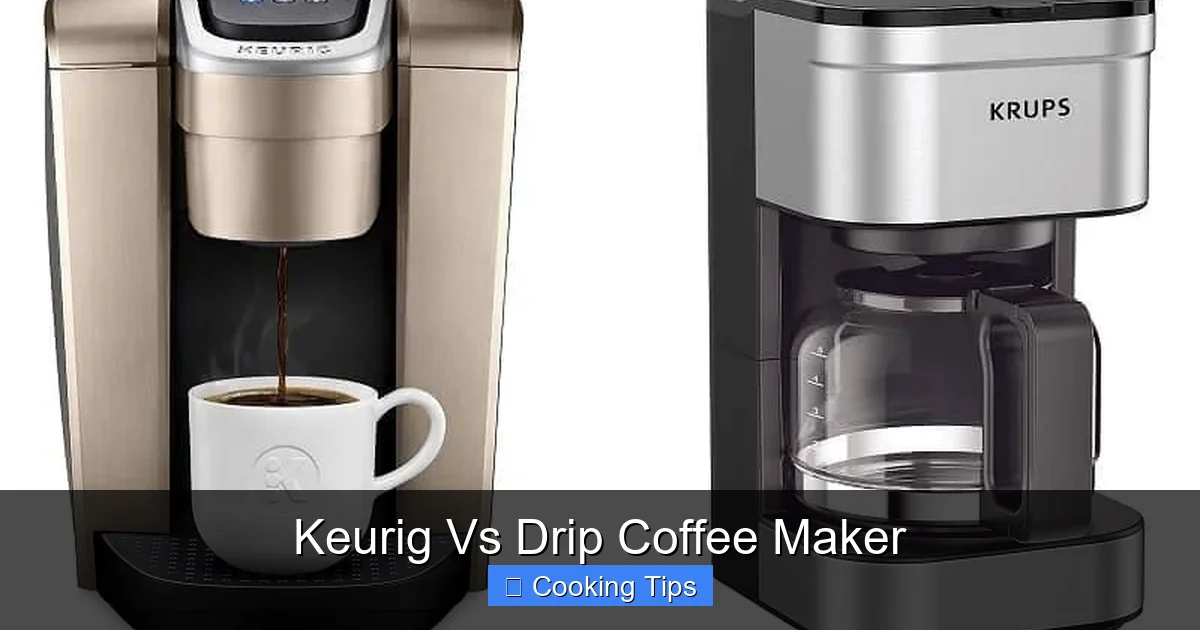
Keurig: Wins hands down. Single cups in under a minute. Minimal cleanup with disposable pods.
Visual guide about Keurig Vs Drip Coffee Maker
Image source: easytoespresso.com
Visual guide about Keurig Vs Drip Coffee Maker
Image source: cornercoffeestore.com
Drip: Slower, especially for multiple cups. Can be messier to prepare and clean.
Cost
Keurig: Higher initial cost for the machine. Significantly higher cost per cup due to K-Cups.
Drip: Lower initial cost for the machine. Much lower cost per cup using ground coffee.
Variety of Beverages
Keurig: Offers a vast selection of coffee, tea, hot chocolate, and more through K-Cups.
Drip: Primarily for coffee. Limited beverage options beyond that.
Brew Quality and Flavor
Keurig: Generally good, but often criticized by connoisseurs for not extracting optimal flavor. Less control over brewing variables.
Drip: Potential for superior flavor extraction due to more control over grounds, ratio, and filter type. Allows for experimentation.
Environmental Impact
Keurig: Higher plastic waste from K-Cups (unless using reusable filters).
Drip: Lower waste, especially with permanent filters or biodegradable paper filters.
Maintenance
Keurig: Requires regular descaling. Pod holder and drip tray need occasional cleaning.
Drip: Carafe and filter basket require daily cleaning. Descaling is also necessary, though perhaps less frequently than Keurigs depending on water hardness.
Making Your Decision
Visual guide about Keurig Vs Drip Coffee Maker
Image source: majestycoffee.com
So, which is right for you? Consider these scenarios:
Choose a Keurig If:
- You are often in a rush in the mornings and need coffee *now*.
- You live alone or are the only coffee drinker in your household.
- You enjoy a wide variety of beverages and want the convenience of switching between them easily.
- You prioritize ease of use and minimal cleanup.
- Budget per cup is less of a concern than immediate convenience.
Choose a Drip Coffee Maker If:
- You frequently brew coffee for multiple people.
- You are a coffee enthusiast who enjoys experimenting with different beans and brewing methods to achieve the perfect cup.
- You are looking for a more budget-friendly option in the long run.
- You are concerned about environmental waste and prefer sustainable options.
- You don’t mind a few extra steps in your morning coffee routine for potentially better taste and lower cost.
Tips for Optimizing Your Brew
Regardless of which machine you choose, a few tips can elevate your coffee game:
For Keurig Users:
- Use Filtered Water: Just like with drip coffee, the quality of your water significantly impacts taste. Use filtered or bottled water in your Keurig’s reservoir.
- Experiment with Reusable K-Cups: If you’re concerned about waste or cost, invest in a reusable K-Cup filter. You can then use your own favorite ground coffee.
- Clean Regularly: Descale your machine as recommended by the manufacturer and wipe down the exterior and drip tray to keep it looking and functioning well.
- Try Different Brands and Roasts: Don’t stick to just one K-Cup. Explore the vast market to find flavors you truly love.
For Drip Coffee Maker Users:
- Grind Your Beans Fresh: For the freshest, most flavorful coffee, buy whole beans and grind them right before brewing.
- Use the Right Grind Size: A medium grind is usually best for most drip coffee makers. Too fine, and your coffee might be bitter; too coarse, and it could be weak.
- Measure Accurately: Use a coffee scale or a measuring scoop for consistency. The 1-2 tablespoon per 6 ounces of water is a good starting point, but adjust to your preference.
- Clean Everything: Rinse your carafe and filter basket after each use. Deep clean your machine by running a descaling solution through it periodically.
- Consider a Thermal Carafe: If you dislike the taste of coffee left on a warming plate, a model with a thermal carafe is an excellent upgrade.
Troubleshooting Common Issues
Keurig Issues:
- Weak Coffee: Ensure you’re using the correct brew size for the amount of coffee in the K-Cup. Try selecting a stronger brew setting if available. Check that the K-Cup is properly seated.
- Machine Not Brewing: Make sure the water reservoir is full and properly seated. Check that the K-Cup is inserted correctly and the handle is fully closed. Descaling might be necessary if there’s a clog.
- Leaking: Check that the K-Cup is not damaged and is seated correctly. Ensure the drip tray is not overflowing. The water reservoir might be cracked or improperly seated.
Drip Coffee Maker Issues:
- Bitter Coffee: You might be using too much coffee, too fine a grind, or your machine needs cleaning.
- Weak Coffee: Try using more coffee grounds or a finer grind. Ensure you’re using the correct water-to-coffee ratio.
- Slow Brewing: Mineral buildup from hard water can clog the internal tubing. Descaling the machine should resolve this.
- Overflowing Filter Basket: This usually happens if the grind is too fine, too much coffee is used, or the filter is not seated properly.
Conclusion
The choice between a Keurig and a drip coffee maker ultimately comes down to your personal priorities. If you value speed, simplicity, and a wide variety of single-serve options, a Keurig is an excellent choice. It streamlines the morning routine and caters to individual preferences effortlessly. However, if you prioritize cost savings, the ability to brew larger batches, and the potential for a richer, more nuanced coffee flavor through greater control, a traditional drip coffee maker will likely be your preferred option. Both have their merits, and understanding their differences will lead you to the perfect brew for your lifestyle. Happy brewing!
