

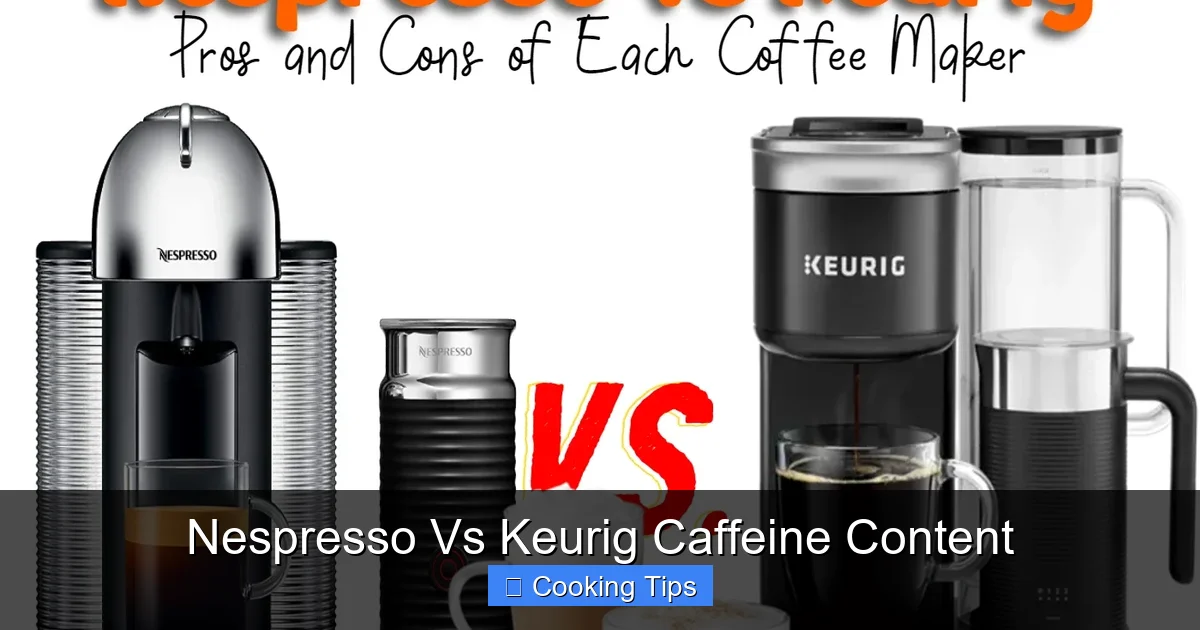
Understanding the caffeine content in your Nespresso and Keurig coffee is key to managing your energy levels. This guide breaks down the factors influencing caffeine in both systems, offering practical advice for choosing the right pod and brew size. Whether you prefer Nespresso’s espresso-style intensity or Keurig’s versatile drip coffee, you’ll learn how to make informed decisions about your daily caffeine intake. Get ready to brew smarter!
Key Takeaways
- Nespresso pods generally contain more caffeine per ounce than Keurig pods due to their smaller serving sizes and espresso-based nature.
- Brew size significantly impacts total caffeine intake with both Nespresso and Keurig; larger brews mean more caffeine.
- Coffee bean origin and roast level play a role, with lighter roasts often having slightly more caffeine than darker roasts for the same amount of beans.
- The “strong” or “bold” setting on Keurig machines does not increase caffeine content but rather impacts extraction time and flavor.
- Decaf options are available for both Nespresso and Keurig, but they still contain a small amount of caffeine.
- Individual sensitivity to caffeine varies, so even if a pod has a certain amount, your personal reaction might differ.
Nespresso Vs Keurig Caffeine Content: Brewing Smarter for Your Boost
In the world of convenient, single-serve coffee, Nespresso and Keurig are the undisputed giants. Both offer a quick and easy way to enjoy a cup of coffee at home or in the office. But when it comes to that all-important caffeine kick, do they stack up the same? Many of us reach for that morning cup not just for the flavor, but for the energy it provides. Understanding the Nespresso vs Keurig caffeine content can help you make the best choice for your daily routine and desired energy levels. This guide will demystify the caffeine in your pods, explaining the factors that influence it and how to get the boost you need, precisely when you need it.
We’ll dive into the specifics of each system, comparing their typical caffeine levels, exploring how different pod types and brew sizes affect your intake, and even touching on how roast levels and origins can play a part. By the end of this guide, you’ll be equipped with the knowledge to navigate the caffeine landscape of both Nespresso and Keurig, ensuring you brew not just a delicious cup, but the *right* cup for your caffeine needs.
Understanding Caffeine in Coffee: The Basics
Before we pit Nespresso against Keurig, let’s quickly review what caffeine is and what influences its levels in coffee. Caffeine is a natural stimulant found in coffee beans. It works by blocking adenosine, a neurotransmitter that makes you feel tired. This blockage leads to increased alertness and reduced fatigue.
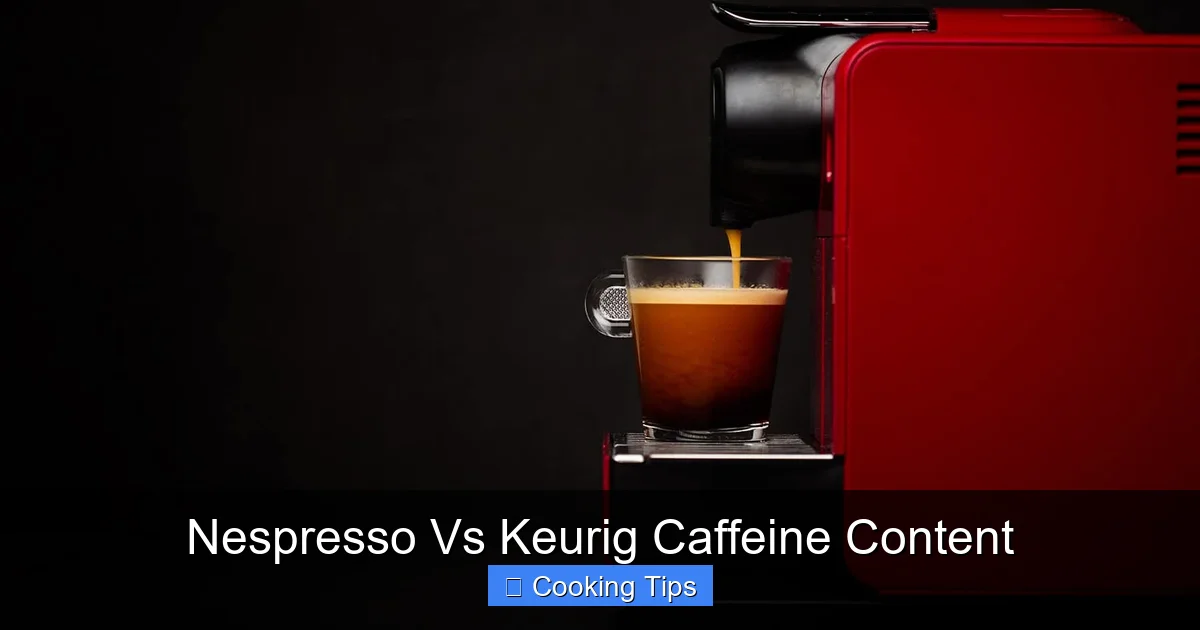
Visual guide about Nespresso Vs Keurig Caffeine Content
Image source: swivel.net
Several factors influence the amount of caffeine in your coffee:
- Type of Bean: Arabica beans, commonly used in premium coffees, generally have less caffeine than Robusta beans, which are often used in espresso blends for their crema and bold flavor.
- Roast Level: Lighter roasts tend to retain slightly more caffeine than darker roasts. During darker roasting, some caffeine can be lost. However, this difference is often marginal.
- Brewing Method: The way coffee is brewed significantly impacts caffeine extraction. Shorter, more intense brewing methods like espresso can extract caffeine efficiently from a smaller amount of coffee.
- Serving Size: This is perhaps the most straightforward factor. A larger cup of coffee will naturally contain more caffeine than a smaller one, assuming the coffee-to-water ratio is similar.
Nespresso Caffeine Content: Espresso Intensity
Nespresso machines are designed to brew espresso and espresso-based beverages. This means they use finely ground coffee and force hot water through it under high pressure. This process is known as pressure brewing.
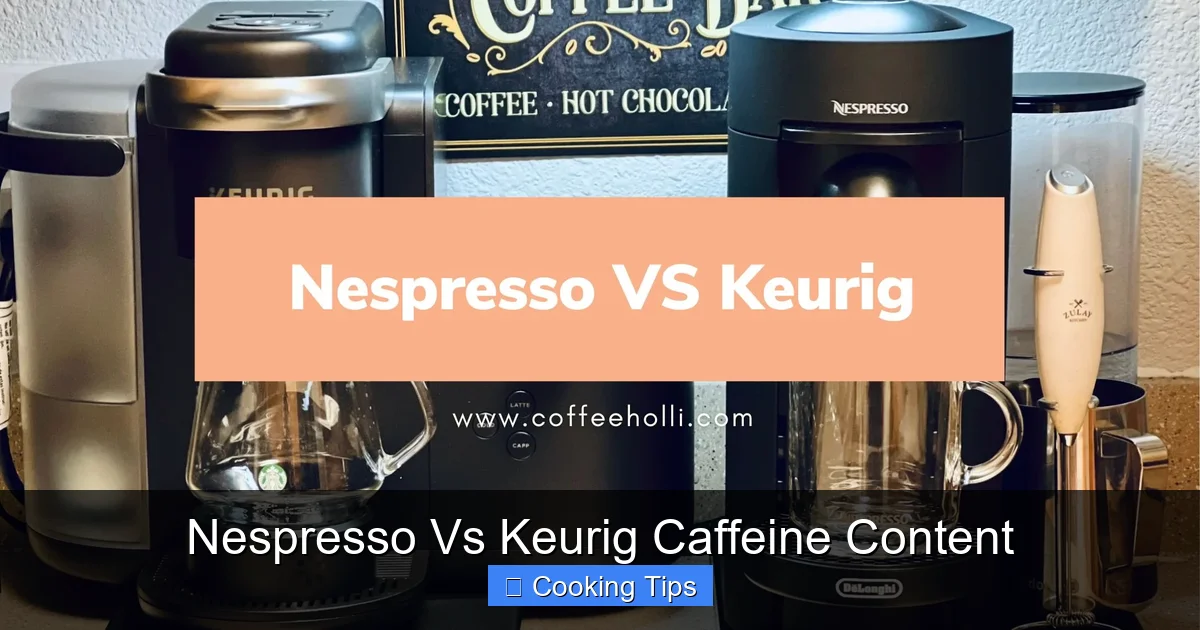
Visual guide about Nespresso Vs Keurig Caffeine Content
Image source: hollicoffee.com
Nespresso Pods and Caffeine
Nespresso pods, also known as capsules, are relatively small. They are designed to produce a standard espresso shot, typically around 1.35 ounces (40 ml). Because they are designed for espresso, they generally use a blend of Arabica and Robusta beans to achieve a rich flavor and crema.
A typical Nespresso capsule contains about 5 to 7 grams of coffee. The caffeine content in a single Nespresso capsule can range significantly, but a common estimate is:
- Around 50-75 mg of caffeine per 1.35 oz (40 ml) espresso shot.
It’s important to note that this is for the standard espresso volume. If you choose to brew a Lungo (a larger espresso shot, typically 3.7 oz or 110 ml) using the same capsule, you are essentially extracting caffeine from the same amount of coffee grounds but with more water. While the extraction might not be as efficient for the larger volume, you will still get more total caffeine than in a standard espresso shot.
Factors Affecting Nespresso Caffeine
- Specific Nespresso Blend: Nespresso offers a wide variety of Grands Crus, each with different bean origins and roast profiles. Some blends might use a higher proportion of Robusta beans, which naturally contain more caffeine. For instance, capsules marketed as “Intense” or those with higher intensity ratings on the Nespresso scale often utilize more Robusta.
- Pod Size: While most Nespresso pods are designed for espresso, some larger capsules exist for Ristretto or Lungo preparations. The amount of coffee grounds within the pod will dictate the potential caffeine.
- Brew Volume: As mentioned, brewing a Lungo will result in a higher total caffeine intake compared to a standard espresso from the same capsule.
Example: If a Nespresso capsule has 65 mg of caffeine in an espresso, a Lungo brewed from that same capsule might have closer to 80-90 mg, although the concentration is lower.
Keurig Caffeine Content: Drip Coffee Versatility
Keurig machines are designed for brewing drip-style coffee, much like a traditional coffee maker. They use K-Cup pods, which are larger than Nespresso capsules and contain more coffee grounds. The brewing process involves hot water being forced through the grounds at a lower pressure over a longer period compared to Nespresso.
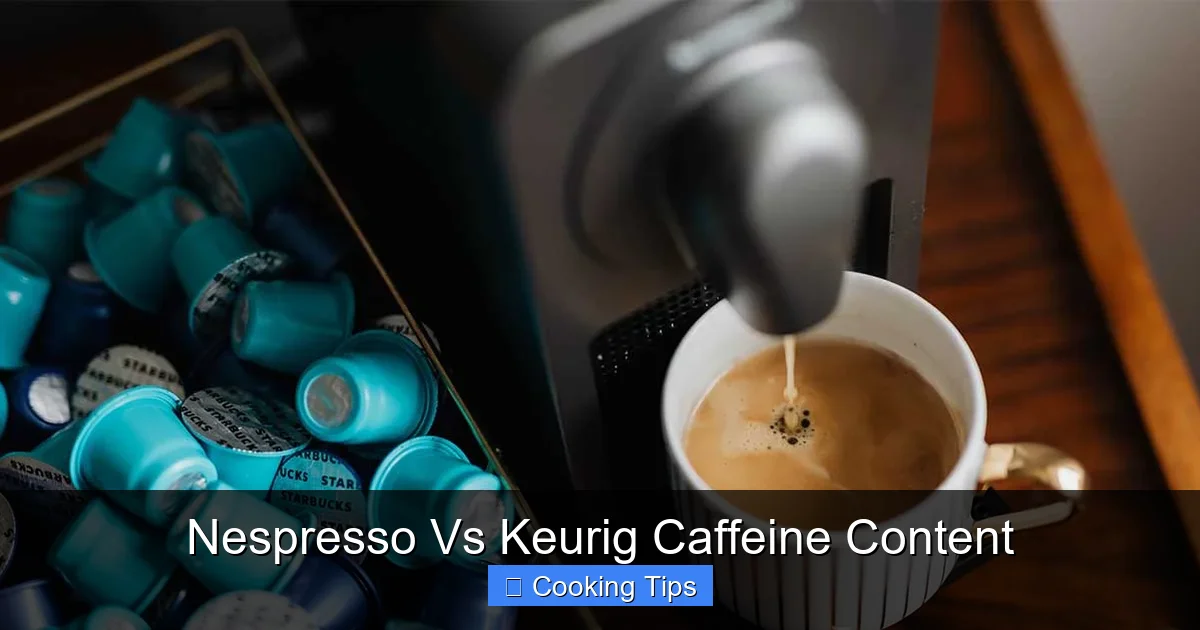
Visual guide about Nespresso Vs Keurig Caffeine Content
Image source: homegrounds.co
Keurig K-Cups and Caffeine
A standard K-Cup pod typically contains between 9 and 12 grams of coffee grounds. Because K-Cups are designed for larger serving sizes, ranging from 6 oz to 12 oz (177 ml to 355 ml) or even larger, the total caffeine content per cup is often higher than a single Nespresso espresso shot.
The caffeine content in a Keurig K-Cup can vary, but a general range is:
- Around 75-150 mg of caffeine per 8 oz (237 ml) cup.
This range is quite broad because of the variety of K-Cup brands and blends available. Many popular brands like Starbucks, Dunkin’, and Green Mountain Coffee Roasters offer K-Cups with differing caffeine levels.
Factors Affecting Keurig Caffeine
- Brew Size Selection: This is the most significant factor for Keurig. Choosing a smaller brew size (e.g., 6 oz) will result in a more concentrated coffee with a higher caffeine concentration per ounce. A larger brew size (e.g., 10 oz or 12 oz) will dilute the caffeine, leading to a lower concentration per ounce but a higher total caffeine in the cup.
- K-Cup Brand and Blend: Different brands use different coffee beans and roast levels. A “bold” or “extra bold” roast from one brand might have more caffeine than a regular roast from another. The use of Robusta beans in some K-Cups will also increase caffeine content.
- “Strong” or “Bold” Brew Setting: Keurig machines often have a “strong” or “bold” brew setting. This setting does not add more caffeine to the pod. Instead, it slows down the water flow, allowing for more contact time between the water and the coffee grounds. This results in a more intense flavor extraction, but the total caffeine content from the pod remains the same. It just extracts more of what’s available from the existing grounds.
- Decaf K-Cups: While most K-Cups contain caffeine, decaffeinated options are available. These still contain a small amount of caffeine, typically around 2-5 mg per cup.
Example: A regular 8 oz cup of coffee from a Keurig might have 95 mg of caffeine. If you select the “strong” setting for the same 8 oz cup, it might taste bolder and potentially have slightly more caffeine extracted, perhaps around 110 mg, but the pod itself hasn’t changed. Brewing a 12 oz cup from the same pod will result in a weaker taste and a lower total caffeine content per cup, maybe around 80 mg, as the caffeine is spread over more water.
Nespresso Vs Keurig Caffeine Content: Direct Comparison
Now, let’s directly compare the caffeine content based on typical usage:
- Per Ounce: Nespresso, being espresso-based with smaller serving sizes, generally has a higher caffeine concentration per ounce. For example, a 1.35 oz Nespresso espresso might have 65 mg of caffeine (approx. 48 mg/oz), while an 8 oz Keurig coffee might have 100 mg of caffeine (approx. 12.5 mg/oz).
- Per Standard Serving: If you compare a typical Nespresso espresso (1.35 oz) to a typical Keurig coffee (8 oz), the Keurig cup usually has more total caffeine. The Nespresso espresso has around 50-75 mg, while the Keurig cup has 75-150 mg.
- For a Similar Caffeine Kick: If you want a caffeine boost comparable to a standard cup of drip coffee from a Keurig, you might need to drink two Nespresso espresso shots or brew a Lungo from a Nespresso pod.
When Nespresso Might Have More Caffeine
While Keurig typically offers more total caffeine in a standard cup, Nespresso can offer a more potent caffeine hit in a smaller volume. If you’re looking for a quick, intense caffeine jolt in a small serving, a Nespresso might be your go-to. Some specialty Nespresso pods designed for a strong kick could potentially rival or even exceed the caffeine of a weaker K-Cup brew if you’re comparing very specific blends and brew sizes.
When Keurig Might Have More Caffeine
For the average coffee drinker who enjoys a larger mug of coffee to start their day, a Keurig will almost always provide more total caffeine. The larger volume of water passing through more grounds in a K-Cup generally results in a higher overall caffeine count.
Tips for Managing Caffeine Intake with Nespresso and Keurig
Whether you’re a Nespresso loyalist or a Keurig convert, you can control your caffeine intake:
1. Check the Pod Information
Both Nespresso and Keurig are becoming more transparent about caffeine content. Look for information on the packaging or the manufacturer’s website. While exact numbers can be hard to find, intensity ratings can be a good indicator.
2. Consider the Blend
For Nespresso, blends with higher intensity ratings or those known to contain Robusta beans will generally have more caffeine. For Keurig, look for brands advertising “bold” or “extra bold” roasts, as these might use beans with higher caffeine potential or extract more efficiently.
3. Be Mindful of Brew Size
This is crucial for Keurig users. If you want less caffeine, opt for a larger brew size (more water dilutes the caffeine). If you want more caffeine concentration (but less total volume), select a smaller brew size.
4. Understand “Strong” Settings
Remember that the “strong” setting on Keurig machines affects flavor intensity, not necessarily the total caffeine available from the pod. It aims to extract more of the coffee’s inherent flavor compounds.
5. Decaf Options Exist
If you’re sensitive to caffeine or trying to reduce your intake, both systems offer decaf options. Keep in mind that decaf coffee still contains a trace amount of caffeine.
6. Experiment and Listen to Your Body
Ultimately, caffeine sensitivity is personal. The best way to manage your intake is to experiment with different pods and brew sizes and pay attention to how you feel. What one person considers a moderate amount of caffeine, another might find too strong.
Troubleshooting Caffeine Content
Problem: My Nespresso feels weak, and I’m not getting enough caffeine.
Solution: Try a Lungo brew from your capsule instead of an espresso. Experiment with Nespresso blends that have higher intensity ratings. Consider Nespresso’s “Fortissimo” or “Volluto” lines, which are often stronger. You might also need to consider having two espresso shots if one isn’t enough.
Problem: My Keurig coffee tastes too strong, and I’m getting too much caffeine.
Solution: Select a larger brew size on your Keurig machine. Try K-Cups from brands known for milder roasts or less intense blends. Look for “regular” or “medium” roast descriptions.
Problem: I’m experiencing jitters or heart palpitations after my coffee.
Solution: This indicates you may be too sensitive to caffeine or consuming too much. Switch to decaf K-Cups or Nespresso capsules. Reduce your overall coffee intake or choose smaller serving sizes. Ensure you’re not consuming other caffeinated beverages throughout the day.
Conclusion: Brewing Your Perfect Caffeine Cup
Navigating the Nespresso vs Keurig caffeine content landscape can seem complex, but it boils down to a few key principles. Nespresso, with its espresso focus, offers a concentrated caffeine hit per ounce, ideal for a quick jolt in a small serving. Keurig, on the other hand, generally provides more total caffeine in its larger, drip-style cups, catering to those who enjoy a more substantial coffee experience.
Your best bet for controlling your caffeine intake is to be an informed consumer. Understand that brew size, pod blend, and roast level all play a role. By paying attention to packaging, experimenting with different options, and listening to your body’s response, you can ensure your daily Nespresso or Keurig brew delivers the perfect energy boost, without overdoing it. So, go forth and brew with confidence, knowing exactly what’s in your cup!
