

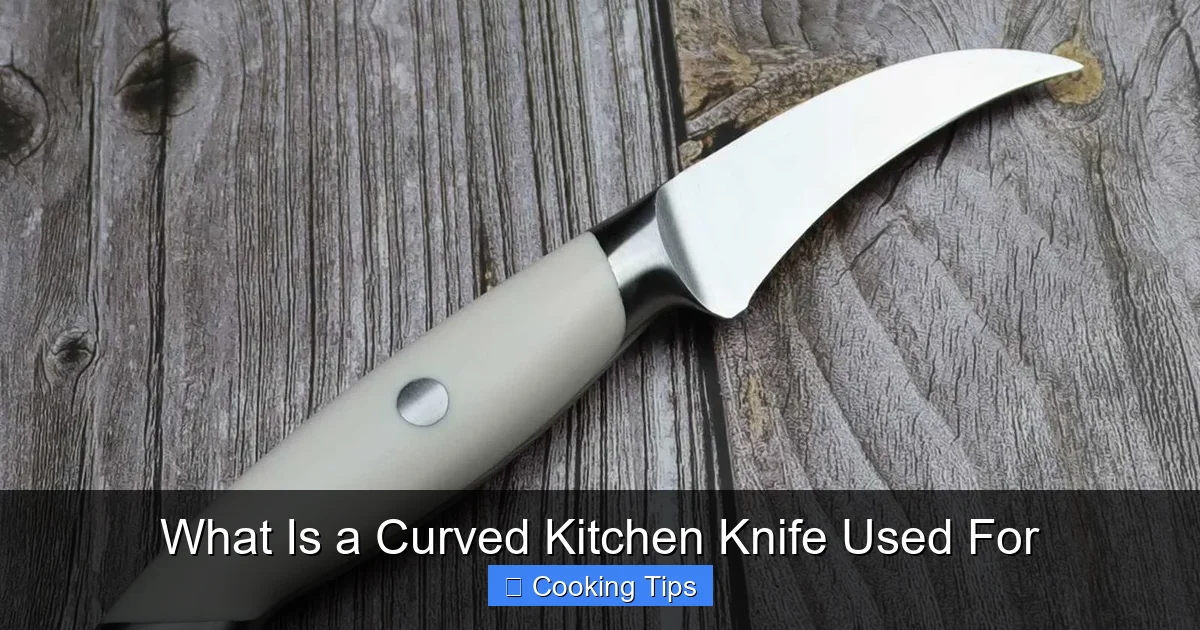
A curved kitchen knife, often called a chef’s knife or a santoku’s cousin, excels at a variety of tasks due to its distinctive blade shape. Its primary function is to provide a rocking motion for efficient chopping and mincing. This guide explores its versatile uses, from preparing vegetables to deboning meats, helping you unlock its full potential in your 2026 kitchen.
What Is a Curved Kitchen Knife Used For
Welcome to your comprehensive guide on the wonderfully versatile curved kitchen knife! In the ever-evolving world of culinary tools, understanding the specific purpose of each blade can significantly elevate your cooking experience. If you’ve ever wondered about that knife with the gentle arc, you’re in the right place. By the end of this guide, you’ll not only understand precisely what a curved kitchen knife is used for but also how to wield it like a seasoned chef, making your meal preparations in 2026 faster, more efficient, and dare we say, more enjoyable!
The beauty of a curved kitchen knife lies in its design. Unlike straight-edged blades, the curve, or “belly,” of the knife facilitates a natural rocking motion as you chop. This design is not just aesthetically pleasing; it’s functionally superior for a multitude of kitchen tasks. Let’s dive into the specific applications that make this knife an indispensable part of any modern kitchen.
- Effortless Rocking Motion: The curve allows for a smooth, rocking motion, making chopping and mincing significantly faster and more efficient than with a straight-edged knife.
- Precision Dicing and Mincing: Ideal for finely dicing onions, garlic, herbs, and other ingredients that require a high degree of uniformity.
- Versatile Vegetable Preparation: Excellent for slicing, dicing, and julienning a wide range of vegetables, from leafy greens to root vegetables.
- Meat and Poultry Tasks: Can be used for trimming fat, deboning smaller cuts of meat, and portioning poultry.
- Fish Filleting (with specific variations): While not a dedicated filleting knife, some curved blades are adept at separating fish from bone and skin.
- Bread Slicing (less common but possible): With a sharp edge, some curved knives can handle slicing through bread crusts and soft interiors.
The Core Function: Rocking and Chopping
The most prominent and widely recognized use of a curved kitchen knife is its ability to perform a “rocking chop.” This technique involves using the curve of the blade to pivot on the cutting board, allowing for continuous contact and a fluid chopping motion.
Mastering the Rocking Chop
To execute the rocking chop effectively:
- Grip Securely: Hold the handle firmly with your dominant hand.
- Pinch the Blade: For optimal control, pinch the base of the blade with your thumb and index finger.
- Stabilize with Your Guiding Hand: Use your non-dominant hand to cradle or guide the food, keeping your fingertips tucked safely away from the blade.
- Initiate the Motion: Start by pressing the tip of the knife onto the food. As you push down and forward, the curve of the blade will naturally lift the heel, creating a rocking motion.
- Maintain Contact: Aim to keep the blade in constant contact with the cutting board. This minimizes the effort required and maximizes efficiency.
This rocking motion is particularly effective for ingredients that require a lot of chopping, such as onions, garlic, and fresh herbs. Instead of lifting and dropping the knife repeatedly, you maintain a smooth, rhythmic action that cuts through food quickly and evenly.
Precision Dicing and Mincing
The rocking chop is the foundation for achieving perfectly diced and minced ingredients. The controlled, repetitive motion of the curved blade ensures that your cuts are uniform and consistent.
Achieving Uniformity
For dicing:
Visual guide about What Is a Curved Kitchen Knife Used For
Image source: imagescdn.gettyimagesbank.com
- Make a series of parallel cuts, then perpendicular cuts to create uniform cubes. The rocking motion helps achieve clean cuts through the entire ingredient.
For mincing:
- After initial chopping, use the rocking motion to repeatedly pass over the ingredients until they are as finely minced as desired. This is especially useful for creating a paste-like consistency for garlic or ginger.
Practical Tip: When mincing herbs like parsley or cilantro, gather them into a neat pile before beginning the rocking motion. This prevents them from scattering and ensures a fine, even mince.
Versatile Vegetable Preparation
Beyond simple chopping, the curved kitchen knife is a powerhouse for all sorts of vegetable preparations. Its versatility shines when dealing with a wide array of produce.
Slicing and Julienne
The gentle curve of the blade allows for smooth, consistent slices. Whether you’re slicing tomatoes, cucumbers, or potatoes, you can achieve thin, even pieces with minimal effort.

Visual guide about What Is a Curved Kitchen Knife Used For
Image source: images.creativefabrica.com
For julienning (cutting into thin strips):
- Make a series of thin, parallel cuts. Then, gather the strips and make perpendicular cuts, again using the rocking motion for efficiency.
Preparing Leafy Greens
Spinach, kale, and other leafy greens can be challenging to chop finely. The rocking motion of the curved knife makes it easy to chiffonade (thinly slice) these ingredients, perfect for salads, sautés, and garnishes.
Tackling Root Vegetables
Carrots, parsnips, and potatoes can be diced, sliced, or julienned with ease. The weight and balance of a good curved knife help it power through denser vegetables.
Meat and Poultry Tasks
While a chef’s knife is often associated with vegetables, its utility extends to preparing meats and poultry.
Trimming and Deboning
The curved blade is excellent for trimming excess fat from cuts of meat like pork loin or chicken breasts. The sharp edge allows for precise removal of unwanted silverskin or connective tissue.
Visual guide about What Is a Curved Kitchen Knife Used For
Image source: i.pinimg.com
For smaller cuts of meat or poultry, a well-sharpened curved knife can even be used for deboning. You can carefully separate the meat from the bone by following the natural contours of the bone structure.
Portioning and Slicing Cooked Meats
Once cooked, the curved knife is ideal for slicing roasts, briskets, or poultry into uniform portions for serving. The long, sweeping motion ensures clean cuts without tearing the meat.
Fish Filleting (with Nuances)
While dedicated filleting knives have extremely thin, flexible blades, certain types of curved kitchen knives, particularly those with a more pronounced curve and a thinner profile, can perform basic fish filleting tasks.
Separating Fish from Bone and Skin
The curve allows you to hug the rib cage and backbone of a fish, making it easier to separate the fillets. The sharp edge will slice through the flesh cleanly.
Important Note: For serious fish preparation, a dedicated filleting knife is recommended. However, for occasional use or when you only have a curved kitchen knife on hand, it can get the job done for smaller fish.
Bread Slicing (A Less Common but Possible Application)
Generally, serrated knives are preferred for bread due to their ability to saw through crusty exteriors without crushing the soft interior. However, a very sharp, well-maintained curved kitchen knife can, in a pinch, be used to slice bread.
When a Straight Edge Fails
If you find yourself without a bread knife, the rocking motion can help initiate a cut through a crusty loaf. Start with a gentle sawing motion, using the curve to your advantage.
Caveat: This is not the ideal application, and you’re more likely to get a less-than-perfect slice compared to using a serrated knife. It’s best suited for softer breads or for making smaller cuts rather than slicing an entire loaf.
Choosing and Maintaining Your Curved Kitchen Knife
The effectiveness of any knife, including a curved one, depends on its quality and maintenance. In 2026, investing in a good quality knife is a worthwhile endeavor.
Blade Material and Balance
Look for knives made from high-carbon stainless steel for durability and edge retention. The balance of the knife, how it feels in your hand, is also crucial for comfort and control during prolonged use.
Sharpening and Honing
Regular honing (using a steel) and periodic sharpening (using a whetstone or electric sharpener) are essential to keep your curved kitchen knife performing at its best. A dull knife is not only less effective but also more dangerous.
Cleaning and Storage
Always hand-wash your curved kitchen knife with warm, soapy water and dry it immediately. Store it in a knife block, magnetic strip, or blade guard to protect the edge and prevent accidents.
Troubleshooting Common Issues
Even with the best tools, you might encounter minor challenges. Here are a few common issues and how to address them:
Issue: Uneven Cuts
Cause: Improper technique, dull blade, or unstable cutting board.
Solution: Practice the rocking motion with a stable cutting board. Ensure your knife is sharp. If using a plastic board, place a damp cloth underneath it for extra grip.
Issue: Food Sticking to the Blade
Cause: Starchy or sticky foods, dull blade not cutting cleanly.
Solution: For starchy foods like potatoes, rinsing the blade occasionally can help. Ensure your knife is extremely sharp. Some knives have “Grantons” (small indentations on the blade) that can help reduce sticking.
Issue: Hand Fatigue
Cause: Poor grip, heavy knife, or prolonged use without breaks.
Solution: Focus on a relaxed but secure grip. Try a lighter-weight knife if yours feels too cumbersome. Take short breaks during extensive chopping sessions.
Conclusion
The curved kitchen knife is far more than just a pretty blade; it’s a highly functional and versatile tool that can significantly enhance your culinary endeavors in 2026 and beyond. Its ability to perform an effortless rocking chop makes it ideal for dicing, mincing, and slicing a wide array of ingredients, from delicate herbs to hearty root vegetables. It also proves its worth in preparing meats and even tackling basic fish filleting tasks. By understanding its primary uses, mastering the rocking motion, and committing to proper maintenance, you’ll unlock the full potential of this essential kitchen companion. So, embrace the curve, and get ready to chop your way to delicious meals with newfound efficiency and ease!
