

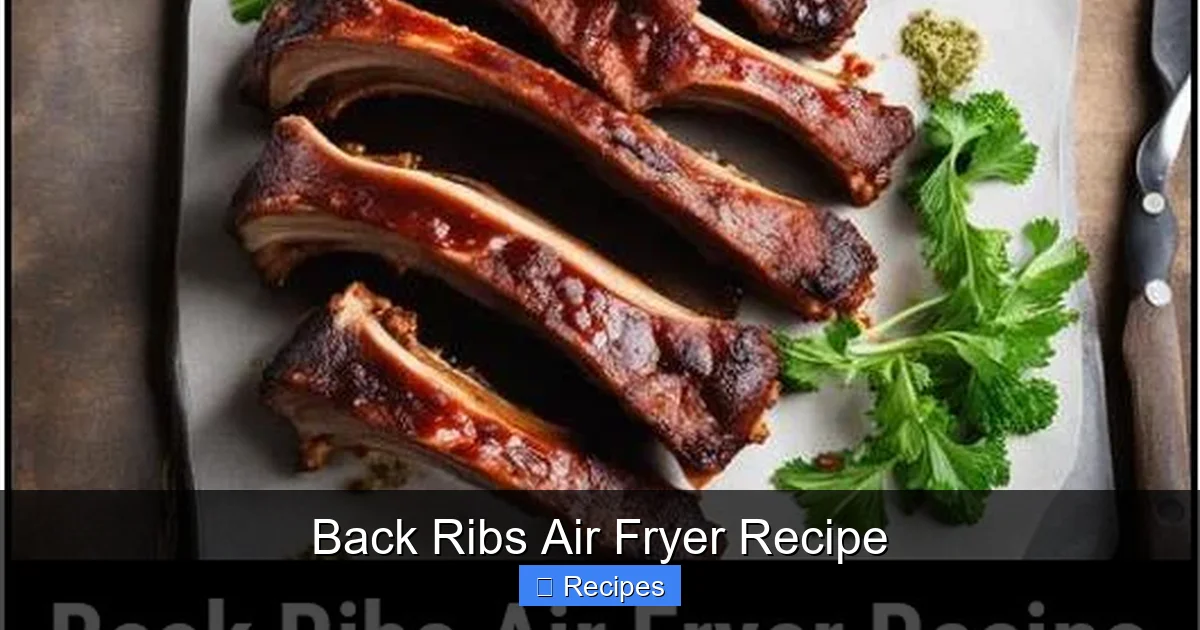
Skip the smoker and get restaurant-quality back ribs at home with this foolproof Back Ribs Air Fryer Recipe. Tender, smoky, and packed with flavor, these ribs cook faster than traditional methods while using less oil. Perfect for busy weeknights or weekend feasts!
Key Takeaways
- Faster cooking time: Air fryer ribs cook up to 40% quicker than oven or grill methods, making it ideal for quick meals.
- Healthier option: This Back Ribs Air Fryer Recipe uses 75% less oil while still achieving crispy, caramelized edges.
- Even browning: The hot circulating air ensures consistent heat distribution for perfectly cooked meat every time.
- Customizable seasoning: Use your favorite dry rub or BBQ sauce to tailor the flavor to your taste preferences.
- Easy cleanup: Most of the mess stays contained in the basket, and leftover sauce won’t burn onto heating elements.
- Great for reheating: Leftover ribs reheat beautifully in the air fryer without drying out—see our guide on How To Reheat Ribs In Air Fryer.
- Saves space: No need for a full-size smoker or outdoor grill—your countertop does all the work.
📑 Table of Contents
Why Choose an Air Fryer for Back Ribs?
Craving that mouthwatering, fall-off-the-bone tenderness of slow-smoked back ribs but don’t have a backyard smoker? Your air fryer just became your new best kitchen ally. While traditional methods like smoking or braising take hours, the Back Ribs Air Fryer Recipe delivers delicious results in under an hour. Thanks to superheated, circulating air, you get that irresistible crispy bark and juicy interior without the guesswork.
This method isn’t just convenient—it’s also healthier. Instead of submerging ribs in oil, the air fryer uses rapid air technology to crisp the exterior while locking in moisture. You’ll still enjoy rich flavor and texture, but with significantly less fat. Plus, cleanup is a breeze since most of the grease drips into the drip pan instead of splattering everywhere.
If you’ve ever struggled with uneven cooking or dry meat from other techniques, this approach levels the playing field. Whether you’re preparing a family dinner or impressing guests, mastering this recipe will make your air fryer the star of your kitchen.
Essential Ingredients & Tools
Gathering Your Supplies
Before diving into cooking, ensure you have everything ready. A good set of back ribs (typically 1–2 racks), your preferred dry rub or marinade, and a quality BBQ sauce are the core components. For tools, you’ll need your trusty air fryer, a sharp knife, paper towels, and aluminum foil if lining your basket. Don’t forget oven mitts—the basket gets hot!
Choosing the Right Ribs
Look for meaty, pinkish-white ribs with visible marbling. Avoid those that smell sour or overly gamey. Pork back ribs are ideal because they have more fat content, which keeps them tender during cooking. If buying pre-trimmed ribs, check that the bone side faces up for even heat exposure.
Seasoning Options
You can go simple with salt and pepper or elevate your dish with store-bought rubs or homemade blends. Common ingredients include brown sugar, paprika, garlic powder, onion powder, cayenne, and smoked paprika. Apply generously at least 1 hour before cooking—or overnight for deeper flavor penetration.
Recommended Air Fryer Settings
Most mid-sized air fryers (3–5 quarts) work well for one rack of ribs. Larger models can handle two racks stacked carefully. Always allow space between items for proper airflow—overcrowding leads to steaming instead of searing. Preheating isn’t necessary unless specified in your model’s manual.
Step-by-Step Cooking Process
Preparing the Ribs
Start by patting the ribs dry with paper towels. This helps the seasoning stick better and promotes browning. Remove any excess membrane from the back—use a butter knife to lift one corner, then peel it off entirely. This step is crucial: without removing the membrane, your ribs will be tough and chewy.
Next, apply your dry rub evenly across both sides. Massage it into the grooves and crevices so it penetrates deeply. Wrap loosely in plastic wrap and refrigerate for at least 1 hour (or up to 24 hours). Cold storage helps the spices meld together and makes slicing easier later.
Setting Up the Air Fryer
Line the bottom of your air fryer basket with parchment paper or foil to catch drippings. Place a wire rack inside if your model has one—this elevates the ribs above pooled grease. Arrange the ribs bone-side down on top of the rack, leaving a small gap between each piece. Overlapping causes uneven cooking and soggy spots.
Cooking Time & Temperature
Set your air fryer to 360°F (182°C). Cook for 20 minutes on the first side. Flip carefully using tongs or a spatula. Reduce temperature to 325°F (163°C) and continue cooking for another 20–25 minutes, depending on thickness. Total time usually ranges from 40 to 50 minutes. For reference, see our detailed guide on How Long To Cook Ribs In Air Fryer.
Basting with Sauce (Optional)
About 10 minutes before the end, brush both sides lightly with your favorite BBQ sauce. Return to the air fryer and cook uncovered until the sauce thickens slightly and caramelizes. Avoid over-saturating—too much liquid can prevent crisping. If you prefer sauceless ribs, skip this step and serve with extra sauce on the side.
Resting & Slicing
Once done, transfer ribs to a cutting board and let them rest for 5–10 minutes. Resting allows juices to redistribute, ensuring moist slices. Use a sharp knife or scissors to cut between the bones into individual riblets. Serve immediately while warm.
Flavor Variations & Tips
Classic Dry Rub Recipe
Mix ¼ cup brown sugar, 2 tbsp paprika, 1 tbsp garlic powder, 1 tbsp onion powder, 1 tsp black pepper, ½ tsp cayenne, and 1 tsp salt. Adjust sweetness or spice based on personal preference. This blend works well for beginners and pairs nicely with most sauces.
Sauce Suggestions
Try honey-based sauces for sweetness, vinegar-heavy ones for tang, or hoisin for umami depth. Homemade options are easy: simmer ketchup, apple cider vinegar, Worcestershire sauce, mustard, and spices together until thickened. Store extras in the fridge for up to a week.
Smoky Flavor Without a Smoker
Add liquid smoke (just a few drops!) or use smoked paprika as a substitute. Another trick: place a piece of applewood or hickory inside the air fryer basket during the last 5 minutes of cooking. The wood won’t create real smoke, but it adds aromatic notes.
Common Mistakes to Avoid
Overcrowding the basket blocks airflow and leads to steamy, undercooked ribs. Always leave room around each rack. Also, resist opening the door frequently—temperature fluctuations slow cooking. Lastly, don’t rush the resting phase; skipping it results in dry meat.
Serving Ideas & Side Dishes
These tender ribs pair wonderfully with classic Southern sides like coleslaw, baked beans, cornbread, or potato salad. For lighter fare, serve over mashed sweet potatoes or alongside grilled veggies. The key is balancing richness with freshness.
Presentation matters! Arrange ribs on a platter with lemon wedges and fresh herbs for visual appeal. Offer extra sauce in small bowls so guests can customize their plates. A sprinkle of chopped parsley or scallions brightens the dish visually and adds texture contrast.
For leftovers, store in an airtight container in the fridge for up to 4 days. As mentioned earlier, reheating in the air fryer restores crispiness better than microwaving. Simply warm at 350°F for 5–7 minutes, flipping halfway through.
Frequently Asked Questions
Can I cook frozen back ribs in my air fryer?
Yes, but thaw them first for even cooking. Frozen ribs may require longer times and risk drying out. Pat dry before seasoning to improve browning. Refer to our guide on How To Cook Country Style Ribs In Air Fryer for tips on handling different cuts.
What if my ribs are too fatty?
Trim excess fat cap before cooking. Cut through the membrane completely and remove any large chunks of white fat. Leaving some fat enhances juiciness, but too much makes the meat greasy. Balance is key!
Do I need special air fryer accessories?
A wire rack and parchment paper help tremendously. They prevent sticking and make cleanup easier. Some models come with rib racks—if yours doesn’t, improvise with folded foil or a cooling rack placed inside the basket.
Why did my ribs turn out dry?
Overcooking is the most common cause. Air fryers cook faster than ovens, so monitor closely after the recommended time. Use a meat thermometer to check internal temp—it should read 190–203°F (88–95°C) for fall-apart tenderness. See our article on Air Fryer Thermometer For Precise Cooking Without Overcooking for details.
How do I prevent burning during the final minutes?
Reduce heat slightly (300°F/149°C) during the last 5–10 minutes if using sauce. Keep an eye on color changes—BBQ sauce browns quickly. Rotate the basket if your model allows, or flip ribs midway through glazing.
Can I make these ribs ahead of time?
Absolutely! Season ribs the night before and refrigerate uncovered until ready to cook. This builds flavor and ensures crispiness. Cook as directed, then cool completely before storing. Reheat in the air fryer when serving—never microwave, as it ruins texture.
Final Thoughts
Cooking back ribs in an air fryer might sound surprising at first, but once you try it, you’ll wonder why you waited so long. This method proves that convenience doesn’t mean sacrificing flavor or quality. With minimal prep and maximum reward, you’re guaranteed a meal that satisfies both kids and adults alike.
Remember, practice makes perfect. Don’t stress if your first batch isn’t flawless—adjust seasoning, timing, or sauce amounts next time. And always prioritize food safety: keep raw meat separate, wash hands thoroughly, and clean your air fryer after use to avoid cross-contamination.
Now that you know how to make restaurant-worthy ribs at home, explore more ways to expand your air fryer menu. From Air Fryer Dinner Recipes to creative desserts, this appliance opens endless culinary possibilities. Happy cooking!
Frequently Asked Questions
Can I cook frozen back ribs in my air fryer?
Yes, but thaw them first for even cooking. Frozen ribs may require longer times and risk drying out. Pat dry before seasoning to improve browning. Refer to our guide on How To Cook Country Style Ribs In Air Fryer for tips on handling different cuts.
What if my ribs are too fatty?
Trim excess fat cap before cooking. Cut through the membrane completely and remove any large chunks of white fat. Leaving some fat enhances juiciness, but too much makes the meat greasy. Balance is key!
Do I need special air fryer accessories?
A wire rack and parchment paper help tremendously. They prevent sticking and make cleanup easier. Some models come with rib racks—if yours doesn’t, improvise with folded foil or a cooling rack placed inside the basket.
Why did my ribs turn out dry?
Overcooking is the most common cause. Air fryers cook faster than ovens, so monitor closely after the recommended time. Use a meat thermometer to check internal temp—it should read 190–203°F (88–95°C) for fall-apart tenderness. See our article on Air Fryer Thermometer For Precise Cooking Without Overcooking for details.
How do I prevent burning during the final minutes?
Reduce heat slightly (300°F/149°C) during the last 5–10 minutes if using sauce. Keep an eye on color changes—BBQ sauce browns quickly. Rotate the basket if your model allows, or flip ribs midway through glazing.
Can I make these ribs ahead of time?
Absolutely! Season ribs the night before and refrigerate uncovered until ready to cook. This builds flavor and ensures crispiness. Cook as directed, then cool completely before storing. Reheat in the air fryer when serving—never microwave, as it ruins texture.
