

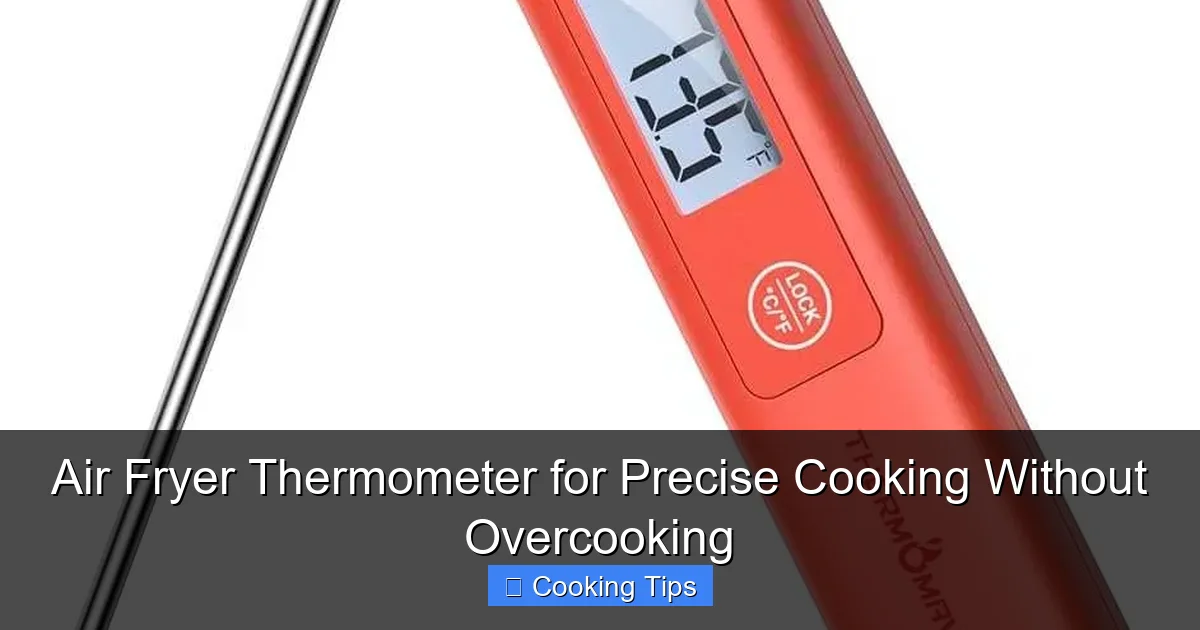
Unlock perfectly cooked meals with your air fryer by mastering the use of an air fryer thermometer. This guide explains why a thermometer is essential for achieving precise temperatures and avoiding overcooking. Learn how to select, use, and interpret readings from your thermometer to ensure delicious, consistently cooked food, from crispy chicken to tender vegetables. Say goodbye to guesswork and hello to culinary perfection in your air fryer.
Key Takeaways
- Understand the “Why”: An air fryer thermometer is crucial for taking the guesswork out of cooking, ensuring food reaches safe internal temperatures without becoming dry or burnt.
- Choosing the Right Thermometer: Select a digital instant-read thermometer or a probe thermometer designed for high heat for optimal air fryer use.
- Preheating Matters: Always preheat your air fryer to the recipe’s recommended temperature before inserting food and taking measurements.
- Accurate Temperature Checks: Insert the thermometer probe into the thickest part of the food, avoiding bones or fat, for the most accurate reading.
- Resting is Key: Allow food to rest after cooking, as internal temperatures can continue to rise slightly, ensuring it’s perfectly done.
- Calibrate Your Device: Periodically check your thermometer’s accuracy by testing it in boiling water to ensure reliable results.
- Beyond Meat: Thermometers aren’t just for meat; they ensure vegetables are tender-crisp and baked goods are fully cooked.
Air Fryer Thermometer for Precise Cooking Without Overcooking
Are you tired of air fryer meals that are sometimes crispy and delicious, and other times… well, a little too crispy? Do you find yourself peeking constantly, trying to guess if your chicken is cooked through or your fries are perfectly golden? If so, you’re not alone! The beauty of the air fryer lies in its ability to create incredible texture and flavor. But without a little help, achieving that perfect balance – juicy inside, crispy outside, and never overcooked – can feel like a gamble. That’s where an air fryer thermometer comes in, transforming your cooking experience from guesswork to precision.
In this guide, we’ll dive deep into why an air fryer thermometer is your new best kitchen friend. We’ll walk you through how to choose the right one, the best ways to use it for various foods, and how to interpret those all-important temperature readings. Get ready to elevate your air fryer game and consistently produce mouthwatering results every single time.
Why You Need an Air Fryer Thermometer
Let’s be honest, we love our air fryers. They’re fast, they’re efficient, and they can make healthy-ish versions of our favorite fried foods. But they cook differently than ovens or deep fryers. The intense, circulating hot air can cook food incredibly quickly. This is fantastic when done right, but it also means there’s a very fine line between perfectly cooked and overcooked.
Overcooking can lead to:
- Dry, tough meats
- Burnt edges on vegetables
- Rubbery textures
- A general lack of enjoyment!
An air fryer thermometer eliminates this uncertainty. It gives you a clear, objective reading of your food’s internal temperature, allowing you to know *exactly* when it’s done. This is especially crucial for foods like chicken, pork, and fish, where cooking to the correct internal temperature is essential for both safety and optimal taste.
Choosing the Right Air Fryer Thermometer
Not all thermometers are created equal, especially when it comes to the high heat of an air fryer. Here are the main types you’ll want to consider:
Digital Instant-Read Thermometers
These are the workhorses of the kitchen thermometer world. They feature a metal probe attached to a digital display, giving you a reading in just a few seconds. Look for models that are:
- Fast: Aim for a thermometer that gives a reading within 3-5 seconds.
- Accurate: Check reviews for accuracy claims and user satisfaction.
- Durable: A stainless steel probe is ideal.
- Easy to Read: A backlit display is a bonus.
Example: A ThermoPro TP03 is a popular choice for its speed and affordability.
Probe Thermometers (Leave-In Thermometers)
These thermometers come with a probe that you leave inserted into the food during cooking, connected by a heat-resistant wire to a base unit that sits outside the air fryer. This is fantastic for monitoring larger cuts of meat or when you don’t want to constantly open the air fryer drawer.
- Wireless Options: Many modern probe thermometers are wireless, sending readings to a receiver or smartphone app.
- High Heat Resistance: Ensure the probe and wire can handle the high temperatures of your air fryer.
- Versatile: Some have built-in timers and alarms.
Example: The MEATER Plus is a popular wireless probe thermometer that connects to your phone.
Meat Thermometers Designed for High Heat
Some traditional meat thermometers might not be rated for the temperatures inside an air fryer, especially if placed too close to the heating element. Stick to digital instant-read or probe thermometers specifically designed for this purpose.
How to Use Your Air Fryer Thermometer: Step-by-Step
Using your thermometer correctly is key to achieving those perfect results. Here’s a breakdown:
Step 1: Know Your Target Temperature
Before you even start cooking, identify the target internal temperature for the food you’re preparing. Reliable sources include your recipe, a trusted cookbook, or government food safety guidelines.
Examples:
- Chicken breast: 165°F (74°C)
- Pork loin: 145°F (63°C) with a 3-minute rest
- Salmon: 125-145°F (52-63°C) depending on preference
- Steak (medium-rare): 130-135°F (54-57°C)
Step 2: Preheat Your Air Fryer
This is a critical step that many people skip. Just like with baking, preheating your air fryer ensures that the cooking environment is at the correct temperature from the moment the food goes in. This leads to more even cooking and better crisping. Most air fryer recipes will specify a preheating time, typically 3-5 minutes.
Step 3: Prepare Your Food and Insert the Probe
Place your food into the air fryer basket. Now, for the measurement:
For Instant-Read Thermometers:
- Timing is Key: It’s generally best to check the temperature towards the end of the cooking time, or in intervals. For example, if a recipe says 15 minutes, start checking at 12 minutes.
- Where to Insert: Gently insert the thermometer probe into the thickest part of the food. Avoid touching any bones, as they conduct heat differently and can give a false high reading. For whole items like chicken thighs or burgers, aim for the center. For larger roasts, find the deepest section.
- Hold Steady: For instant-read thermometers, hold the probe in place until the reading stabilizes, which should only take a few seconds.
For Probe Thermometers:
- Initial Placement: Insert the probe into the thickest part of the food before placing it in the air fryer basket.
- Route the Wire: Carefully place the food in the basket and close the drawer, ensuring the wire is not pinched and doesn’t interfere with the fan.
- Monitor the Base/App: Keep an eye on the readings from the base unit or your connected app as the food cooks. You can set alarms to notify you when the target temperature is nearing.
Step 4: Read and Interpret the Temperature
Once you have your reading:
- Is it Ready? If the internal temperature matches your target temperature, your food is likely done!
- Needs More Time? If it’s still below the target, put the food back in the air fryer for short intervals (2-5 minutes) and check again. It’s always better to add more time than to overcook.
- Too High? If you’ve accidentally overshot the temperature, don’t panic. You can often salvage the food, especially if it’s just a few degrees over.
Step 5: Rest Your Food
This is a crucial step often overlooked. Once your food reaches its target temperature, remove it from the air fryer and let it rest for 5-10 minutes (longer for larger roasts). During resting, the internal temperature of the food will continue to rise a few degrees (this is called carryover cooking) and the juices will redistribute, resulting in more tender and moist food.
Practical Tips for Air Fryer Thermometer Use
* Cleanliness is Crucial: Always wash your thermometer probe thoroughly with soap and hot water after each use, and dry it completely. A quick wipe with a sanitizing alcohol wipe is also a good idea, especially if you’re switching between raw and cooked foods.
* Calibrate Your Thermometer: To ensure accuracy, test your thermometer in boiling water (212°F or 100°C) and ice water (32°F or 0°C). If the readings are off, recalibrate according to the manufacturer’s instructions or consider replacing it.
* Avoid Opening the Drawer Too Much: Every time you open the air fryer drawer, you lose heat, which increases cooking time. Try to use your thermometer strategically towards the end of cooking, especially if using an instant-read model. Probe thermometers excel here.
* Consider Food Thickness: Thicker foods will take longer to cook. Your thermometer is your best friend for ensuring the center is done without the outside burning.
* Different Foods, Different Rules: Remember that different foods have different ideal internal temperatures. Don’t use the same target temperature for chicken as you would for fish.
* Not Just for Meat! While meat is a primary use, a thermometer is excellent for checking if vegetables like broccoli or potatoes are tender-crisp, or if baked goods like muffins or cakes are fully cooked through. Insert into the center of the largest piece.
Troubleshooting Common Issues
* Inaccurate Readings:
* Problem: Your thermometer consistently shows a temperature that seems too high or too low.
* Solution: Calibrate your thermometer. Ensure the probe is inserted correctly into the thickest part of the food, away from bone or fat. Batteries might also be low on digital models.
* Food is Dry Despite Thermometer:
* Problem: You hit the target temperature, but the food is still dry.
* Solution: You might have rested the food for too long, or the target temperature itself was a bit too high for that specific cut or type of food. Consider adjusting your target temperature slightly down for future cooks, or shorten the resting time. Fat content also plays a huge role in moisture.
* Probe Wire Damage (for Probe Thermometers):
* Problem: The wire connecting the probe to the base is frayed or damaged.
* Solution: These wires are heat-sensitive. Ensure it’s not being pinched or placed directly against the heating element. If damaged, the wire or the entire unit may need to be replaced.
Conclusion
Integrating an air fryer thermometer into your cooking routine is a game-changer. It empowers you with the knowledge to cook food perfectly, every single time. No more guessing, no more disappointing meals, just delicious, consistently cooked food that’s safe to eat and a joy to serve. Whether you’re a seasoned chef or a beginner air fryer enthusiast, this simple tool will elevate your culinary creations and make your air fryer an even more indispensable appliance in your kitchen. Invest in a good thermometer today and say goodbye to overcooking forever!
