

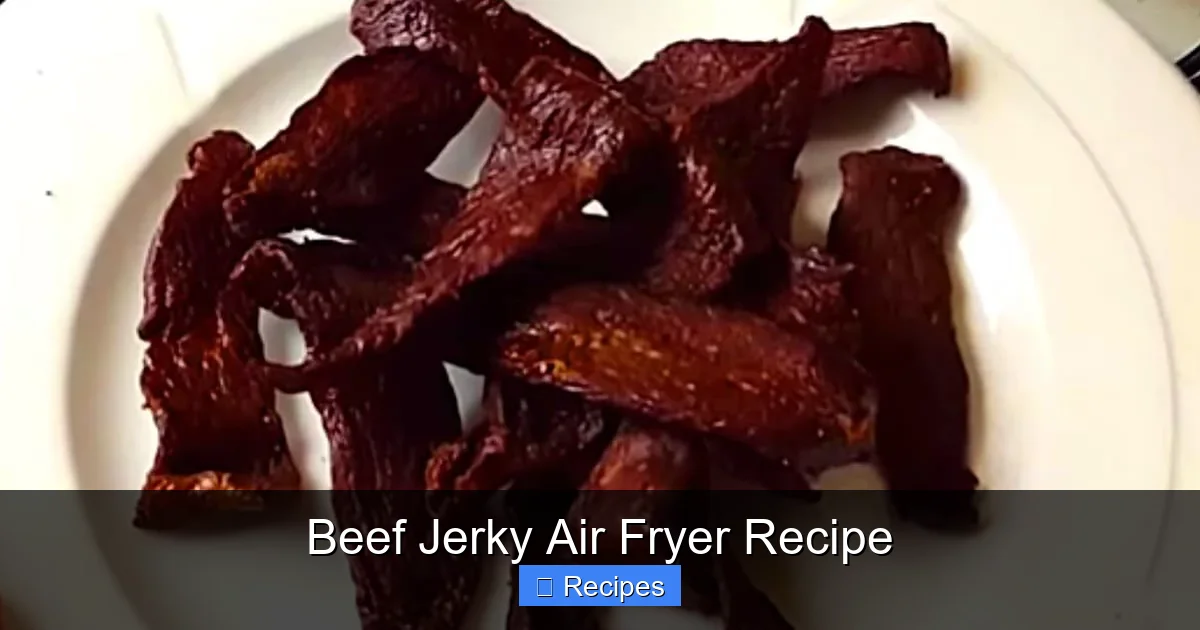
Making beef jerky at home has never been easier with your air fryer. This beef jerky air fryer recipe delivers tender, chewy, and flavorful results using simple ingredients and minimal prep time. Skip the store-bought versions and enjoy a healthier, customizable snack that’s ready in under an hour.
Making beef jerky at home used to mean spending hours waiting for a dehydrator to work its magic. But thanks to modern kitchen gadgets like the air fryer, you can now turn out delicious, chewy, and protein-rich jerky in half the time. If you’re looking for a way to enjoy a satisfying, portable snack without the preservatives and high sodium found in many store-bought options, this beef jerky air fryer recipe is your new best friend.
Whether you’re meal prepping for the week, packing lunch for hiking trips, or just craving something savory, homemade jerky delivers. Plus, with an air fryer, you get that perfect balance of crispy edges and tender center—something many dehydrators struggle to achieve consistently.
In this guide, we’ll walk you through everything you need to know: how to choose the right cut of beef, how to make a flavorful marinade, the exact air fryer settings to use, and tips to avoid common mistakes. By the end, you’ll be confident making jerky that rivals anything you’d find in a gourmet deli.
Key Takeaways
- Speed & Convenience: The air fryer reduces traditional jerky-making time from hours to under 30 minutes.
- Healthier Option: Use lean cuts and control sodium levels for a cleaner snack.
- Customizable Flavor: Adjust marinades to suit your taste—sweet, spicy, smoky, or savory.
- Even Cooking: Air fryers circulate hot air evenly, preventing overcooking and ensuring consistent texture.
- Space-Saving: No need for a large dehydrator; most air fryers can handle multiple strips.
- Cost-Effective: Homemade jerky is often cheaper than buying pre-packaged versions.
- Perfect for Meal Prep: Make a batch ahead and store for quick energy-boosting snacks.
📑 Table of Contents
Why Use an Air Fryer for Making Beef Jerky?
Traditionally, beef jerky requires a food dehydrator set to 160°F (71°C) for several hours to remove moisture and prevent spoilage. While effective, this process isn’t practical for most home cooks due to time and equipment constraints. Enter the air fryer—a versatile appliance that mimics the dehydration effect through rapid air circulation.
An air fryer heats food quickly and evenly, which helps draw out moisture while locking in flavor. Unlike deep frying or oven roasting, it uses little to no oil, making the result leaner and healthier. Best of all, you don’t need special trays or accessories—just a standard air fryer basket or tray lined with parchment paper.
Many people assume air fryers are only for frying or baking small portions, but with the right technique, they can handle long strips of meat just as well as a dehydrator. In fact, some models come with expandable racks or skewers designed specifically for this purpose.
For those who want convenience without sacrificing quality, the air fryer offers a smart alternative. It’s compact, energy-efficient, and works great for other tasks too—like reheating wings or cooking frozen potstickers. And if you’re already using one for Air Fryer Dinner Recipes, adding jerky to your routine is a natural next step.
Choosing the Right Cut of Beef for Jerky
Not all cuts of beef are created equal when it comes to jerky. You want something lean but still flavorful enough to stand up to long cooking times—even if they’re shorter in this case. Here’s what to look for:
Top Round Steak is the most popular choice because it’s lean, affordable, and holds up well during drying. It has less fat than chuck or brisket, reducing the risk of spoilage and rancidity. Plus, it slices easily into thin strips.
Flank Steak is another excellent option. It’s slightly more flavorful than top round and has good texture, though it may require a bit more trimming due to connective tissue.
Avoid fatty cuts like ribeye or short ribs unless you plan to trim away most of the visible fat. Excess fat can spoil faster and lead to off-flavors.
When selecting meat, always opt for fresh, high-quality cuts. Check expiration dates and ensure the packaging hasn’t been compromised. For best results, buy whole steaks rather than pre-sliced packages—you’ll have better control over thickness and slicing direction.
Pro Tip: Slice Against the Grain
To make your jerky extra tender, slice the steak perpendicular to the muscle fibers. This breaks up long strands of protein, resulting in a chewier yet manageable bite. If the grain is too obvious, try folding the steak and slicing along its natural lines.
Preparing Your Beef Strips
Once you’ve chosen and sliced your beef, it’s time to prep. Follow these steps for uniform, perfectly sized strips:
Start by patting the meat dry with paper towels. Any excess moisture will slow down the drying process and increase cooking time.
Cut the steak into strips about ¼-inch thick. Consistency is key—too thick, and they won’t dry properly; too thin, and they’ll become brittle and snap instead of chew.
Trim off any visible fat or sinew before marinating. While a tiny bit of fat adds flavor, too much can spoil during storage.
If you’re short on time, you can partially freeze the steak for 30–45 minutes. This makes slicing much easier and more precise.
After cutting, place the strips in a resealable plastic bag or glass container. They’ll absorb marinade quickly, so don’t worry if they overlap slightly.
Creating the Perfect Marinade
The secret to great jerky isn’t just drying—it’s flavor. A good marinade should balance sweetness, saltiness, acidity, and umami. Here’s a basic formula that works every time:
– ½ cup soy sauce (or low-sodium tamari for gluten-free)
– ¼ cup Worcestershire sauce
– 2 tablespoons brown sugar or honey
– 1 tablespoon liquid smoke (optional but recommended)
– 1 teaspoon garlic powder
– 1 teaspoon onion powder
– ½ teaspoon black pepper
– ¼ teaspoon cayenne pepper (adjust to taste)
Whisk all ingredients together until the sugar dissolves. Taste and adjust—add more heat if you like it spicy, or a splash of apple cider vinegar for tang.
Marinate your beef strips for at least 4 hours, preferably overnight in the fridge. This allows the flavors to penetrate deeply and ensures even seasoning.
If you’re making jerky for kids or prefer milder flavors, reduce or omit the cayenne. You can also swap liquid smoke for smoked paprika if desired.
Flavor Variations to Try
Want to mix things up? Experiment with these ideas:
– Teriyaki Jerky: Replace soy sauce with teriyaki sauce and add ginger.
– BBQ Jerky: Mix in BBQ rub or barbecue sauce for a smoky kick.
– Honey Sriracha: Add 1–2 tablespoons sriracha and a drizzle of honey.
– Lemon Pepper: Skip the liquid smoke and use lemon zest and cracked pepper.
Remember, you can always adjust recipes based on personal preference. The beauty of homemade jerky is total customization.
Step-by-Step Air Fryer Instructions
Now comes the fun part—turning your marinated beef into jerky! Follow these steps closely for best results:
Preheat your air fryer to 170°F (77°C). Lower temperatures help preserve flavor and prevent burning.
Line the air fryer basket with parchment paper or silicone mats to prevent sticking. If your model doesn’t come with one, you can purchase reusable liners online.
Arrange beef strips in a single layer, leaving space between them so hot air can circulate freely. Overcrowding leads to uneven drying and soggy spots.
Close the basket and cook for 12–15 minutes. Flip the strips halfway through for even browning. Total time depends on thickness and your air fryer’s power.
Check for doneness by bending a strip. It should feel springy and flexible—not brittle. If it cracks, it’s overdone.
Let the jerky cool completely on a wire rack. Residual heat continues to dry it slightly.
Store in an airtight container at room temperature for up to 2 weeks, or refrigerate for longer shelf life.
Common Mistakes to Avoid
– Overcrowding: Blocked airflow = uneven drying. Use two batches if needed.
– Too High Temp: Above 180°F (82°C) risks burning before drying completes.
– Skipping Parchment: Sticky residue ruins future meals.
– Rushing: Patience pays off—don’t skip the flip!
If you’re unsure, start with a shorter time and test. Better safe than crunchy!
Storing and Enjoying Your Homemade Jerky
Proper storage is crucial to maintain texture and safety. Once cooled, transfer jerky to a resealable bag or glass jar with a tight lid. Label it with the date so you track freshness.
At room temperature, jerky lasts about 2 weeks. Refrigeration extends shelf life to 4–6 weeks. For longer storage, vacuum seal and freeze for up to 3 months.
When ready to eat, grab a strip as-is or crumble it into salads, soups, or grain bowls. It pairs especially well with avocado toast or as a trail mix addition.
You can also rehydrate jerky by soaking in broth or water for 10–15 minutes if you prefer softer bites.
Serving Suggestions
– Toss diced jerky into pasta for extra protein.
– Sprinkle over roasted vegetables before serving.
– Blend into energy balls with oats and peanut butter.
– Pair with cheese and crackers for party snacks.
Homemade jerky makes a fantastic gift too—just wrap in decorative bags with a handwritten label!
Troubleshooting & Tips for Success
Even with the best recipe, things don’t always go as planned. Here’s how to fix common issues:
Problem: Jerky is too soft or sticky
Solution: Cook a little longer next time—ensure internal temp reaches 160°F (71°C).
Problem: Edges burn before center dries
Solution: Reduce temperature by 10°F and rotate strips manually if possible.
Problem: Off smell or slimy texture
Solution: Discard immediately—this indicates bacterial growth. Always use clean hands and tools.
Tip: Use a meat thermometer to check internal temperature. Safe jerky should read at least 160°F.
Also, consider investing in an Air Fryer Thermometer if you frequently make dried meats or fish.
Final Thoughts
There’s nothing quite like biting into a piece of tender, flavorful beef jerky made right in your kitchen. With this beef jerky air fryer recipe, you’ve got a fast, flexible, and delicious solution that fits into busy lifestyles. No dehydrator required—just a few simple ingredients, your trusty air fryer, and a little patience.
This method isn’t just convenient; it’s empowering. You control the salt, sugar, and spices, tailoring each batch to your exact liking. Whether you’re building snack packs for school lunches or stocking up for camping season, homemade jerky delivers quality and satisfaction.
And since air fryers are so versatile, why stop here? Try making turkey jerky, chicken strips, or even fruit leather using similar techniques. Or explore other Air Fryer Dehydrator Recipes to expand your repertoire.
Ready to give it a try? Gather your supplies, marinate that steak, and let your air fryer do the rest. Before you know it, you’ll wonder how you ever lived without homemade jerky.
Frequently Asked Questions
Can I use ground beef to make jerky in an air fryer?
No, ground beef isn’t ideal for jerky because it lacks the structure to form long, flat strips. Traditional jerky requires whole muscle cuts like top round or flank steak for proper texture and shape.
How long does homemade jerky last?
When stored properly in an airtight container, homemade jerky lasts about 2 weeks at room temperature, 4–6 weeks refrigerated, and up to 3 months frozen.
Do I need special equipment besides an air fryer?
Nope! Just a sharp knife, cutting board, mixing bowl, and resealable bag for marinating. Some models benefit from parchment liners or skewers, but they’re optional.
Can I freeze jerky for later use?
Absolutely. Freeze jerky in portion-sized bags for easy access. Thaw at room temperature before eating, or eat straight from the freezer for a firmer bite.
Is air fried jerky healthier than store-bought?
Yes, generally. Homemade versions allow you to reduce added sugars, sodium, and preservatives while increasing protein content with lean meats.
What if my air fryer model doesn’t have enough space?
Try cooking in batches. Overcrowding blocks airflow, leading to uneven drying. Alternatively, consider upgrading to a larger model if you frequently make jerky.
