

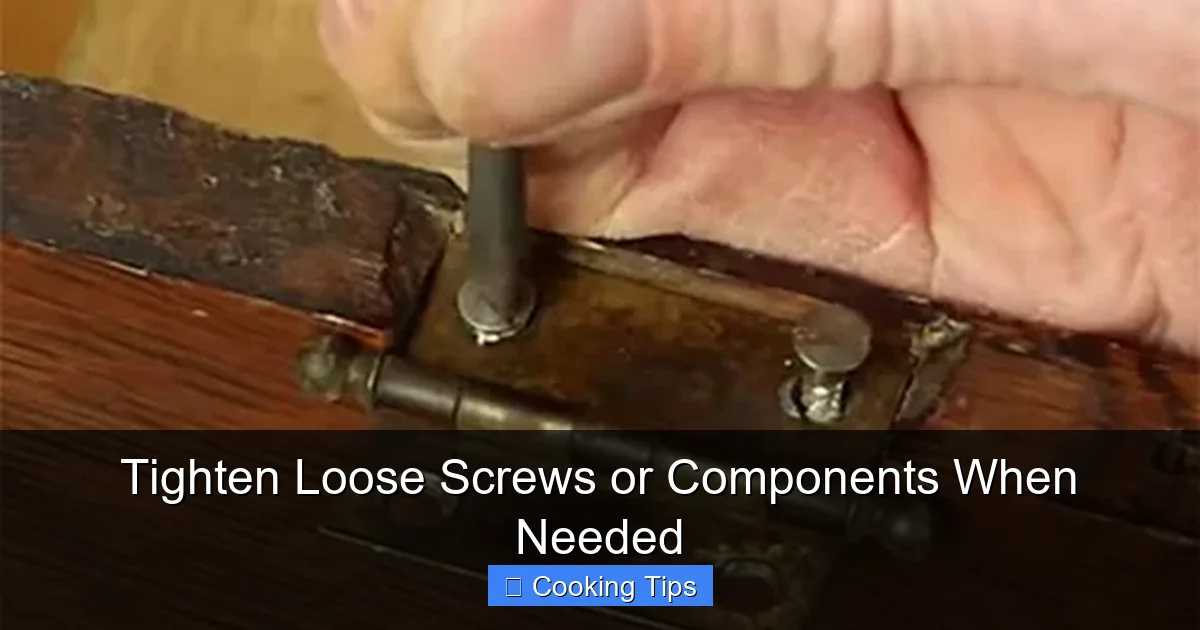
This comprehensive guide teaches you how to identify and fix loose screws and components in your kitchen. From everyday appliances to cabinetry, learning to tighten them is crucial for safety and functionality. We’ll cover common tools, step-by-step instructions, and when to call a professional to keep your kitchen in top shape.
Key Takeaways
- Regularly inspect kitchen items: Periodically check appliances, cabinets, and furniture for any signs of looseness to prevent further damage.
- Gather the right tools: Having a basic set of screwdrivers and wrenches will make tightening tasks much easier and more effective.
- Understand screw types: Differentiate between Phillips, flathead, and other screw types to use the correct screwdriver for each job.
- Proper tightening technique: Apply firm, consistent pressure without overtightening, which can strip screws or damage the material.
- Address component looseness: Learn how to secure loose handles, knobs, hinges, and other parts for improved usability and appearance.
- Know when to seek help: Understand that some repairs are best left to professionals to avoid causing more damage or safety hazards.
Tighten Loose Screws or Components When Needed
Your kitchen is the heart of your home. It’s where delicious meals are created, families gather, and memories are made. To keep this vital space running smoothly and safely, it’s important to pay attention to the little things, like loose screws and wobbly components. A seemingly minor issue like a loose screw on a cabinet door or a wobbly handle on an appliance can escalate into a bigger problem if left unaddressed. This guide is designed to empower you with the knowledge and skills to tackle these common kitchen upkeep tasks. You’ll learn how to identify potential problems, what tools you’ll need, and how to perform basic tightening procedures yourself, saving you time and money.
Let’s dive into how you can keep your kitchen functional and safe by mastering the art of tightening loose screws and components.
Why is it Important to Tighten Loose Screws and Components?
You might wonder why such small issues deserve attention. The reasons are manifold and directly impact your kitchen’s usability, safety, and longevity.
* Safety First: A loose handle on a heavy appliance, like an oven or dishwasher, could detach unexpectedly, leading to burns or injuries. Similarly, a loose drawer pull could cause a drawer to fall, potentially harming someone. In cabinetry, loose hinges or handles can make doors swing unexpectedly, posing a risk.
* Prevent Further Damage: A screw that is only slightly loose can, over time, create a larger hole in the material it’s screwed into. This can lead to stripped screw holes, which are more difficult to repair. Worn-out connections can also cause components to rub against each other, leading to wear and tear on both parts.
* Maintain Functionality: Imagine a drawer that constantly sticks because its runners are loose, or a cabinet door that won’t close properly. Tightening the screws can restore smooth operation and ensure everything works as it should. Loose knobs can become difficult to turn, and wobbly shelves can threaten to spill their contents.
* Enhance Aesthetics: A kitchen that looks well-maintained is more pleasant to be in. Loose cabinet doors that sag, or drawer fronts that hang crookedly, detract from the overall appearance of your kitchen. A quick tightening can restore a neat and tidy look.
* Save Money: By addressing small issues promptly, you can often prevent them from becoming costly repairs. Replacing a stripped screw hole is easier and cheaper than replacing an entire cabinet door or appliance panel.
Gathering Your Tools
Before you start tightening, it’s essential to have the right tools for the job. This will not only make the task easier but also ensure you don’t damage the screws or the items you’re working on.
Essential Screwdrivers
The most common tools you’ll reach for are screwdrivers. It’s good to have a variety on hand.
* Phillips Head Screwdrivers: These have a cross-shaped tip. They are incredibly common in most household items, including many kitchen appliances and cabinets. You’ll want a set with various sizes (e.g., #1, #2, #3) to fit different screw heads.
* Flathead (or Slotted) Screwdrivers: These have a single, flat blade. While less common than Phillips screws in modern appliances, they are still found in older fixtures and some types of furniture. Again, a range of sizes is beneficial.
* Precision Screwdriver Set: For smaller appliances or electronics, you might encounter very tiny screws. A precision set, often including a rotating handle and interchangeable bits, is invaluable.
Other Useful Tools
Depending on what you’re tightening, you might need a few other items.
* Wrenches (Adjustable and Socket): Some components, like certain appliance feet or handles, might be secured with nuts and bolts. An adjustable wrench can adapt to various nut sizes, while a socket set is excellent for more consistent tightening.
* Pliers: Sometimes, you might need to grip a component while tightening a screw. Needle-nose pliers or standard pliers can be helpful.
* Gloves: For a better grip and to keep your hands clean, especially when working on appliances.
* Cleaning Cloth: To wipe away any dust or grime from the components before you work on them.
* Small Container or Tray: To keep screws you remove (if any) organized and prevent them from getting lost.
Step-by-Step Guide: Tightening Common Kitchen Items
Now that you have your tools ready, let’s get to work! We’ll break down how to tighten common loose items in your kitchen.
1. Cabinet Doors and Drawers
Loose cabinet doors and drawers are one of the most common kitchen issues. This usually involves the hinges or drawer slides.
Tightening Cabinet Hinges
* Identify the Looseness: Does the cabinet door sag? Does it rub against the adjacent door or cabinet frame? This is usually a sign of loose hinges.
* **Locate the Screws:** Cabinet hinges are typically attached to the cabinet door and the cabinet frame with screws. There are usually two or three screws per hinge.
* **Choose the Right Screwdriver:** Most cabinet screws are Phillips head.
* **Tighten Gently:** Insert the screwdriver into the screw head. Turn the screw clockwise to tighten. Apply firm, but not excessive, pressure. Overtightening can strip the screw or damage the wood.
* Check for Alignment:** After tightening each screw, gently close the door to see if the alignment has improved. You may need to adjust multiple hinges or screws to get the door hanging straight.
* **Adjustable Hinges:** Some modern hinges have adjustment screws that allow you to move the door up, down, left, or right without fully removing the hinge. Consult your cabinet manufacturer’s guide if you have these, as they offer more precise alignment options.
Tightening Drawer Slides and Pulls
* Loose Drawer Pulls/Knobs: These are usually attached with a single screw from the inside of the drawer.
* Open the drawer.
* Locate the screw on the back of the drawer front.
* Use the appropriate screwdriver (likely Phillips) to tighten the screw. If the screw just spins, the insert in the drawer front might be stripped. (See troubleshooting).
* Loose Drawer Slides: If a drawer feels stiff, wobbly, or doesn’t glide smoothly, the drawer slides might be loose.
* Extend the drawer as much as possible.
* Locate the screws attaching the slide to the cabinet frame and to the drawer itself.
* Use the correct screwdriver to tighten these screws. Ensure the slides are parallel and properly aligned.
* If the slides themselves are bent or damaged, tightening may not be enough, and replacement might be necessary.
2. Appliance Handles and Knobs
Handles and knobs on appliances like ovens, dishwashers, refrigerators, and microwaves can become loose from frequent use.
* **Identify the Looseness:** Does the handle wiggle? Is the knob not turning smoothly?
* **Locate the Attachment Point:**
* Handles: Many handles are attached with screws from the inside of the appliance door. You might need to open the door and look for visible screws, or sometimes, there might be decorative caps that need to be pried off to access the screws.
* Knobs: Knobs often have a small set screw on the underside or back that secures them to the control shaft.
* **Choose the Right Tool:** You might need a Phillips screwdriver, a flathead screwdriver, or even a small Allen wrench for set screws.
* **Tighten Carefully:** Tighten the screws clockwise. For knobs with set screws, you’ll likely need to loosen the knob slightly, tighten the set screw against the shaft, and then re-tighten the knob. Avoid overtightening, as this can strip the threads or crack plastic components.
* **Check Functionality:** After tightening, test the handle or knob to ensure it feels secure and operates correctly.
3. Refrigerator Door Seals (Gaskets)**
While not a screw, a loose refrigerator door seal can impact efficiency.
* **Identify the Issue:** Is the refrigerator not cooling properly? Do you see condensation or feel air escaping? The rubber seal around the door might be loose, cracked, or dirty.
* **Inspect the Seal:** Gently pull the rubber gasket away from the appliance. Look for any tears or signs of damage.
* **Cleaning and Resealing:**
* Clean the gasket and the door frame with a mild soap and water solution.
* Sometimes, the gasket can be gently “reattached” by pushing it back into its groove.
* If the gasket is pliable but just sticking out, you can try using a hairdryer on a low heat setting to warm it up slightly, then gently press it back into place. Be very careful not to overheat or melt the rubber.
* **When to Replace:** If the gasket is cracked, torn, or permanently deformed, it will need to be replaced. This is often a job you can do yourself, but it might require ordering a specific part for your model.
4. Dishwasher Racks and Spray Arms**
Dishwasher racks can become wobbly if their rollers or supports are loose. The spray arms can also become loose.
* **Loose Rack Wheels:**
* Pull the rack out.
* Examine the wheels. If they are loose, they are usually attached with screws or clip-on mechanisms.
* Tighten any visible screws. For clip-on wheels, ensure they are fully seated in their housing.
* **Loose Spray Arms:**
* The spray arms are typically removable.
* Check if the spray arm is screwed in, clipped on, or held in place by a locking nut.
* Tighten or re-secure as needed. Ensure the arm can still rotate freely after tightening.
* **Check Dishwasher Door:** Sometimes, the dishwasher door itself can feel loose, especially if the hinges are old or have a lot of play. This is a more involved repair, often requiring specialized tools and knowledge.
5. Table and Chair Legs**
While you might think of these as furniture, they are common in kitchens.
* **Identify the Wobble:** Place the table or chair on a flat surface and gently rock it to find which leg is loose.
* **Locate the Fasteners:** Legs are usually attached with bolts, screws, or sometimes dowels and glue.
* **Tighten Bolts/Screws:**
* If there are visible bolts, use a wrench or socket set to tighten them.
* If there are screws, use the appropriate screwdriver.
* **Legs with Wedges or Inserts:** Some legs are designed to be tightened by turning them, which wedges them into place.
* **Stuck Screws:** If a screw is difficult to turn, a drop of lubricant (like WD-40) might help. Let it sit for a few minutes before trying again.
Troubleshooting Common Issues
Even with the right tools and instructions, you might run into a few snags.
* **Stripped Screw Head:** If the slots in a screw head are damaged, your screwdriver can’t get a good grip.
* Try a Larger Screwdriver: Sometimes a slightly larger flathead can wedge into a stripped Phillips head.
* Rubber Band Trick: Place a wide rubber band between the screwdriver tip and the screw head. The rubber can provide extra grip.
* Pliers: If the screw head is raised enough, you might be able to grip it with pliers and turn it.
* Screw Extractor Kit: For stubborn stripped screws, a screw extractor kit is your best bet. These kits are designed to bite into damaged screw heads and remove them.
* **Stripped Screw Hole (in wood):** If a screw just spins without tightening, the hole it’s in is likely stripped.
* Toothpicks or Wooden Dowels: Dip a few wooden toothpicks or a small piece of wooden dowel in wood glue, insert them into the hole, break them off flush, and let the glue dry. Then, carefully re-drill a pilot hole and re-insert the screw.
* Larger Screw: Sometimes, you can use a slightly larger or longer screw that can find new wood to grip.
* Screw Anchor: For heavier items, use a plastic or metal screw anchor designed for wood.
* **Component Won’t Align After Tightening:** This can happen with cabinet doors.
* Check All Hinges:** Make sure all hinges are tightened and that none are bent or damaged.
* **Adjustable Hinges:** If you have them, use the adjustment screws to fine-tune the alignment.
* Level Surface:** Ensure the cabinet itself is level and plumb. If the cabinet is crooked, the doors will never hang perfectly straight.
* **Plastic Components That Crack:** Be very cautious when tightening screws into plastic. Plastic can be brittle and easily crack if too much force is applied.
* Tighten slowly and stop as soon as resistance is felt.
* If a plastic part is already cracked, tightening might not fix it, and you may need to replace the part.
When to Call a Professional
While this guide covers many common kitchen fixes, there are times when it’s best to call in an expert.
* **Major Appliance Issues:** If the looseness is on a critical component of a major appliance (like a control panel on an oven, a heating element, or a complex part of a dishwasher) and you’re unsure, it’s safer to call a qualified appliance repair technician.
* **Structural Issues:** If a cabinet frame itself seems loose or compromised, or if you’re dealing with extensive water damage that has weakened wood, professional carpentry might be needed.
* **Electrical Components:** Never attempt to tighten anything related to the electrical workings of an appliance unless you are trained and have disconnected power.
* **Safety Concerns:** If you’re dealing with something that could pose an immediate safety risk and you don’t feel confident, don’t hesitate to call for professional help.
* **Lack of Tools or Confidence:** If you don’t have the right tools, or if you feel uncomfortable performing a repair, it’s perfectly fine to hire someone.
Conclusion
Keeping your kitchen in good working order doesn’t have to be a daunting task. By understanding the importance of tightening loose screws and components, gathering the right tools, and following these simple steps, you can significantly improve the safety, functionality, and appearance of your kitchen. Regular checks and prompt attention to small issues will prevent them from turning into larger, more expensive problems down the line. So, grab your screwdriver, take a good look around your kitchen, and empower yourself to tackle these common repairs. Your well-maintained kitchen will thank you for it!
